Board and Batten Fence: Boards, Battens and What It Takes
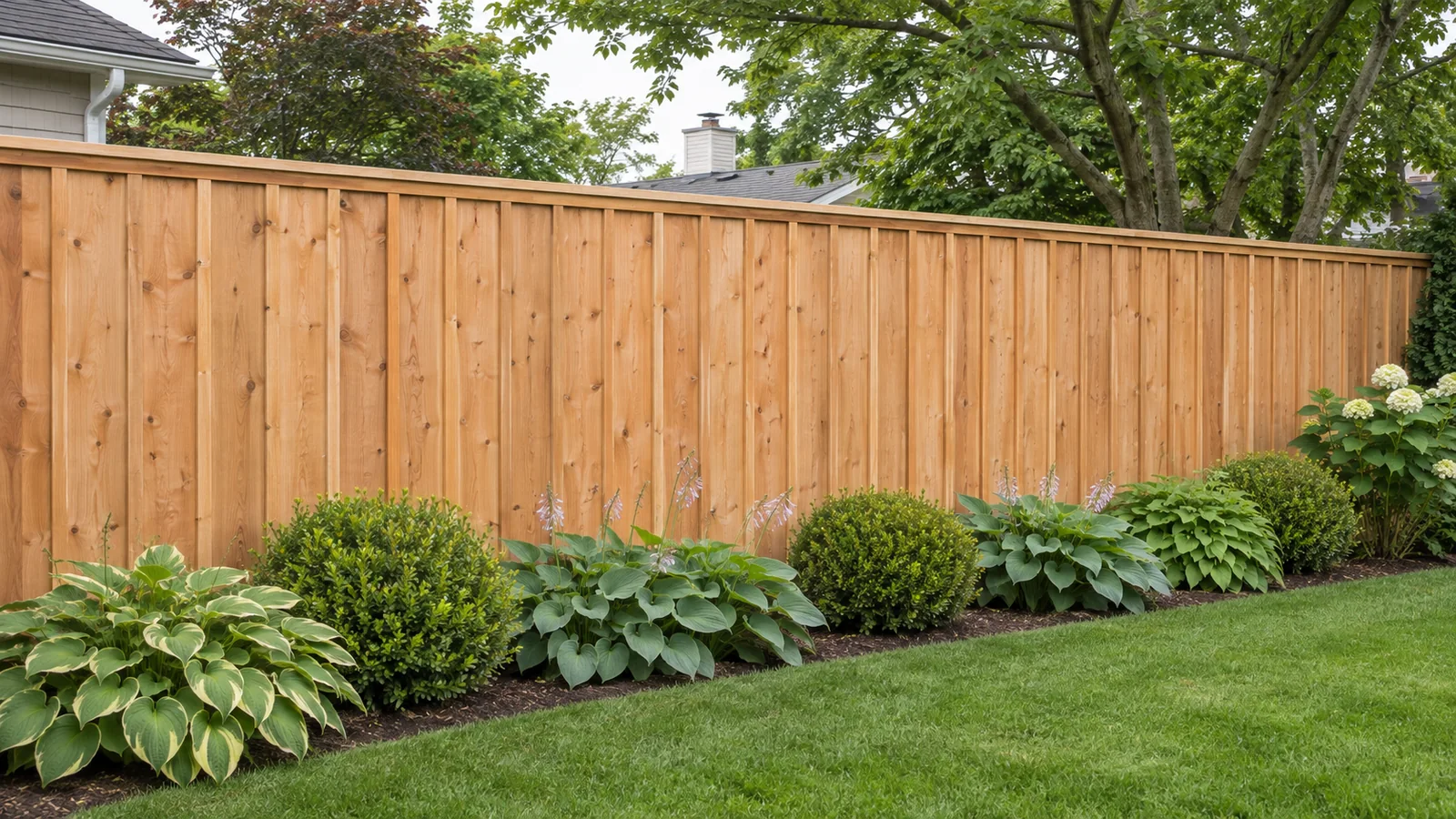
A board and batten fence is a row of wide vertical boards with narrow battens fixed over the joints between them. At 6 ft tall with 1×6 boards and a 1-in gap setting, an 8-ft section takes 15 boards and 14 battens, so an 80-ft run with one 4-ft walk gate comes to 13 posts, 158 boards with waste and 140 battens.
Updated
Advanced: Picket Width & Gap
11 line + 2 gate, 4x4
With 5% waste: 32 rails, 158 pickets/boards.
Hole: 10 in diameter x 2 ft deep, 0.92 cu ft per post.
Total: 26 bags (80 lb) / 39 bags (60 lb) / 39 bags (50 lb) for 13 posts, 11.97 cu ft.
The calculator above is set to spaced 1×6 boards on three rails: an 80-ft line, 6 ft tall, one 4-ft walk gate, posts 8 ft apart. It counts the boards, rails, posts and concrete. It has no batten setting, so it does not count the battens; they are boards minus one in every section, a derived count. The other wood layouts are on the fence styles hub.
How many boards and battens does a board and batten fence take?
Each section is a run of boards with a gap between neighbors, and a batten covers every gap. The calculator divides the 92.5 in of clear span between two 4×4 posts by one board plus one gap, 6.5 in at the defaults, and gets 14.2. It rounds up to 15 boards. Fifteen boards have 14 gaps between them, so 14 battens.
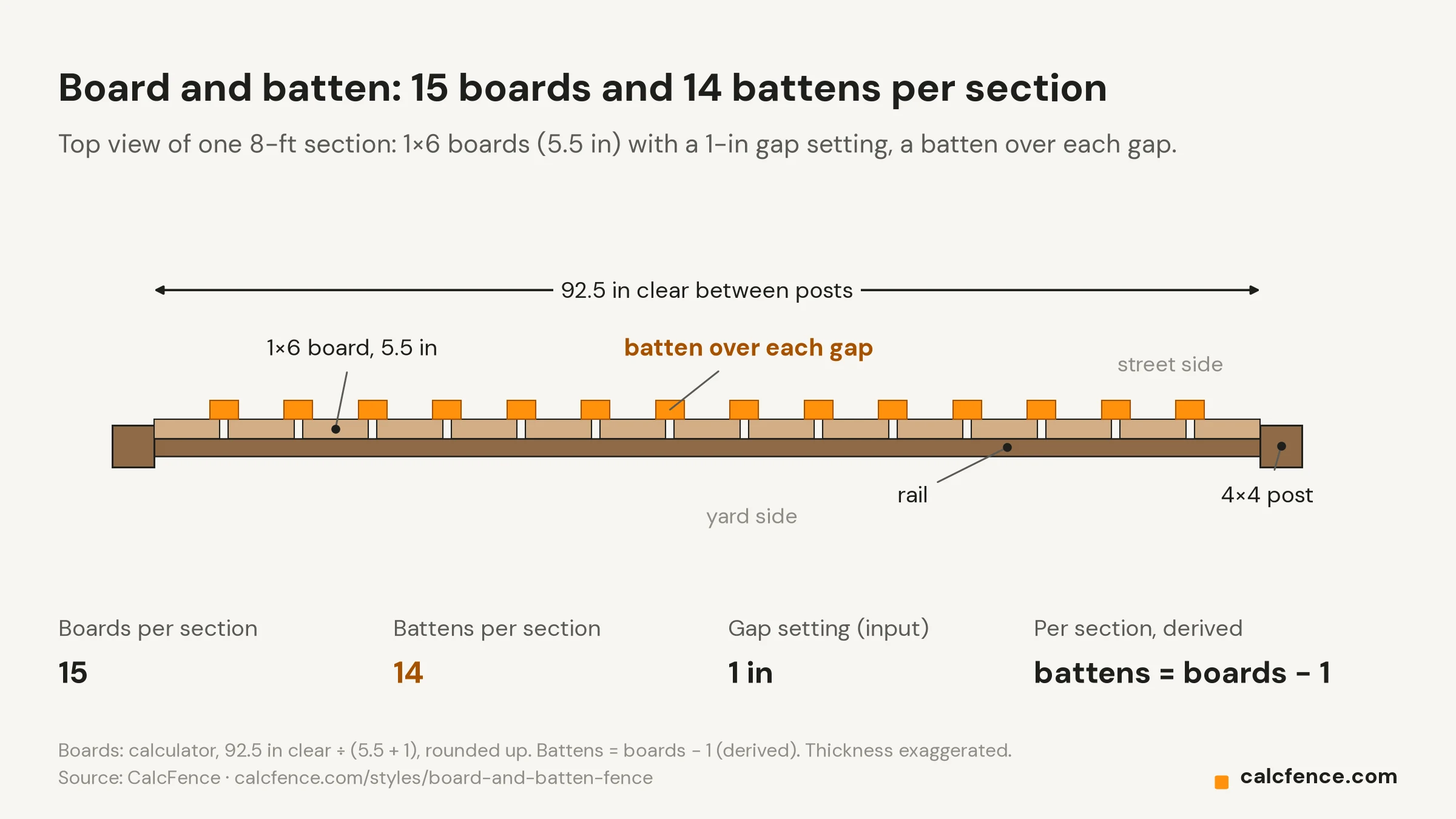
Inputs for the run: 80 ft straight, one 4-ft walk gate, 4×4 posts 8 ft apart, 1×6 boards at 5.5 in with a 1-in gap setting, 5% waste on.
| Line | Quantity | What sets it |
|---|---|---|
| Fence line | 76 ft in 10 sections | 80 ft minus the gate opening; nine full bays and a 4-ft bay |
| Posts | 13, each 8 ft long | 11 line posts and 2 gate posts |
| Boards | 150, or 158 with waste | 15 per section |
| Battens (derived) | 140, before waste | 14 per section, each 6 ft long |
| Rails | 30, or 32 with waste | 3 per section, 8 ft long |
| Concrete | 26 bags of 80-lb mix | 2 per post |
The 900 fasteners the calculator lists are the screws or nails for the boards, 2 at each rail. The batten fasteners are not in that number, and a batten needs its own at every rail it crosses. Order batten stock by the 140 above and add whatever waste you allow for thin strips, since the calculator applies none to them.
Is the gap you set the gap the batten covers?
Not quite. Hung evenly from post to post, 15 boards leave 10 in of daylight (92.5 minus 82.5) to share across 14 gaps, which is about 0.7 in each, not the 1 in typed into the Gap box. The Gap box is a setting that decides the board count, and the rounded-up board takes some of the space back. The semi-privacy fence page works through that rounding in full for 1×6 boards on rails.
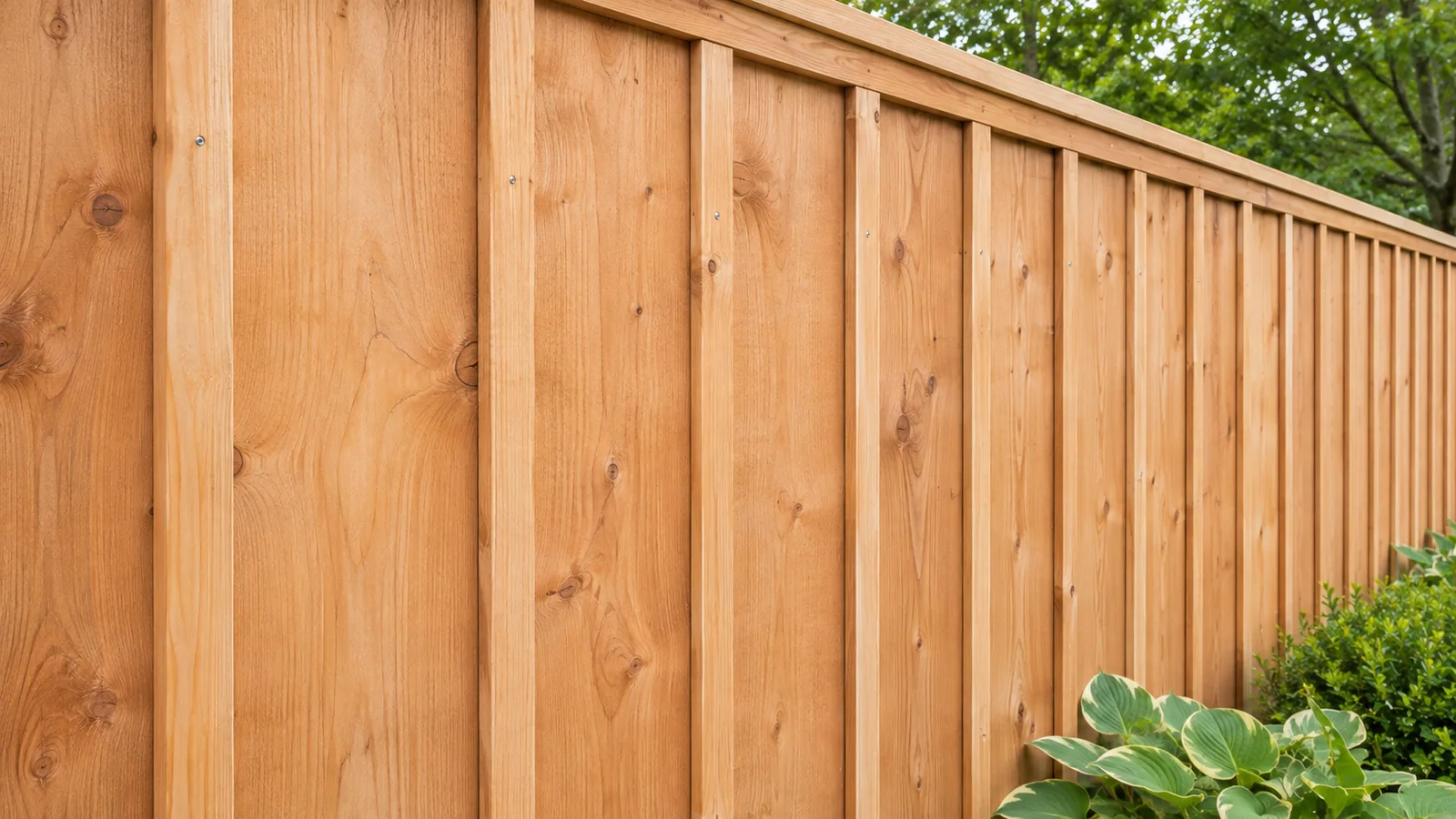
For a batten the real gap matters in one way: it is the width to cover. A batten 1.5 in wide laid centered over a 0.71-in gap overlaps each board edge by 0.39 in. That batten width is an assumed input, not a rule, and a wider strip overlaps more.
| Gap setting | Boards per section | Battens per section | Real gap, hung evenly | Boards, 80-ft run with waste | Battens, 80-ft run |
|---|---|---|---|---|---|
| 1/2 in | 16 | 15 | 0.30 in | 168 | 150 |
| 3/4 in | 15 | 14 | 0.71 in | 158 | 140 |
| 1 in | 15 | 14 | 0.71 in | 158 | 140 |
| 1 1/4 in | 14 | 13 | 1.19 in | 147 | 130 |
| 1 1/2 in | 14 | 13 | 1.19 in | 147 | 130 |
The count moves in whole boards, so settings next to each other can give the same fence. A wider gap saves boards and battens together, and the batten has to be wider to cover it.
Board and batten fence vs board on board
Both styles are closed on the face. It closes the gaps with a narrow strip, and a board on board fence closes them with a second layer of boards lapped over the first. On the same 80-ft line, 6 ft tall:
| Layout | Boards with waste | Extra pieces |
|---|---|---|
| Board and batten, 1-in gap setting | 158 | 140 battens |
| Privacy, boards tight | 179 | none |
| Board on board | 221 | none |
This layout uses 12% fewer boards than a tight privacy fence and 29% fewer than board on board, because the gaps leave part of the face without a board. What it adds is the batten count: 140 more strips to cut, set and fasten. The fence board calculator counts the board on board version for your own length.
Posts and rails
The posts and rails ignore the battens. The 80-ft run needs 13 posts and 32 rails with waste at every gap in the table, because posts follow the length and the spacing, and rails follow the height. A shorter fence of 4 ft keeps the 15 boards per section but drops to 2 rails per section. The fence post spacing calculator shows what other spacings do to the post count.
Board and batten fence gate
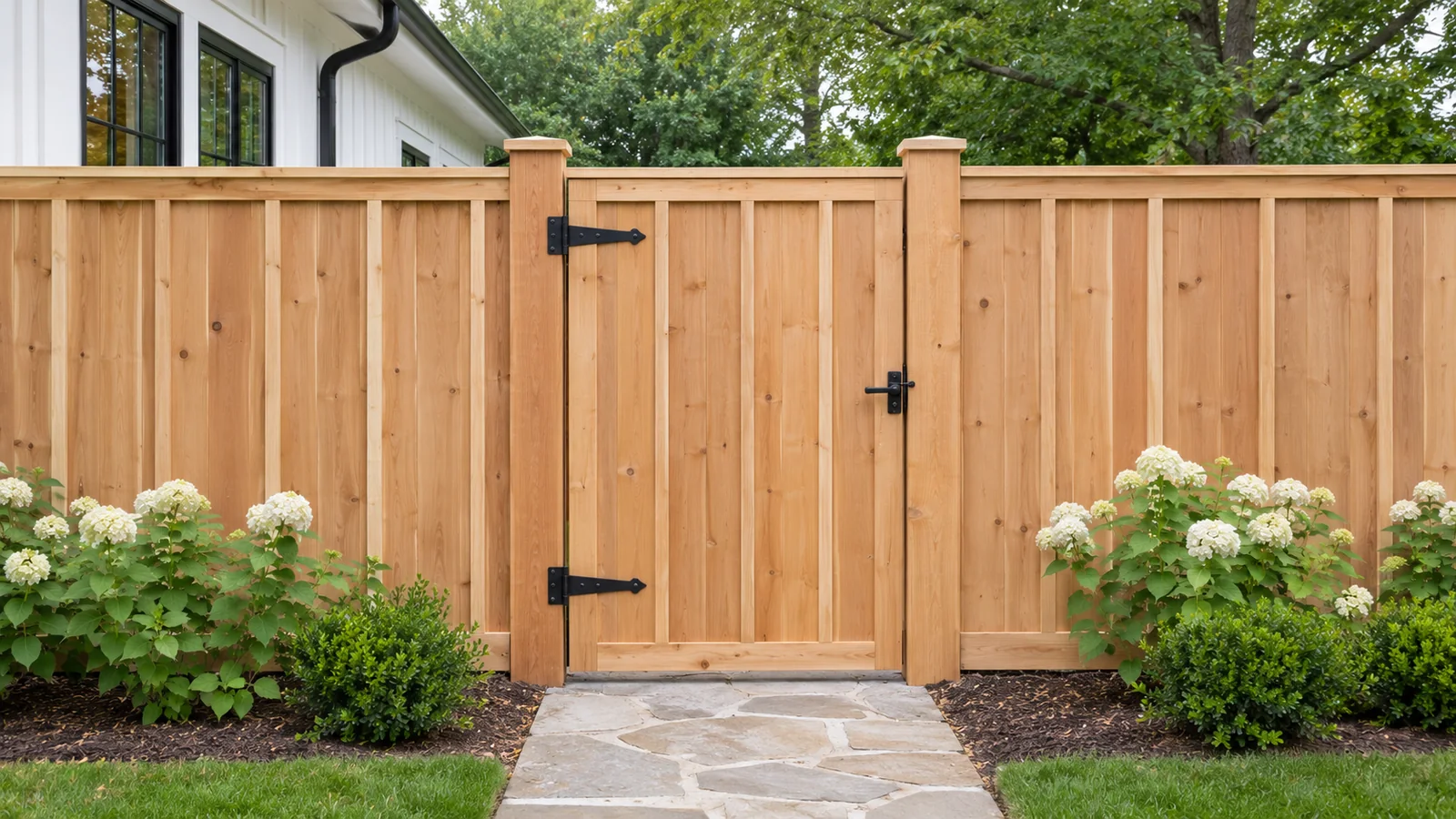
The walk gate takes 4 ft out of the fence line and adds 2 gate posts to the 13. Its leaf is a separate frame with hinges and a latch, and its boards and battens are not in the 158 or the 140. Cover the leaf with the same boards and battens as the run so the face carries across. The count for that leaf is the clear width divided by one board plus one gap, with a batten in each gap except at the edges; the picket fence calculator handles any width.
White board and batten fence
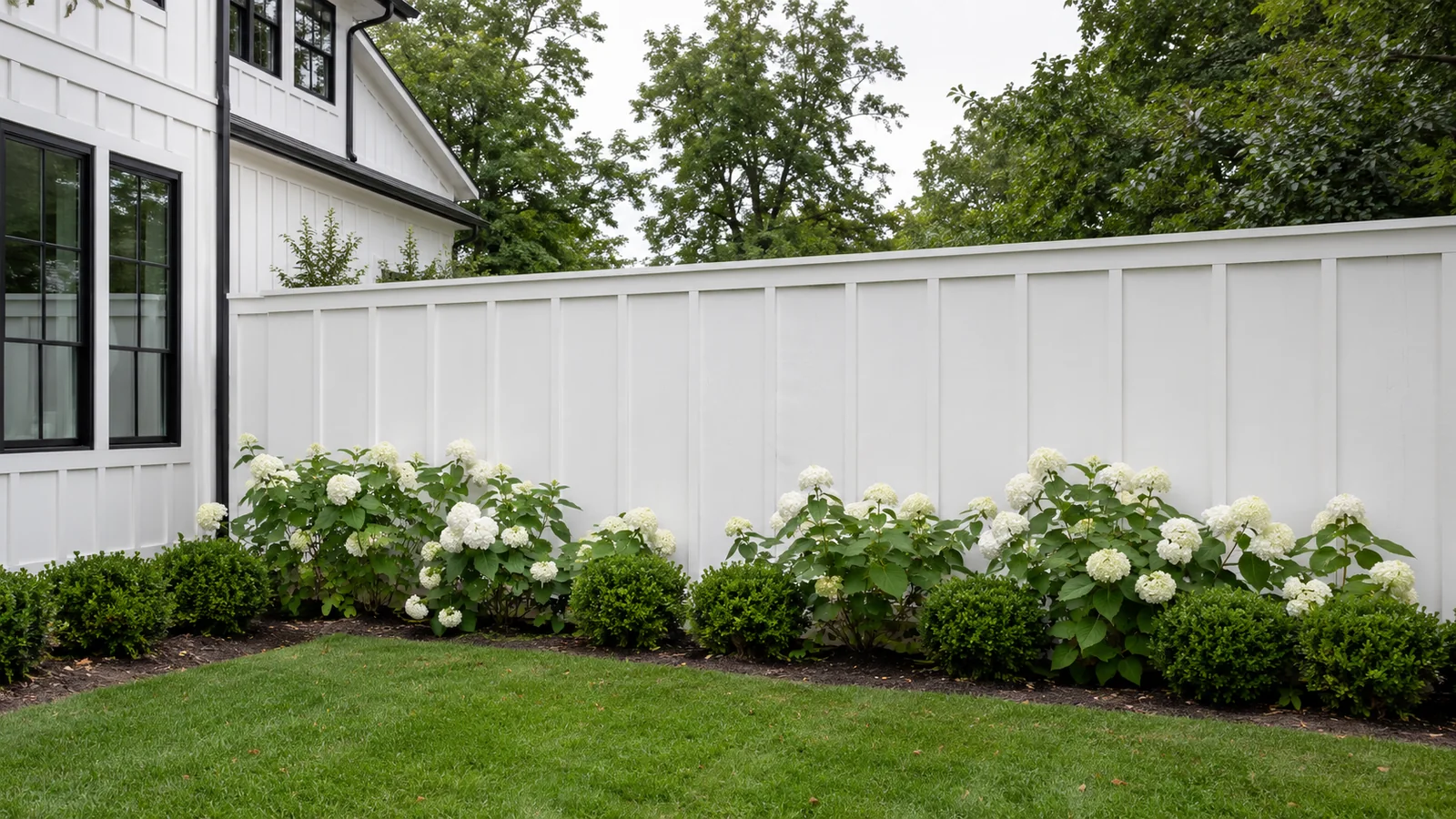
A white painted fence is the same frame in a different coat, and color does not change a count. The calculator counts none of the paint, so a paint quote starts from the face area, not the board list.
What the fence costs
The national cost table has no row for it. The nearest rows are wood privacy at $37 per foot installed at mid range for 6 ft, and wood board on board at an estimated $45. Boards plus battens come to 298 pieces on the 80-ft run, against 179 boards for privacy, so the layout saves no lumber, and neither row includes the battens or the labor of setting each strip. The wood fence cost calculator prices the privacy version, and fence materials compared sets wood against other fence materials.
Key Takeaways
- In 60-lb bags the 80-ft run needs 39 bags of concrete, and 52 in 40-lb bags.
- At 8 ft tall the clear span narrows to 90.5 in, so the section takes 14 boards, and the rails go to 4 per section, 42 with waste.
- The 140 battens are 840 ft of 6-ft stock, against 948 ft in the 158 boards.
- A 4-ft bay at the end of the run still gets 15 boards and 14 battens, so the last bay carries spare pieces.
Frequently Asked Questions
How many boards and battens for 100 feet of fence?
With one 4-ft gate, 96 ft of fence line makes 12 sections: 180 boards, 189 with waste, and 168 battens before waste.
Can I use 1×8 boards for the boards?
Yes. At 7.25 in wide with a 1-in setting, a section takes 12 boards and 11 battens, hung with gaps of 0.50 in. The 80-ft run needs 126 boards with waste.
How far apart should the posts be?
The calculator starts at 8 ft. At 10 ft the clear span is 116.5 in, a section takes 18 boards and 17 battens, and the run needs 11 posts and 152 boards with waste.
Is board and batten the same as board on board?
No. Board and batten spaces the boards and covers each gap with a strip. Board on board laps boards over boards with no strips.