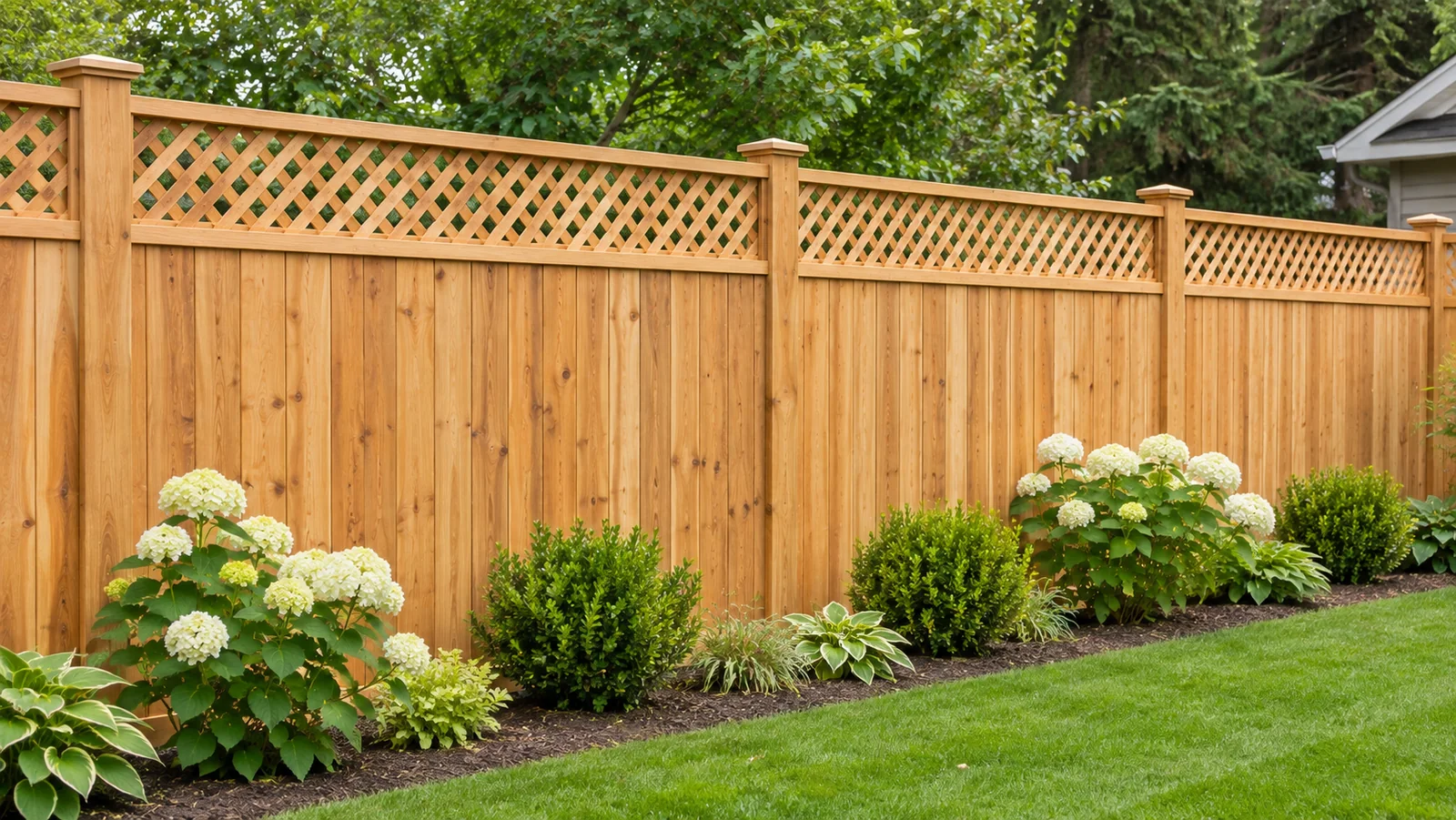
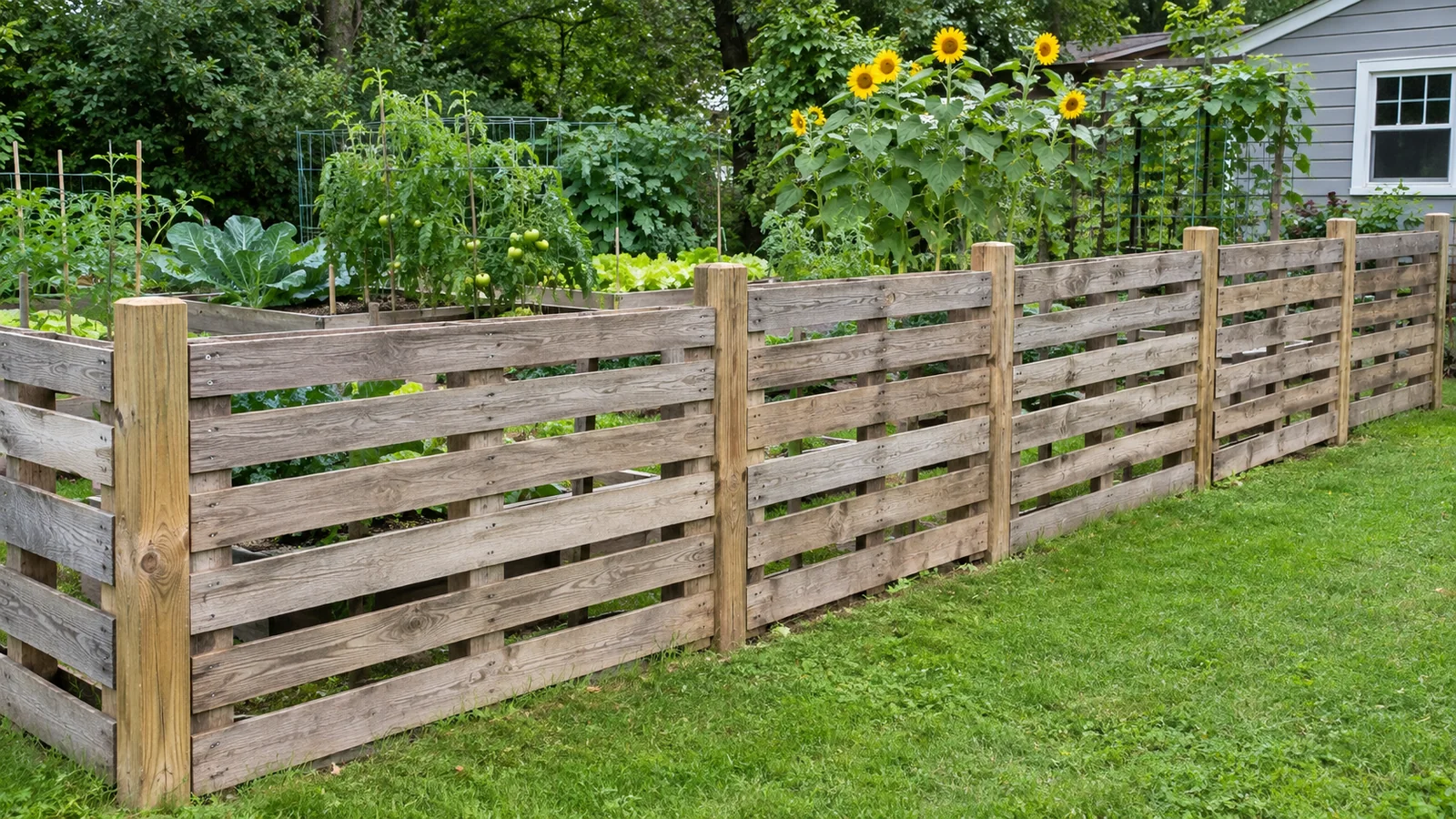
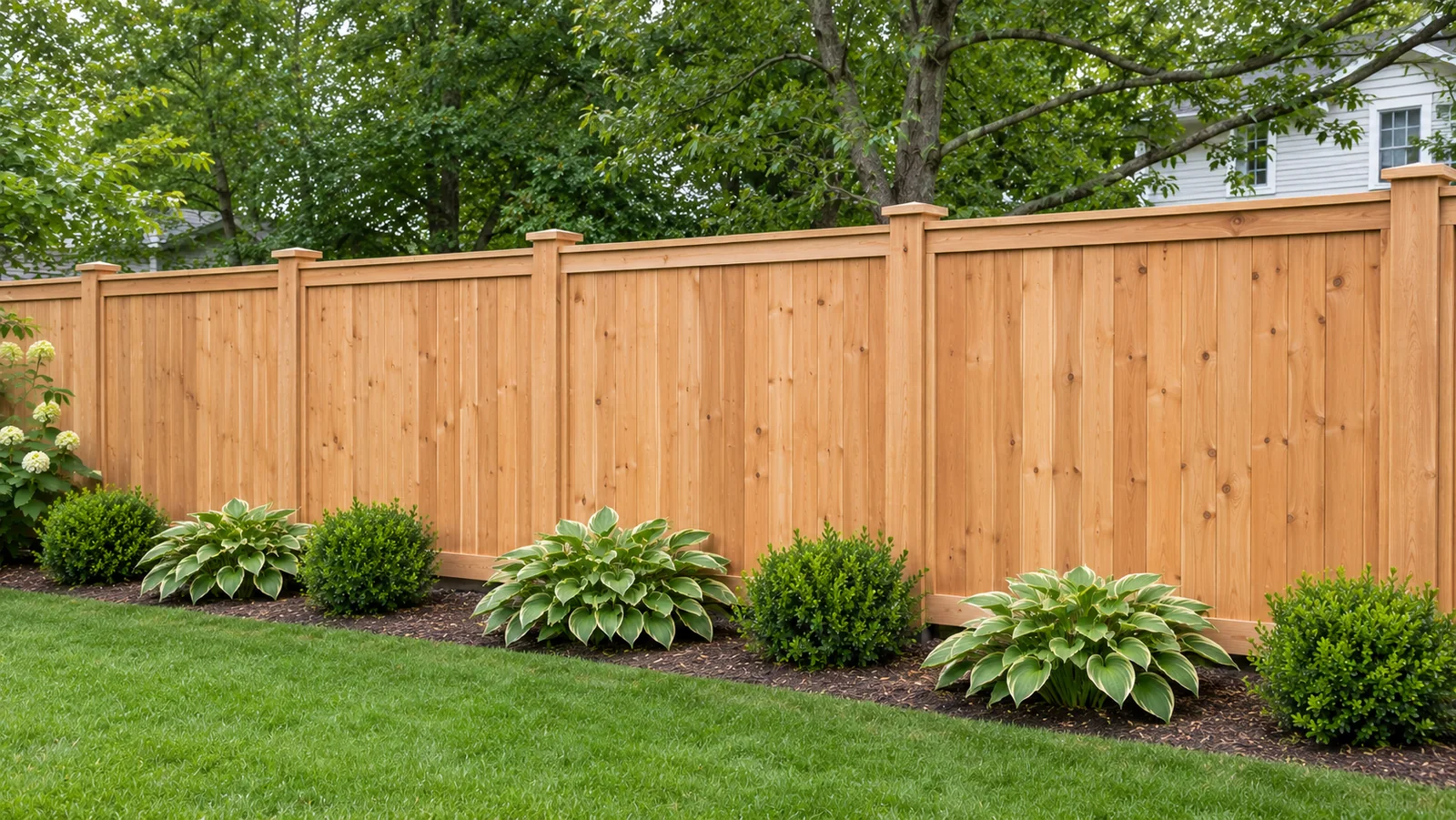
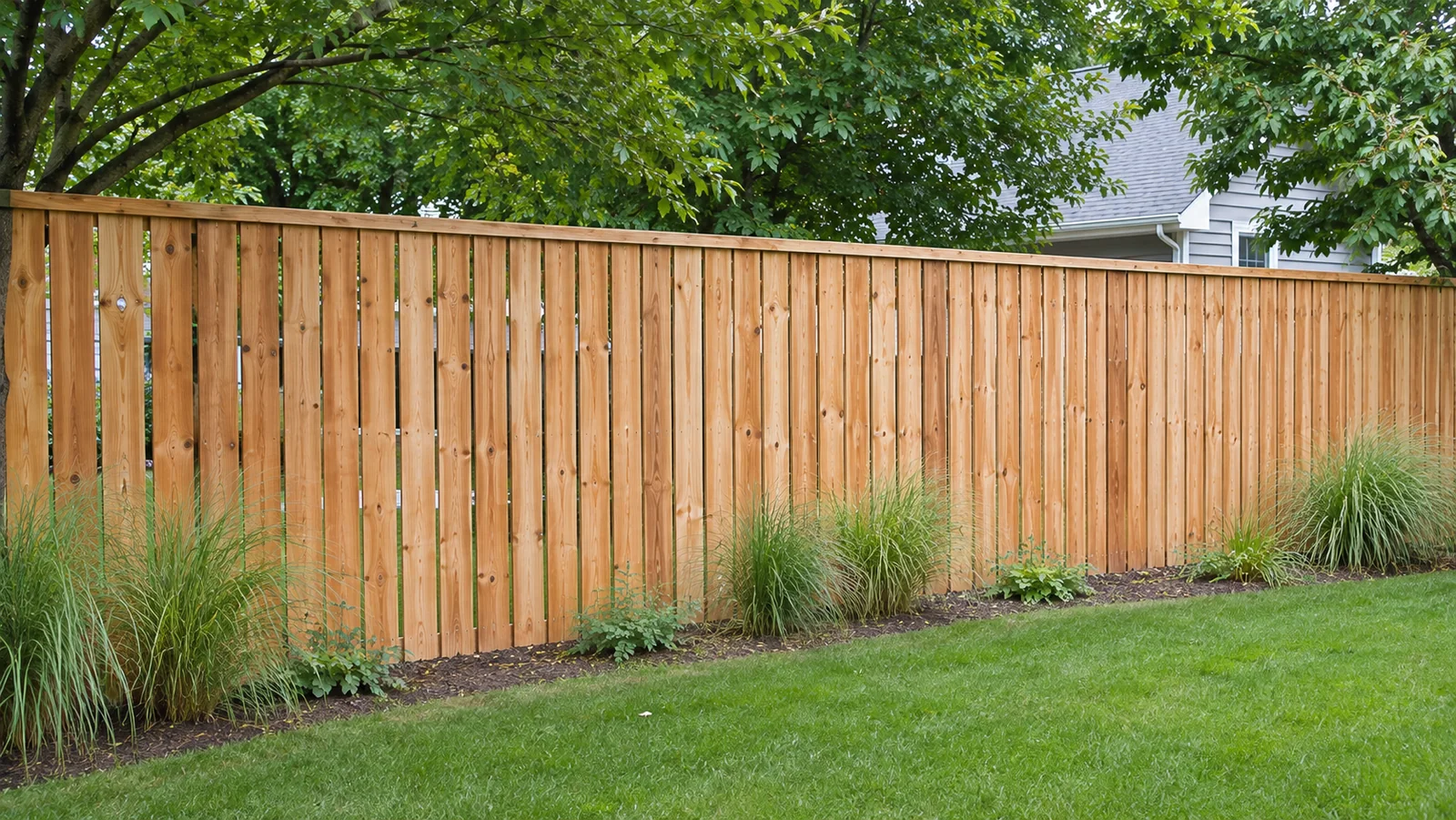
Horizontal Fence: How It Is Built and What It Takes
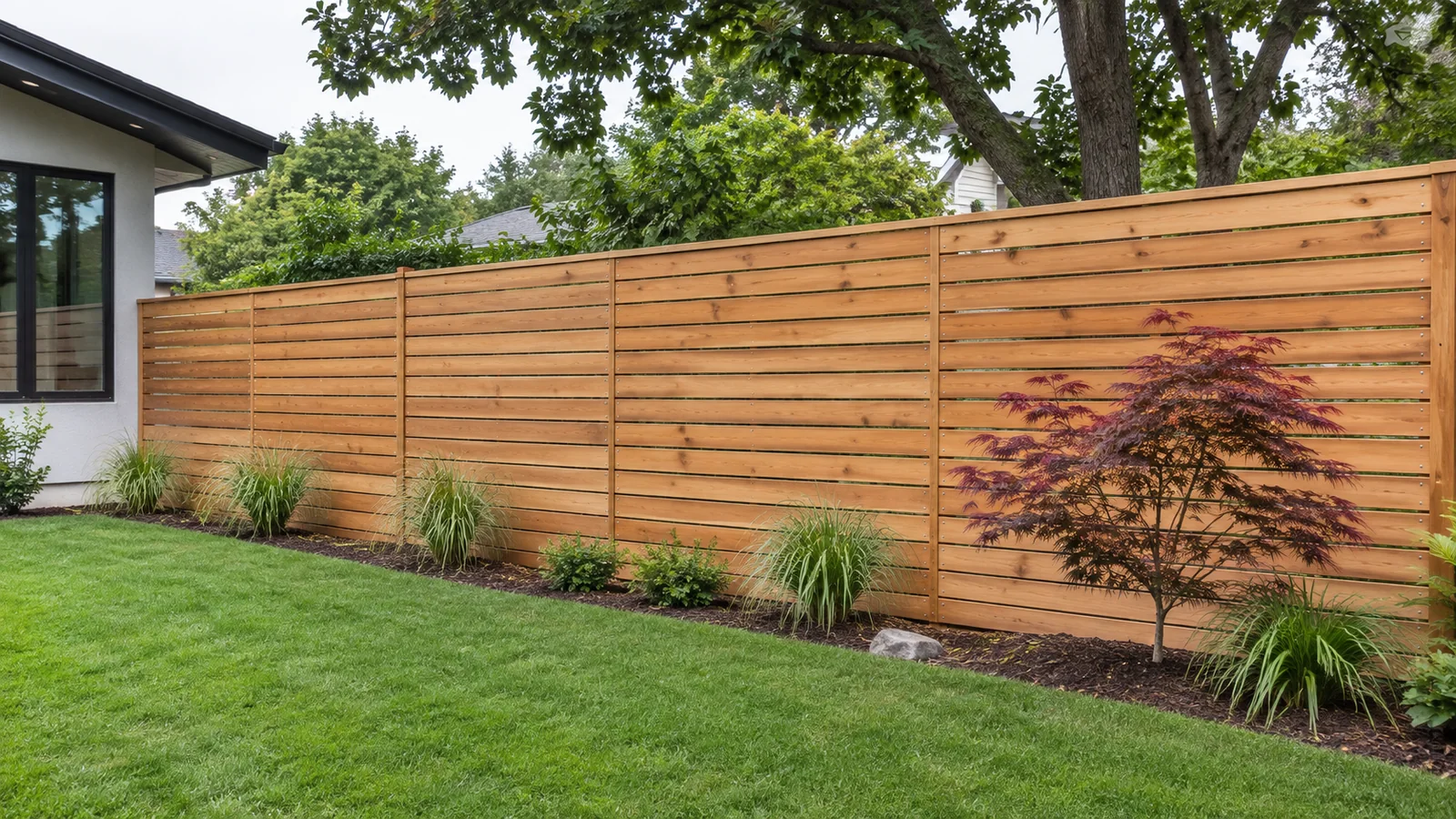
A horizontal fence runs its boards sideways from post to post instead of standing them on end. At 6 ft tall, 1×6 boards with 1/2-in gaps stack 12 to a section, so a 48-ft patio screen with one 4-ft walk gate and posts 8 ft apart takes 9 posts and 76 boards, 5% waste included.
Updated
Advanced: Picket Width & Gap
7 line + 2 gate, 4x4
With 5% waste: 76 boards.
Hole: 10 in diameter x 2 ft deep, 0.92 cu ft per post.
Total: 18 bags (80 lb) / 27 bags (60 lb) / 27 bags (50 lb) for 9 posts, 8.29 cu ft.
The calculator above opens on a patio screen: 48 ft of horizontal wood fence, 6 ft tall, with a single 4-ft gate and 4×4 posts 8 ft on center. It is one of three closed wood layouts in the fence styles section, and the only one whose board count ignores the length of the section.
How many boards does a horizontal fence need?
A vertical board covers width, so the count per section depends on how far apart the posts are. Turn the board on its side and its 5.5-in face covers height instead. The count per section then comes from the fence height alone: 72 in ÷ (5.5 in + 1/2-in gap) = 12 boards for a 6-ft fence.
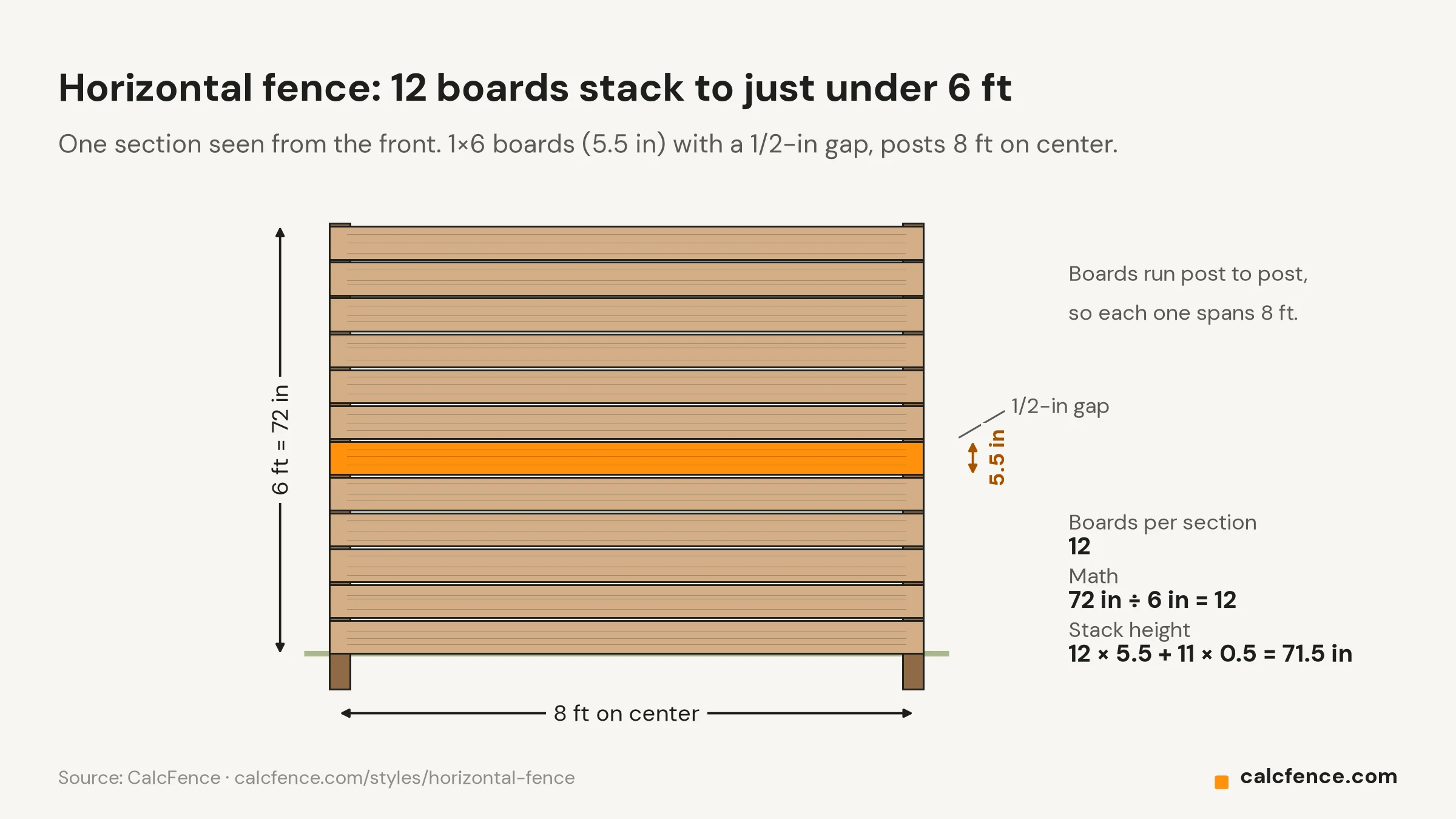
Twelve boards with 11 gaps between them stack to 71.5 in, half an inch short of 72. Length decides only how many sections you build. A horizontal slat fence of 1×4s or 1×8s follows the same division with a different board width, and the fence board calculator sets this method beside the counts for board-on-board and shadowbox.
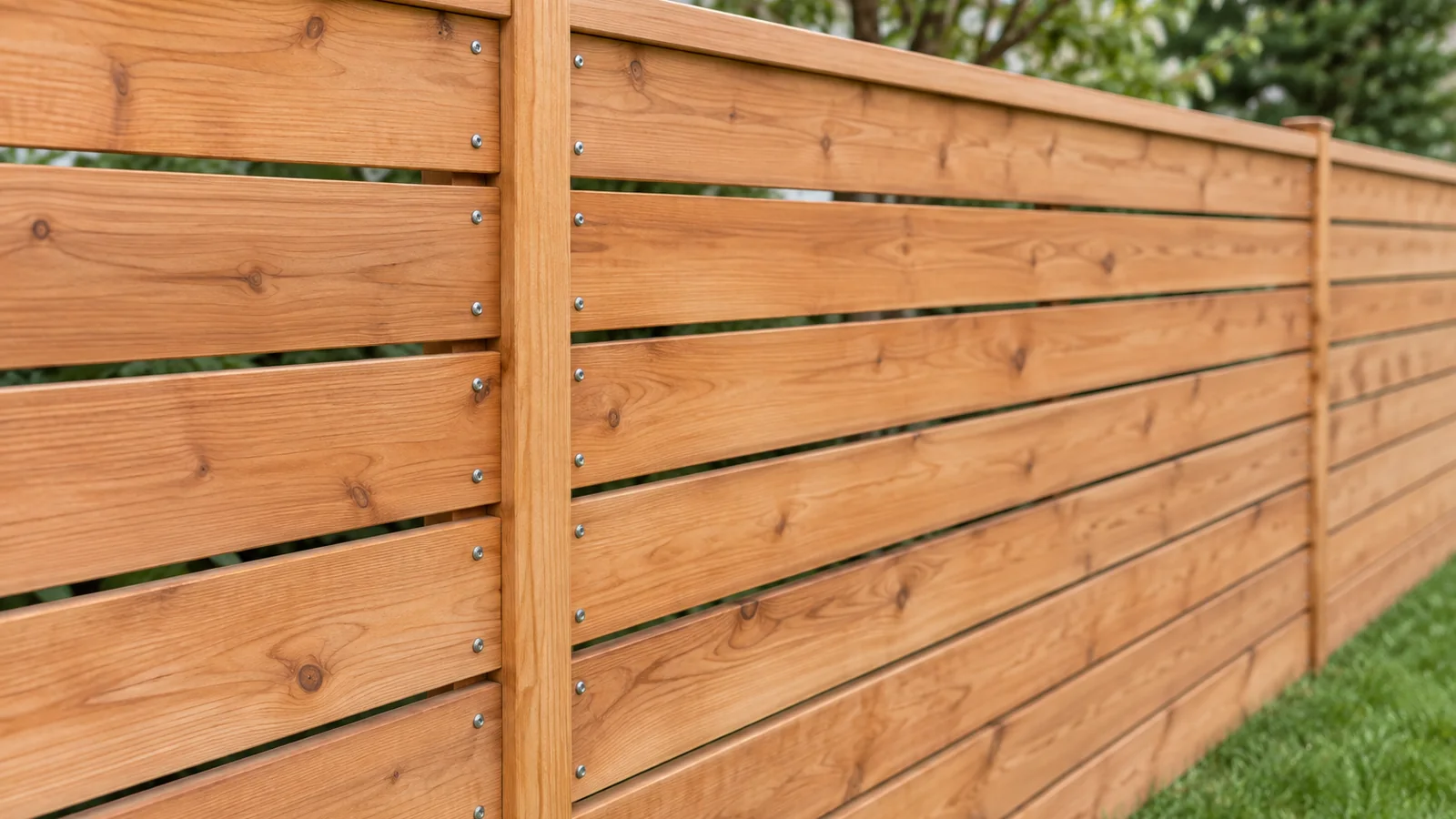
Board ends meet in the middle of each post. A 4×4 is 3.5 in across, so two boards butting on one post share it, and every board end has 1.75 in of wood to take its screws.
The 48-ft patio screen, line by line
Inputs: straight run of 48 ft, 6 ft tall, one 4-ft walk gate, posts 8 ft apart, 4×4 posts, 1×6 boards at 5.5 in with a 1/2-in gap, 5% waste on.
| Line | Quantity | What sets it |
|---|---|---|
| Fence line | 44 ft | 48 ft minus the gate opening |
| Sections | 6 | 44 ÷ 8 = 5.5, rounded up |
| Posts | 9, each 8 ft long | 7 line posts and 2 gate posts, buried 2 ft |
| Boards | 72, or 76 with waste | 12 per section, each 8 ft long |
| Concrete | 18 bags of 80-lb mix | 2 bags per 10-in hole |
Five full sections cover 40 ft, so the sixth is a 4-ft bay. The calculator still gives it 12 full 8-ft boards, though 6 of them cut in half would cover it. Spreading the posts evenly instead, 44 ÷ 6 = 7 ft 4 in on center, makes all six bays alike. The fence post spacing calculator works out that even spacing for any run.
In place of rails, the result panel lists five 2×4 mid-supports, each 6 ft long, and about 408 fasteners. Horizontal boards screw to the posts, so the calculator counts 2 screws at each board end and 2 more where a board crosses a mid-support. Each bay of 6 ft or more gets one mid-support.
Choosing the gap
The gap is the one setting under Advanced that changes the look most. The calculator rounds the board count up, so the counted boards plus one gap each cover at least the full height, and at most gap widths the top board ends up past 72 in.
| Gap | Boards per section | Height they stack to | One board fewer | Patio screen boards, with waste |
|---|---|---|---|---|
| none | 14 | 77.0 in | 71.5 in | 89 |
| 1/4 in | 13 | 74.5 in | 68.75 in | 82 |
| 1/2 in | 12 | 71.5 in | 65.5 in | 76 |
| 3/4 in | 12 | 74.25 in | 68.0 in | 76 |
| 1 in | 12 | 77.0 in | 70.5 in | 76 |
Only the 1/2-in gap lands just under 72 in with the counted boards. At a 1-in gap, 11 boards per section reach 70.5 in, so the 76-board order carries one spare per section. With tight boards and no gap, 13 boards already reach 71.5 in. Read the "one board fewer" column before you order, and cut a spacer block to the gap you pick so it stays the same from the bottom board to the top.
Do horizontal fences sag?
Trex, a composite fencing seller, writes in its help center (updated October 19, 2021) that "horizontal fences are more likely to sag than vertical ones if the boards are not properly supported." Master Halco, a fence manufacturer, gives the fix in its undated installation guidelines for horizontal wood boards on its PostMaster steel posts: with board lengths of 6 to 8 ft, "you should add a 2x4 mid-support to keep the boards in alignment." For the patio screen, that means a 2×4 at the middle of each of the 5 full bays. The 4-ft bay falls under that range and needs none. The calculator's mid-support line counts the same 5.
Post spacing sets the board length, and with it nearly every line on the list:
| Post spacing | Sections | Posts | Boards with waste | Board length | 80-lb bags |
|---|---|---|---|---|---|
| 6 ft | 8 | 11 | 101 | 6 ft | 22 |
| 8 ft | 6 | 9 | 76 | 8 ft | 18 |
| 10 ft | 5 | 8 | 63 | 10 ft | 16 |
Six-foot spacing adds 2 posts, 25 boards and 4 bags of concrete to the patio screen, and 6-ft boards still sit inside Master Halco's mid-support range, so it buys stiffer bays without removing the 2×4s. Ten-foot spacing saves a post but asks each 1×6 to span 10 ft, past the 6 to 8 ft that Trex calls the common span.
Corners and the gate
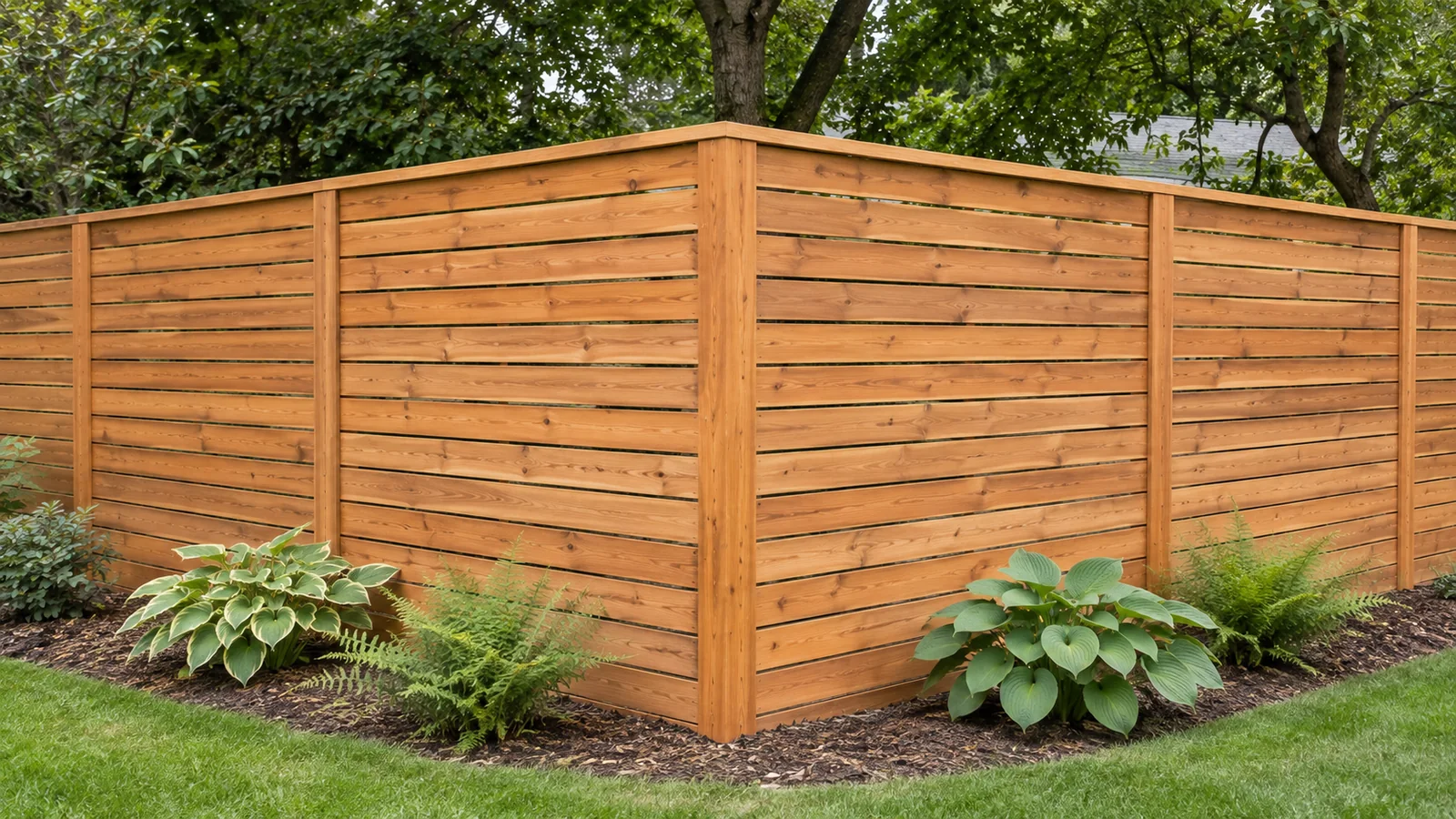
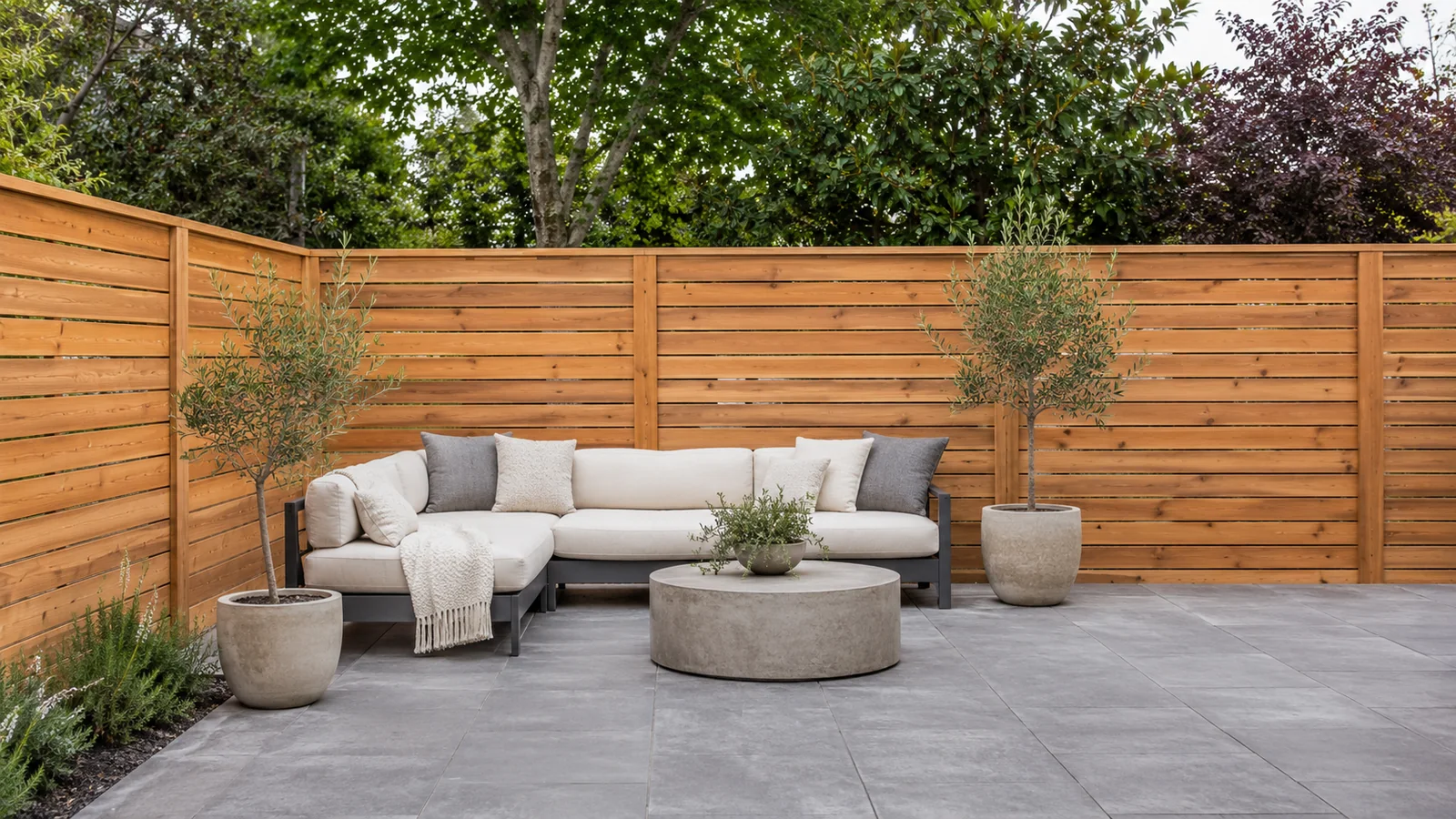
At the corner shown, both runs end on one post and a vertical trim strip covers the board ends of each. Enter the sides under Multiple Runs so the calculator divides each one by the spacing on its own and counts the shared post once.
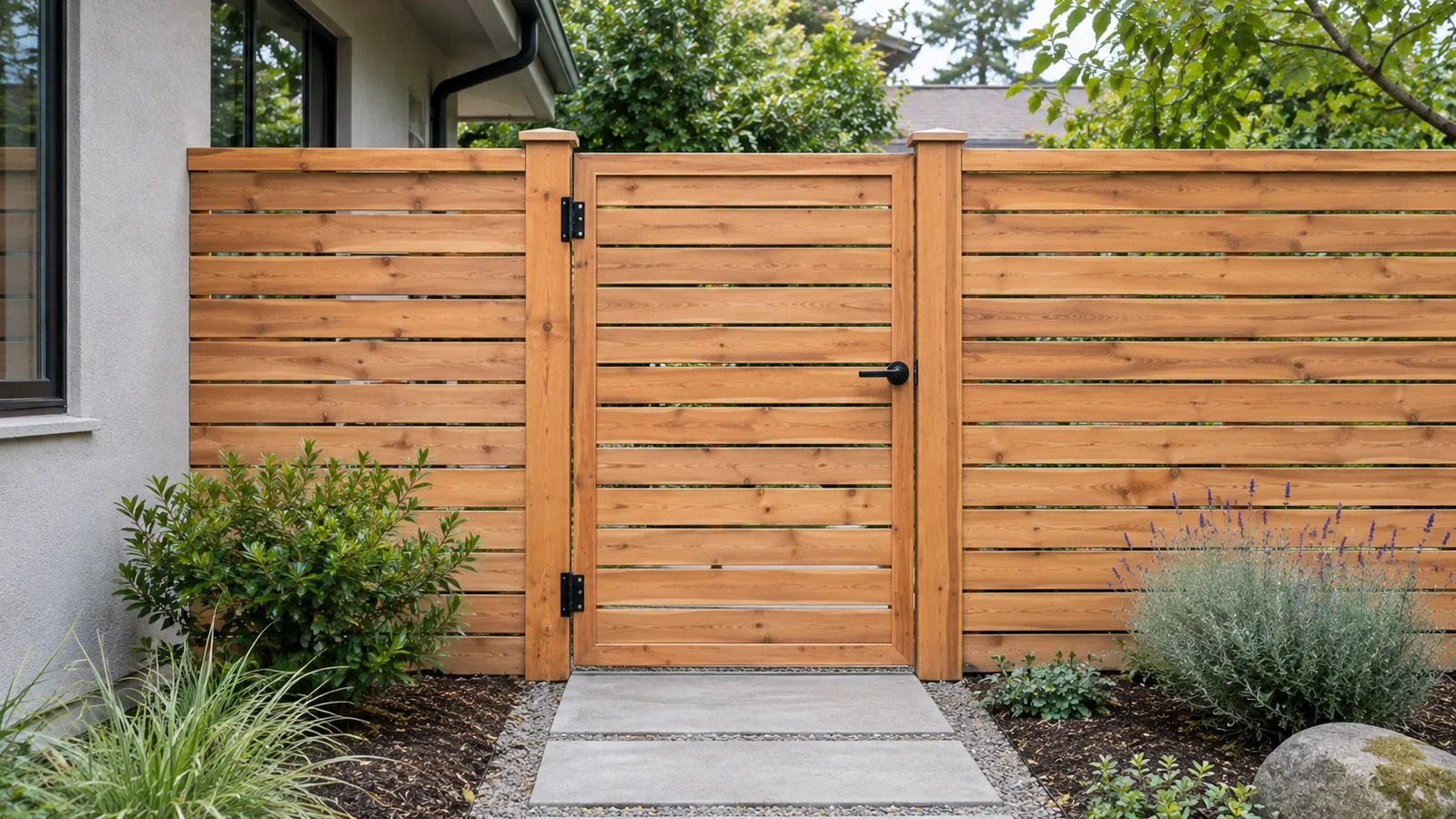
The 4-ft walk gate removes 4 ft from the fence line and adds 2 gate posts to the list, and nothing more. The gate leaf, its frame, hinges and latch are a separate purchase; the wood fence calculator lists what else falls outside the board and post count.
Horizontal fence vs vertical
Built as a vertical privacy fence of tight 1×6 dog-ear boards, the same patio screen takes 108 boards with waste instead of 76, with the same 9 posts and 18 bags of concrete. The vertical boards are 6 ft long and the horizontal ones 8 ft, so the lumber comes to 648 ft of board against 608 ft, about 6% less for the horizontal fence. Board-on-board and shadowbox use more boards than either, since they lap or double the vertical boards; the board-on-board fence and shadow box fence pages cover those two.
What a horizontal fence costs
The national cost table puts a 6-ft wood horizontal fence at an estimated $52 per foot installed at mid range, 41% above wood privacy. It is an estimate. Angi's privacy fence cost guide puts horizontal fences 10% to 20% above vertical ones, while the per-foot prices contractors publish run far higher; at the midpoints of its ranges, Ergeon, a fence installer, prices horizontal wood at about 1.75 times its dog-ear rate. The table sets the rate between the two as a premium over privacy. At that rate the patio screen comes to about $2,880 for 44 ft of fence, entered without the gate opening, plus the walk gate and a typical permit fee. Choose Wood Horizontal Fence in the fence cost calculator to price your own length and state, and use the wood fence cost calculator for the vertical privacy version.
Cap boards, black stain and grey stain
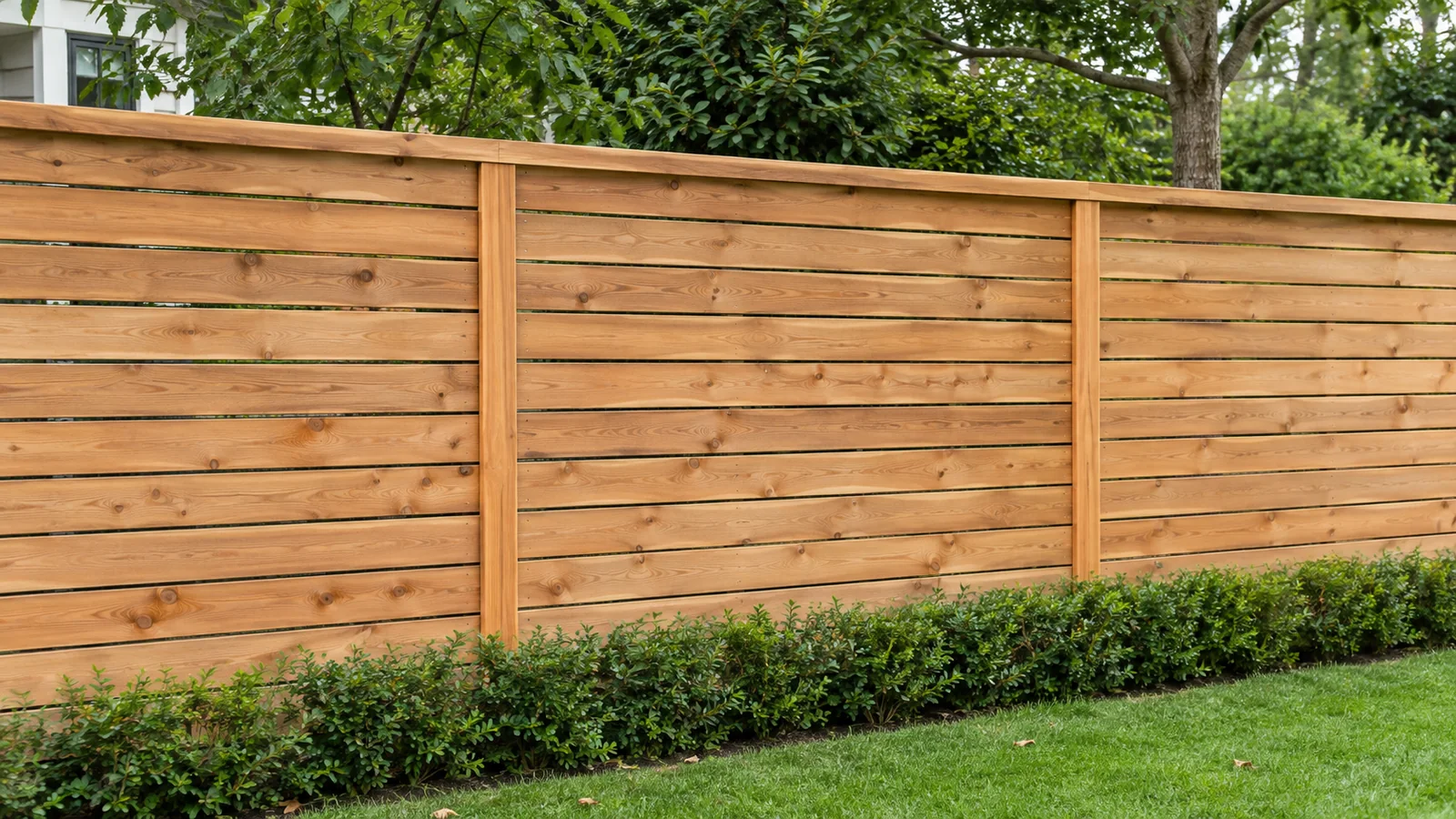
A cap board laid flat across the post tops runs the length of the fence line, 44 ft on the patio screen, and covers the end grain of the top board and the post tops in one piece. It is not on the calculator's list, and neither is stain.
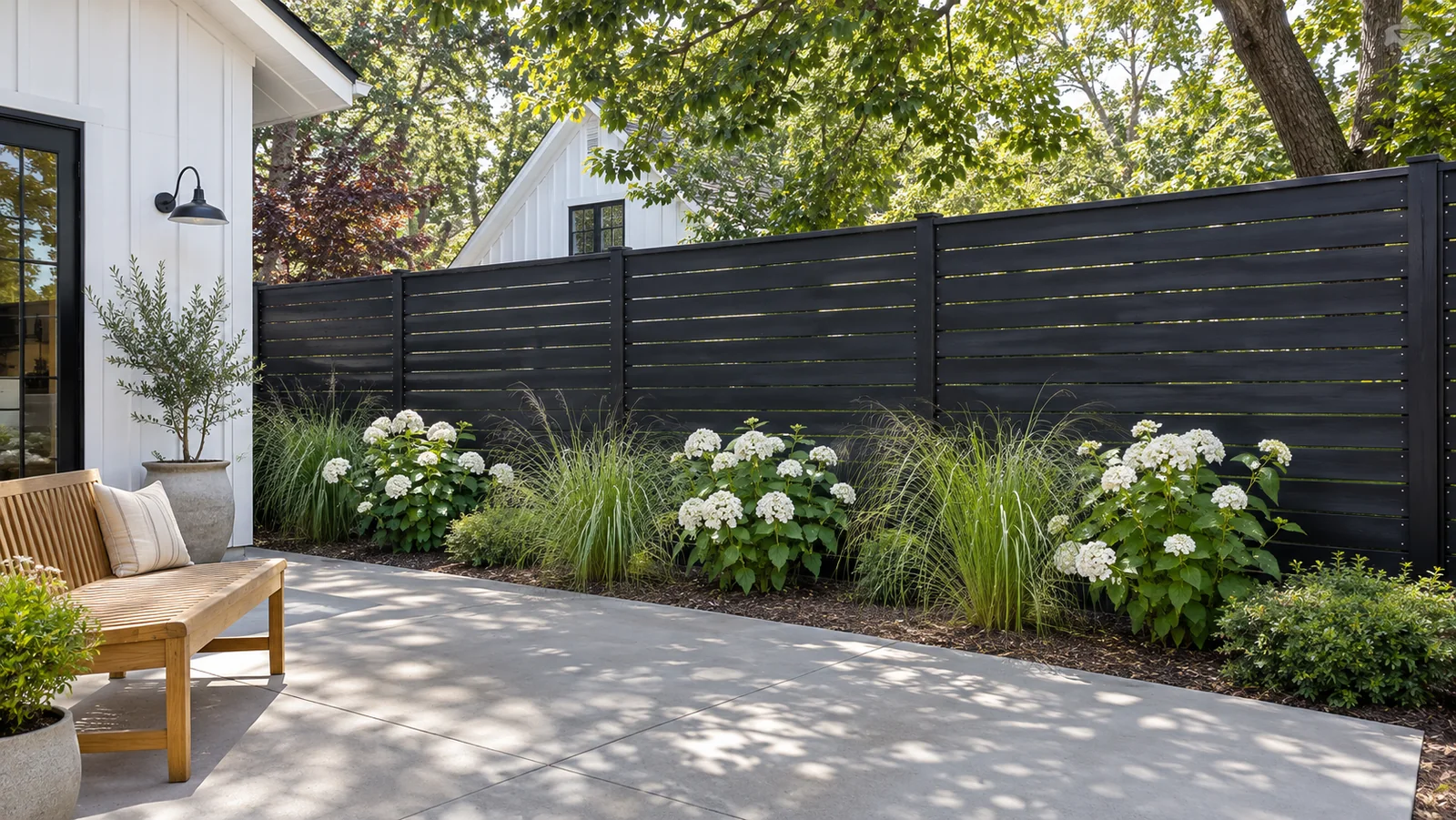
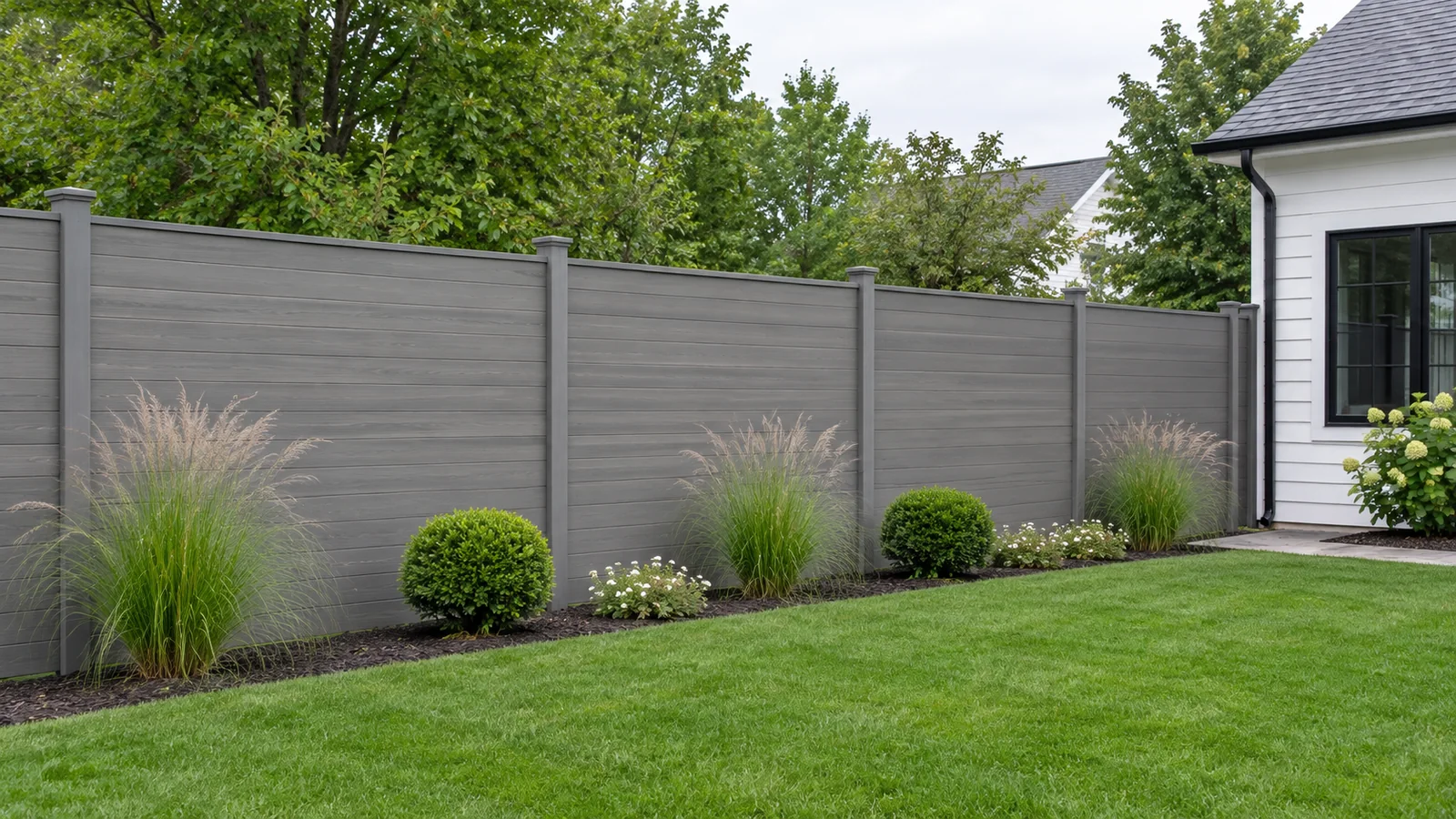
A black horizontal fence is a stain or paint choice on the same frame and boards, and color does not change any count above. The gaps read as thin dark lines on natural cedar and nearly disappear in solid black.
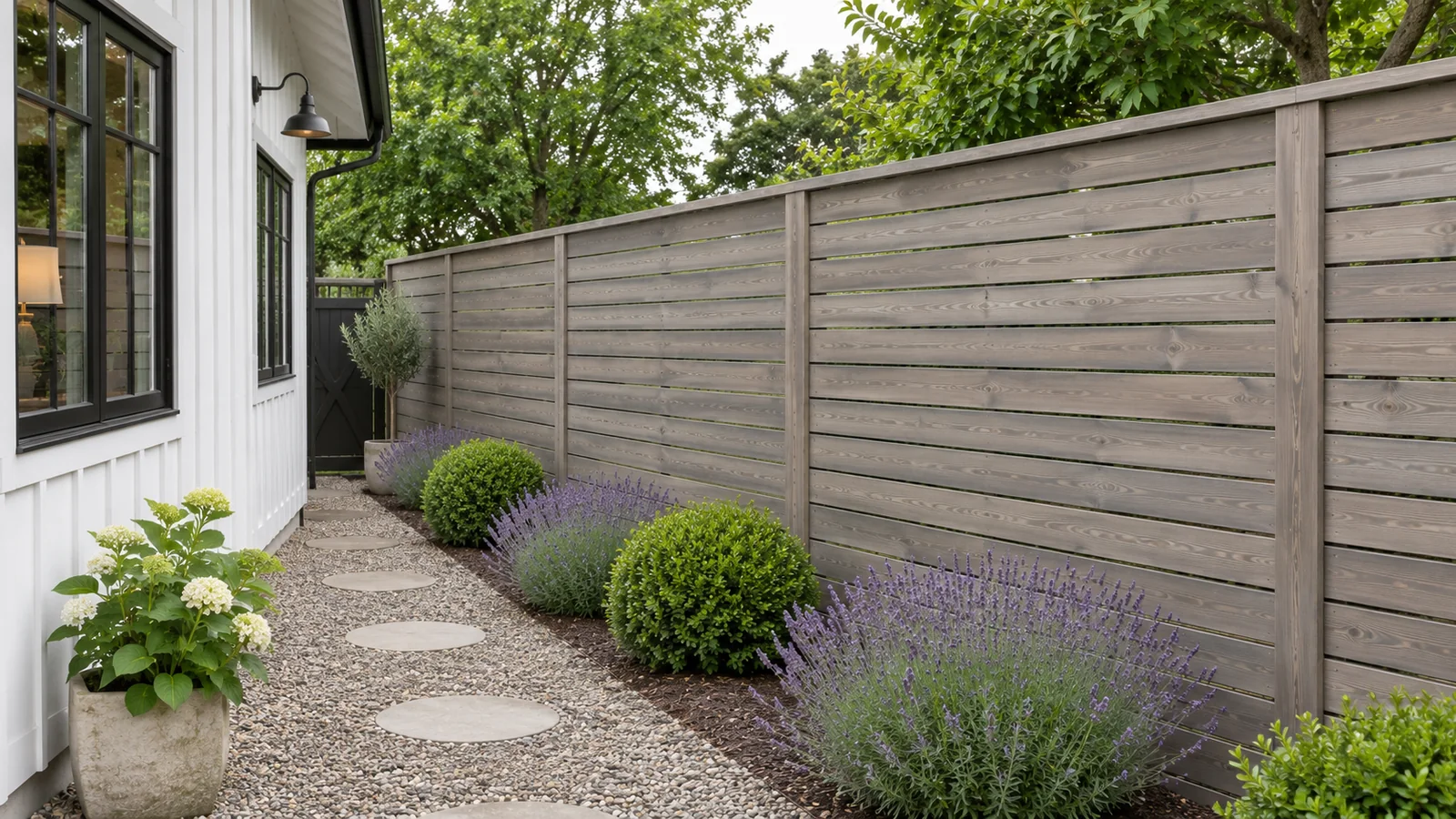
A grey semi-transparent stain sits between the two, with the grain still showing through.
Lower horizontal fences in front yards
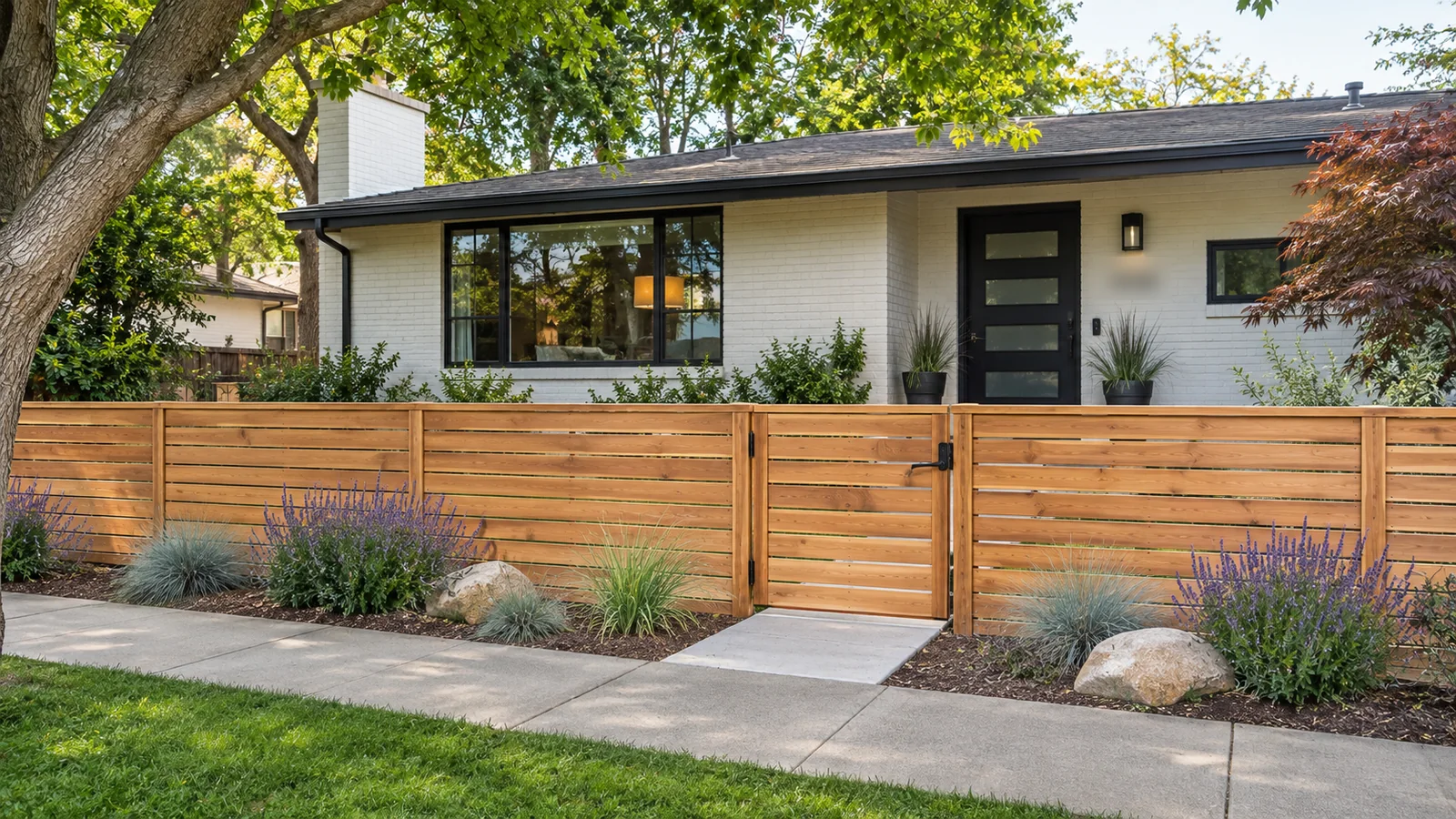
At 4 ft, 8 boards fill a section, and the same 48-ft run with a 4-ft gate takes 51 boards with waste. Posts stay at 9 because they are set by length and spacing, not height. Front yards are where cities cap fence height, and the four city codes in fence height rules and permits set those limits. For wood against vinyl or metal on the same layout, see fence materials compared.
Key Takeaways
- Splitting the patio screen into a 32-ft back side and a 16-ft side under Multiple Runs still gives 6 sections and 9 posts, because the gate comes off the longer side and both remainders round to whole bays.
- Master Halco's guidelines space line posts at the board length plus 2 in on center and set corner and gate posts 30 in deep, against the calculator's 2 ft for every post on a 6-ft fence.
- In 60-lb bags the patio screen's concrete comes to 27 bags.
- Waste adds 4 boards to the patio screen's 72.
Frequently Asked Questions
How far apart should posts be on a horizontal fence?
The calculator starts at 8 ft and offers 6 and 10 ft. Trex puts the common span at 6 to 8 ft, and on the 48-ft patio screen the shorter end of that means 11 posts instead of 9.
Can I use 1×8 boards on a horizontal fence?
Yes. At 7.25 in wide with a 1/2-in gap the calculator counts 10 per 6-ft section, 63 for the patio screen with waste. Ten boards stack to 77 in, so 9 per section with gaps of about 0.84 in fit a 72-in fence.
Is a horizontal fence more expensive than a vertical one?
On the patio screen with its gate, the estimate runs 34% above a vertical wood privacy fence of the same length. Labor is the biggest part of that difference, just under half of it.
Does a horizontal fence need rails?
Not in the vertical sense. Master Halco's layout screws a 2×4 or 2×6 kickboard along the bottom and 2×2 vertical nailers to the posts, then nails the boards to the nailers. The calculator counts the 2×4 mid-supports but not the kickboard or the nailers.