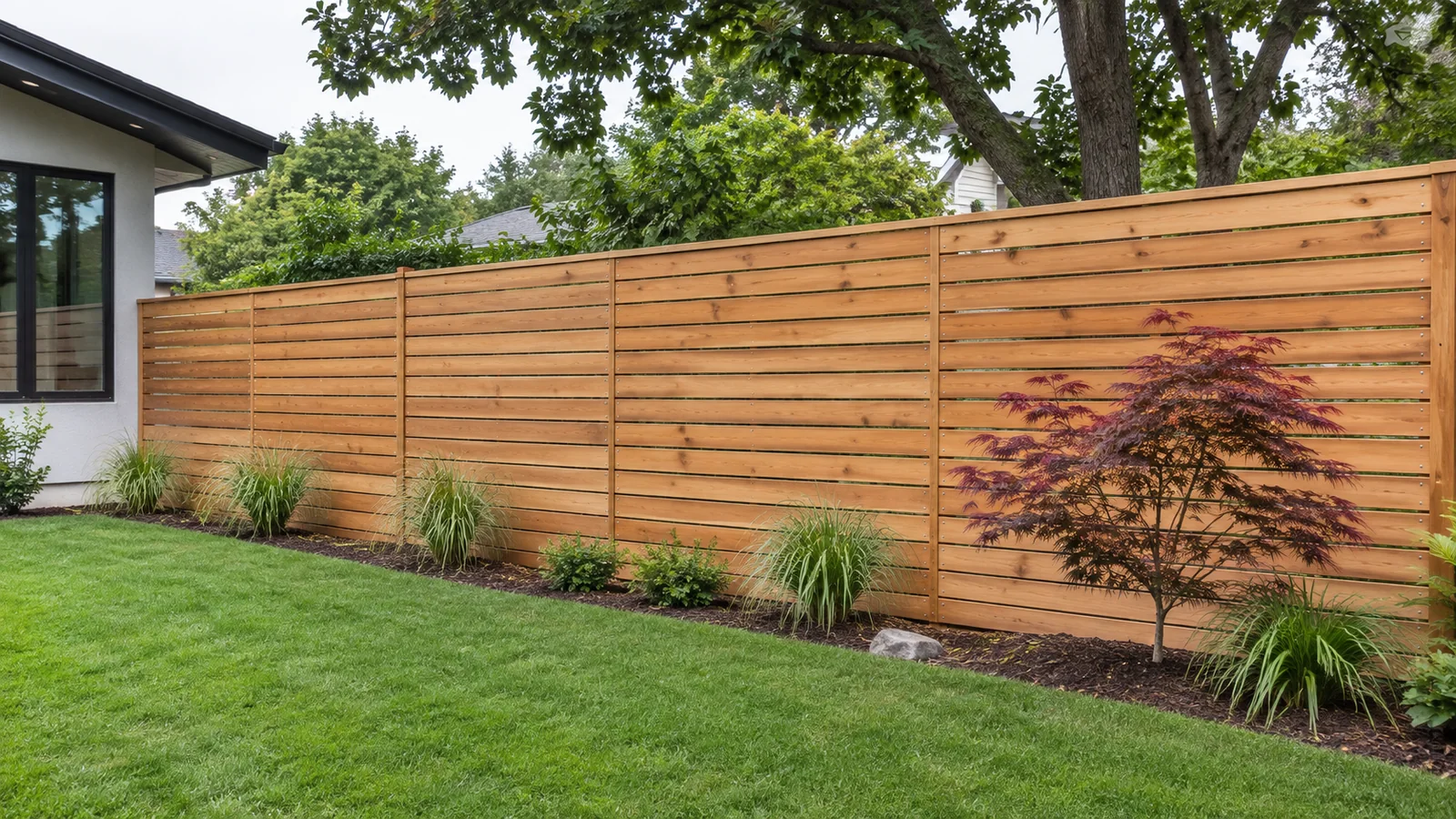
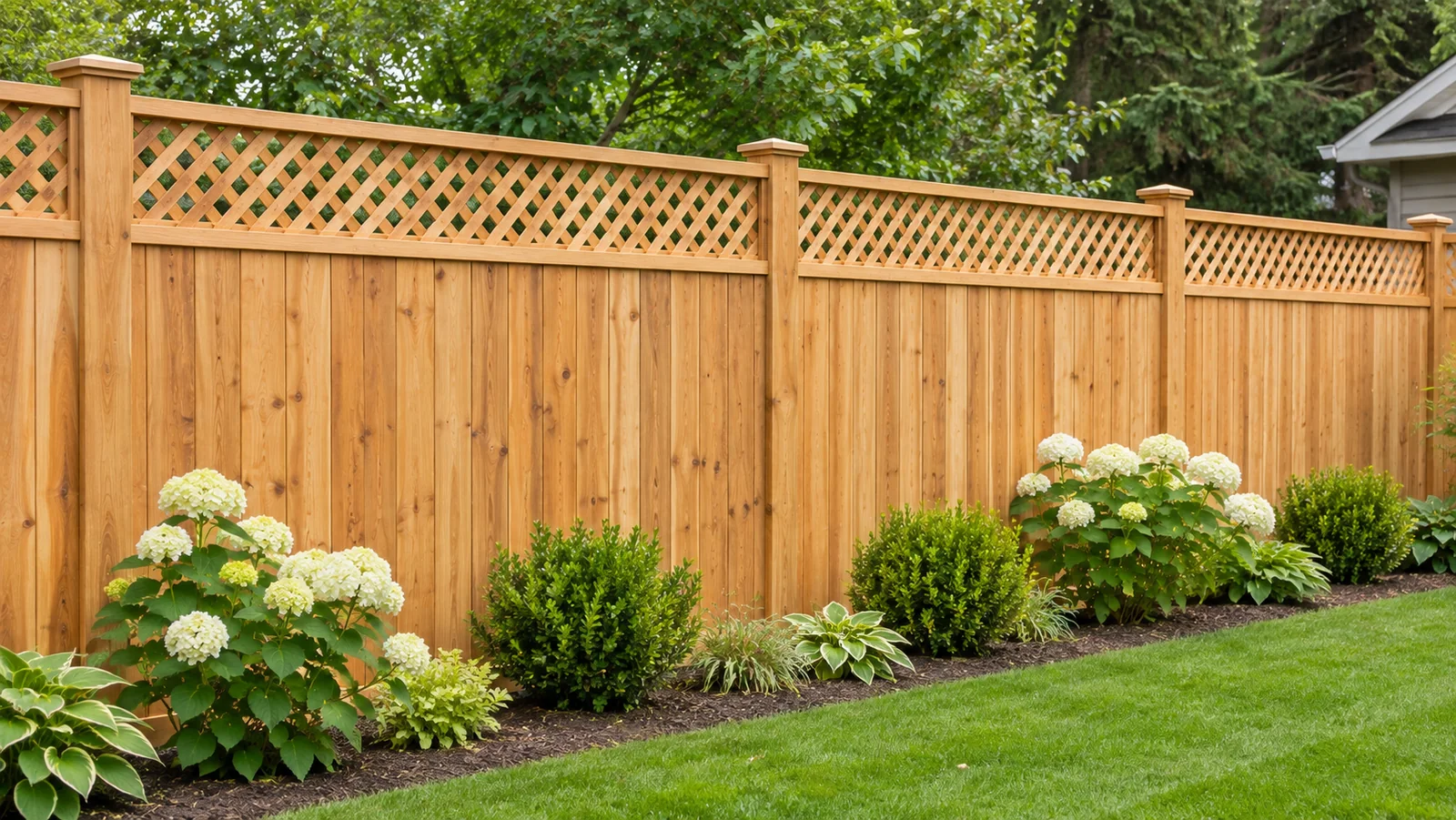
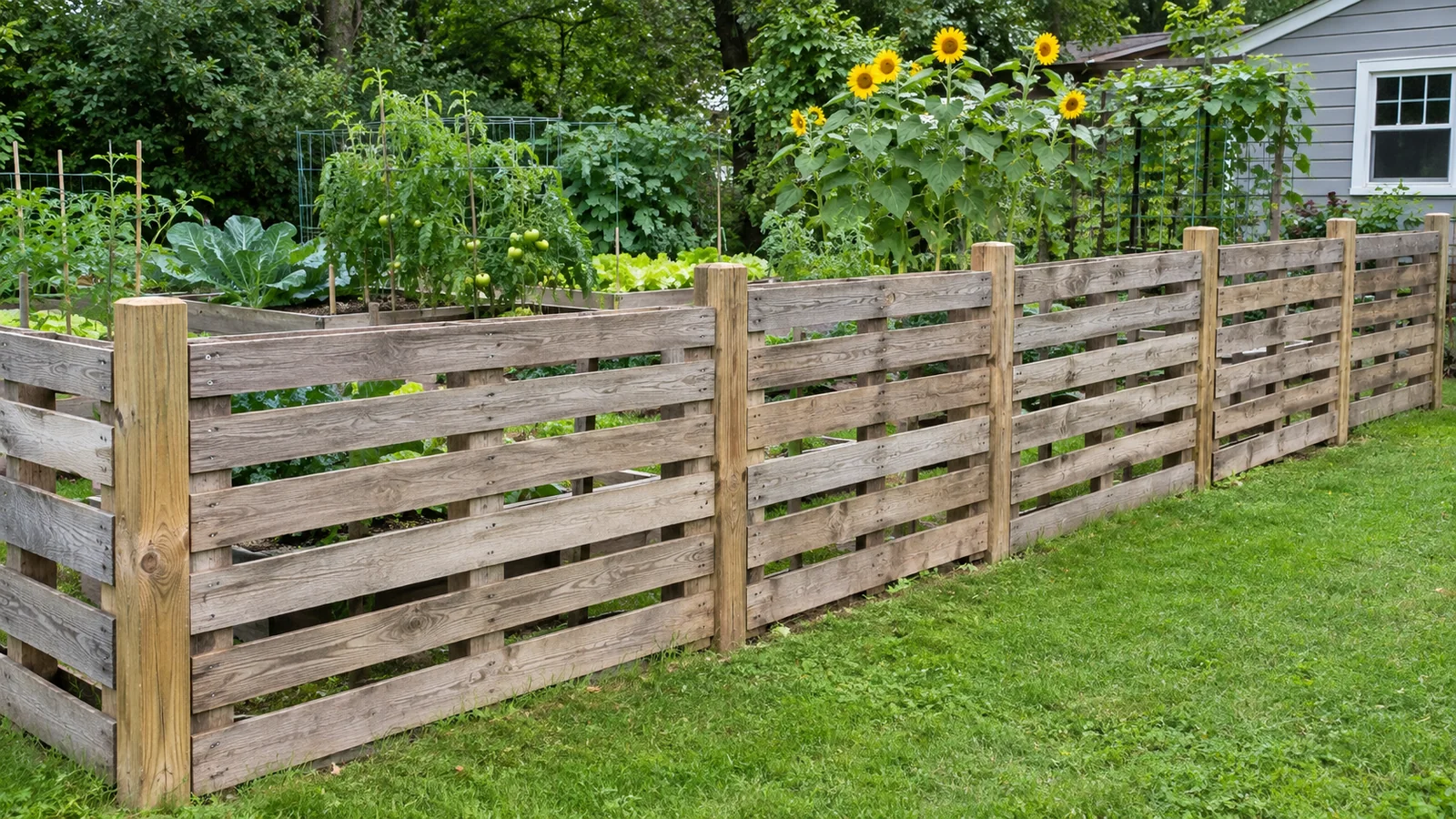
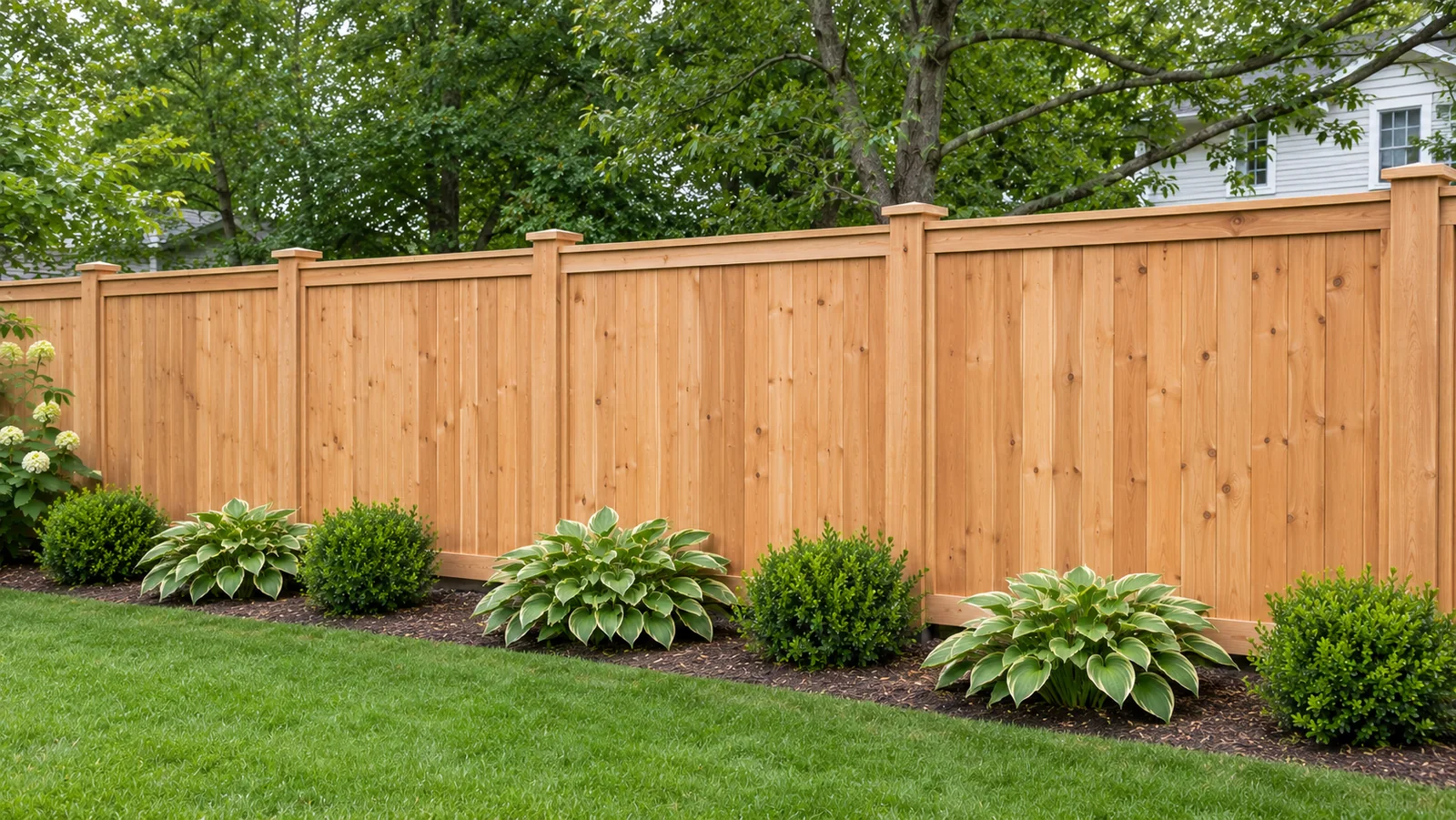
What is a semi privacy fence?
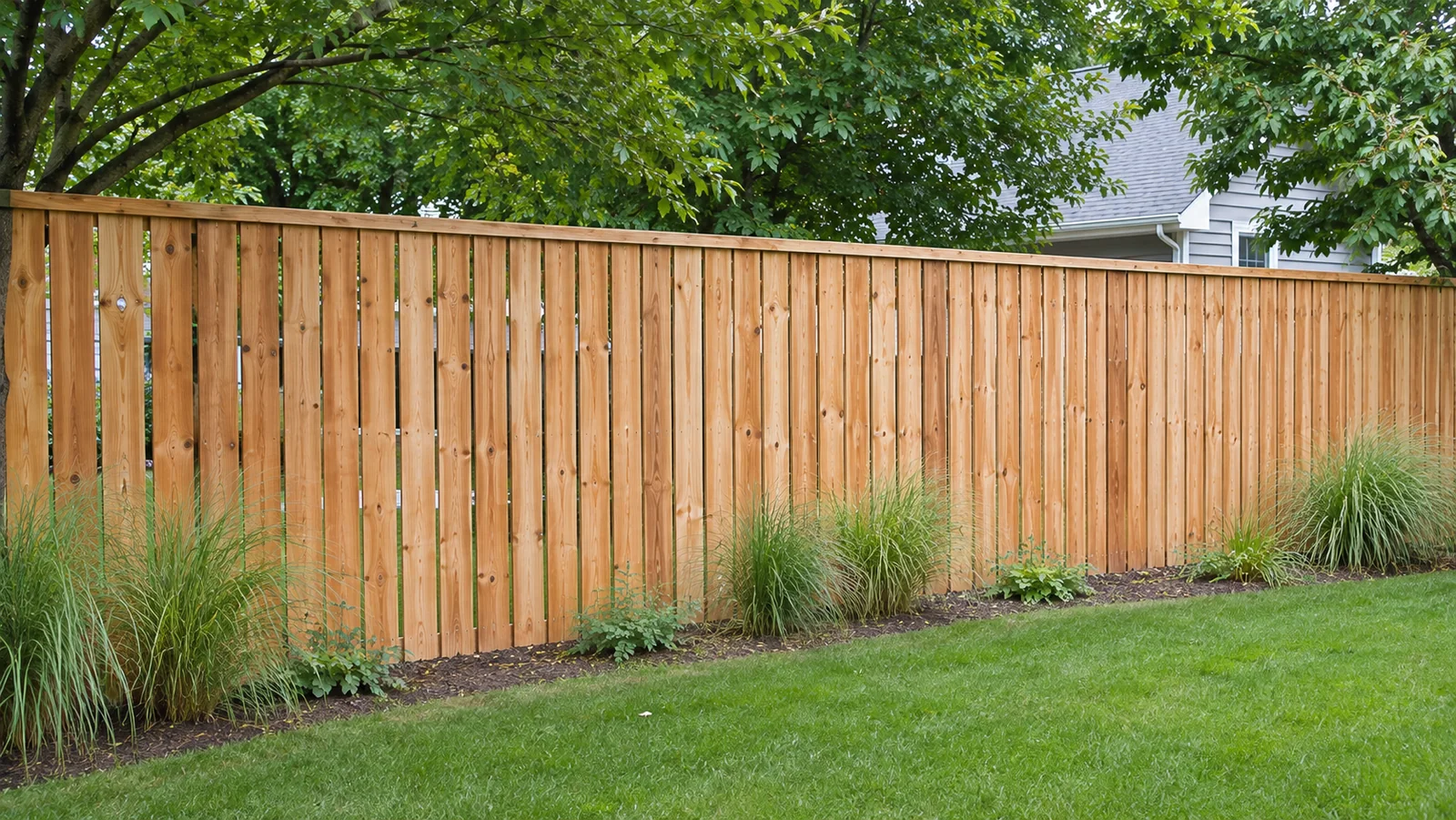
A semi privacy fence is a board fence hung with gaps, so it screens a yard without closing it off. With 1×6 boards, a 1-in gap setting and posts 8 ft apart, the calculator counts 15 boards per section. Hung evenly, those 15 boards leave real gaps of about 0.63 in, so roughly 11% of the fence face is open.
Updated
Advanced: Picket Width & Gap
12 line + 2 gate, 4x4
With 5% waste: 35 rails, 174 pickets/boards.
Hole: 10 in diameter x 2 ft deep, 0.92 cu ft per post.
Total: 28 bags (80 lb) / 42 bags (60 lb) / 42 bags (50 lb) for 14 posts, 12.89 cu ft.
The calculator above is set to spaced 1×6 boards and opens on a 92-ft line around a patio garden, 6 ft tall, with one 4-ft walk gate. Board width and gap sit under Advanced, and both are already filled in for this layout. Other wood layouts, closed and open, are on the fence styles hub.
One row of boards with daylight between them
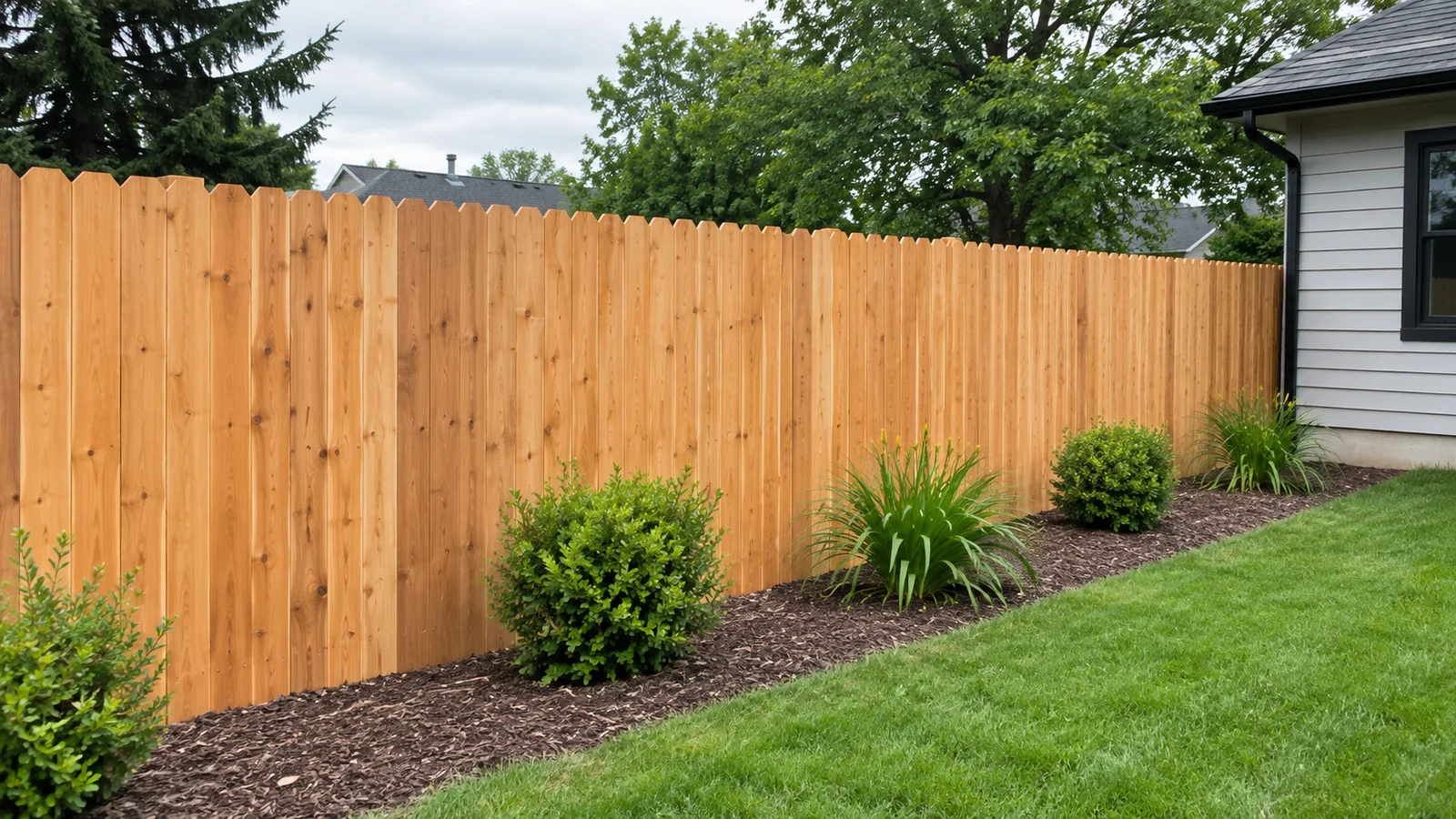
A semi-privacy fence is a single row of vertical boards on one face of the rails, each board set a small distance from the next. Square to the fence you see a stripe of wood, then a sliver of the yard behind, then wood again. At an angle the slivers close up, so a neighbor walking past sees less than one standing straight across. Wind and light pass through every gap.
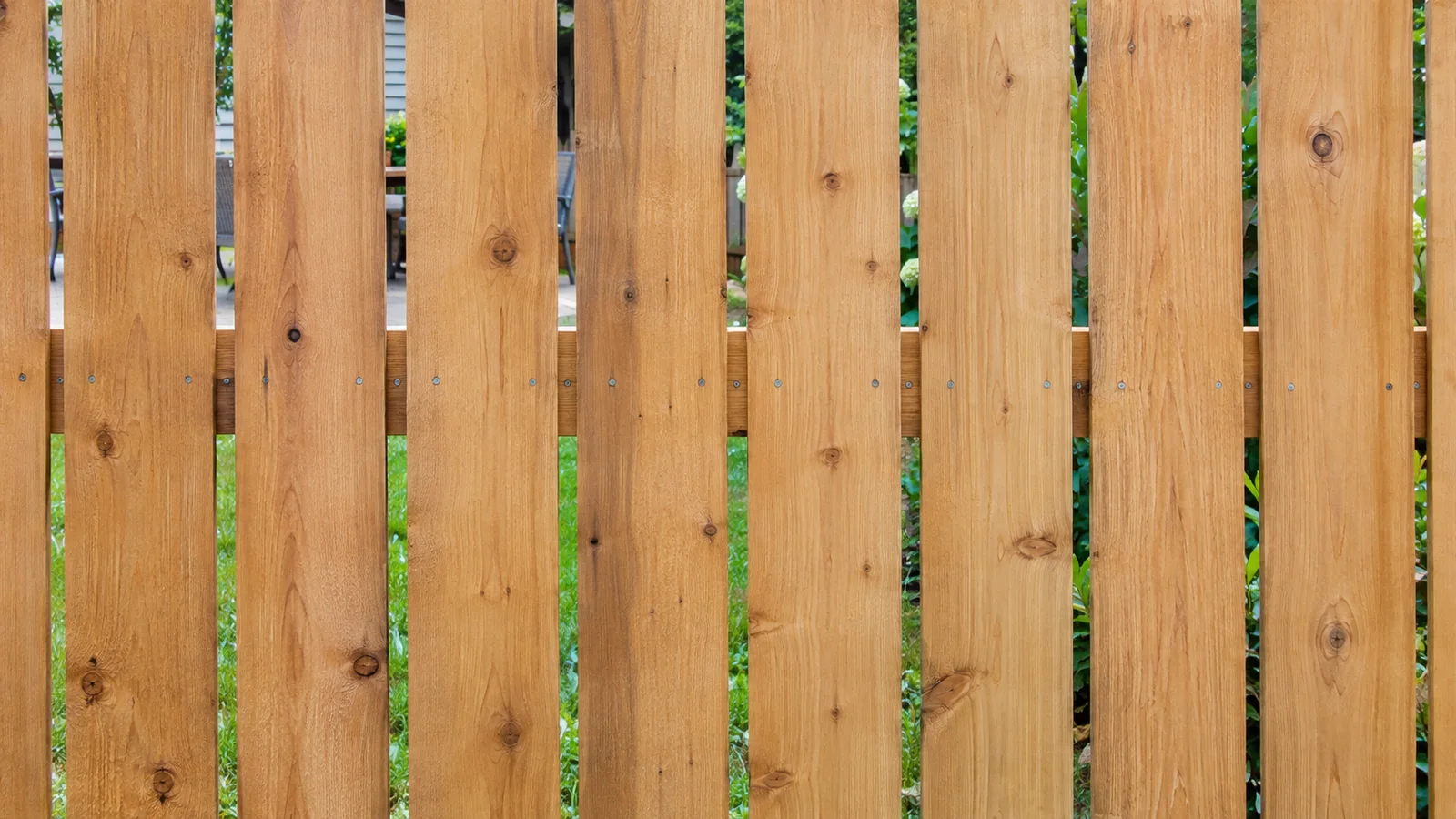
The name is used loosely. Southfield, Michigan's fence ordinance (Section 5.37-1, amended December 2012) defines a "semi-privacy fence" as one "designed and intended to be sight-obscuring, such as a Board-on-Board fence", which is a closed layout on this site. On a quote, ask whether the boards have gaps or are lapped. A shadow box fence closes the same gaps with a second row on the far face, and a board on board fence laps a second layer on the near face. Both take more boards than one spaced row, and the fence board calculator counts them side by side.
The gap setting and the gap you hang
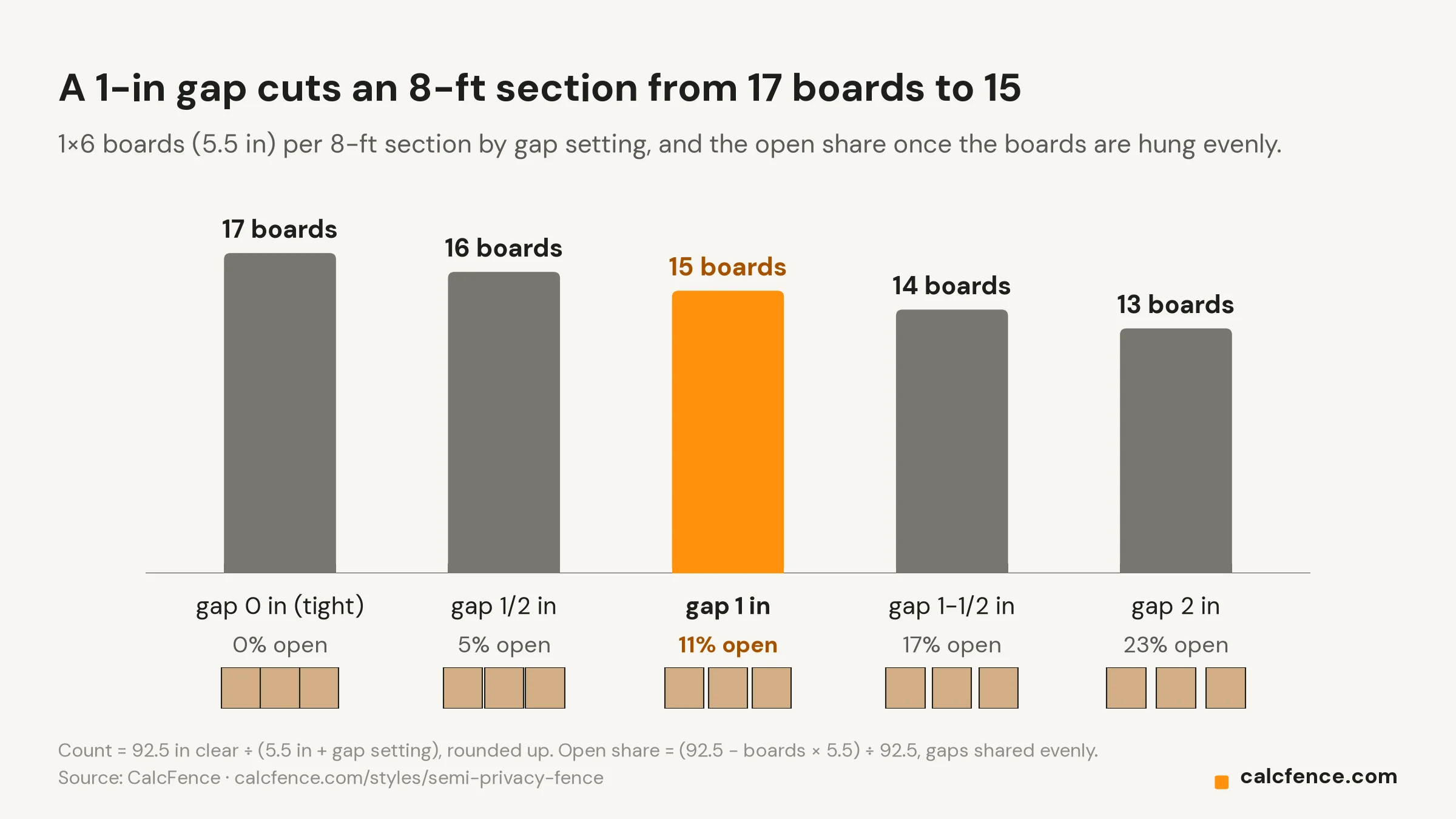
The Gap box is a setting, and the gap you end up with is always a little smaller. The calculator divides the 92.5 in of open span between two 4×4 posts by one board plus one gap, 6.5 in at the defaults, and gets 14.2. It rounds that up to 15 boards so you never run a board short. Fifteen 1×6 boards cover 82.5 in, which leaves 10 in of daylight to share out. With a gap against each post that is 16 gaps of 0.63 in.
Reading the setting as the gap would put a 1-in fence at about 15% open, since 1 in is 15% of a 6.5-in board-plus-gap slot. Hung evenly, the 15 boards leave 10 in open out of 92.5, which is 11% of the section, the figure the chart shows. The difference is the rounded-up board, spread across every gap.
To hang a true 1-in gap, enter 1.25 in. The count drops to 14 per section, and 14 boards spread evenly leave gaps of 1.03 in and about 17% open. The picket fence calculator gives the formula for turning any board count into a hung gap.
How much gap between fence boards?
All rows are 1×6 boards at 5.5 in, 4×4 posts 8 ft apart, gaps spread evenly with one against each post. The last column is the 92-ft patio line with its gate and 5% waste.
| Gap setting | Boards per 8-ft section | Real gap when hung | Open share of the section | Boards for the 92-ft line |
|---|---|---|---|---|
| 1/2 in | 16 | 0.27 in | 5% | 185 |
| 3/4 in | 15 | 0.63 in | 11% | 174 |
| 1 in | 15 | 0.63 in | 11% | 174 |
| 1 1/4 in | 14 | 1.03 in | 17% | 162 |
| 1 1/2 in | 14 | 1.03 in | 17% | 162 |
| 2 in | 13 | 1.50 in | 23% | 151 |
| 2 1/4 in | 12 | 2.04 in | 29% | 139 |
The count moves in whole boards, so neighboring settings can give the same fence: 3/4 in and 1 in both hang 15 boards, and 1 1/4 and 1 1/2 in both hang 14. A half-inch setting leaves gaps barely a quarter inch wide, and at 5% open it reads from a few steps back as a privacy fence.
Where a town sets a minimum open share, the real gap is the one that counts. Shorewood, Minnesota's residential fence handout requires that "all boundary line fences must be at least 25% open in design," and the same 25% applies to front-yard fences, which are capped at 4 ft. A 2-in setting looks like it clears that bar, since 2 in is 27% of its slot. Hung, its 13 boards leave 23% open. It takes 12 boards per section, a 2 1/4-in setting with real gaps of 2.04 in, to reach 29%. Other towns use other thresholds and measure them their own way, and the fence height rules and permits guide covers where to find yours.
How many boards does a semi privacy fence take?
The worked example is a 92-ft line around a patio garden, 6 ft tall, one 4-ft walk gate, posts 8 ft apart, 1×6 boards at a 1-in gap setting, 5% waste on. The gate opening comes off first, and the remaining 88 ft divides into exactly 11 sections, so every bay is a full 8 ft and no short bay carries spare boards.
| Line | Quantity |
|---|---|
| Fence line | 88 ft in 11 sections |
| Posts | 14 (12 line posts and 2 gate posts), 4×4, 8 ft long, 2 ft in the ground |
| Rails | 33, or 35 with waste, 3 per section, 8 ft long |
| Boards, 1×6 | 165, or 174 with waste |
| Concrete | 28 bags of 80-lb mix, 2 per post |
| Fasteners | 990, 2 per board at each rail |
Built tight as a privacy fence, the same line takes 197 boards, so the gaps save 23 boards, about 12%. Posts, rails and concrete do not change at all, because they follow the length of the line and the height, never the board spacing. The gate leaf, its hinges and latch are not on the list.
Cut one spacer to the real gap, 5/8 in for this layout, and hang the first board 5/8 in off the post. If the fifteenth board leaves a different gap against the far post, the error is split over the last few boards rather than dumped in one.
Around a patio or garden
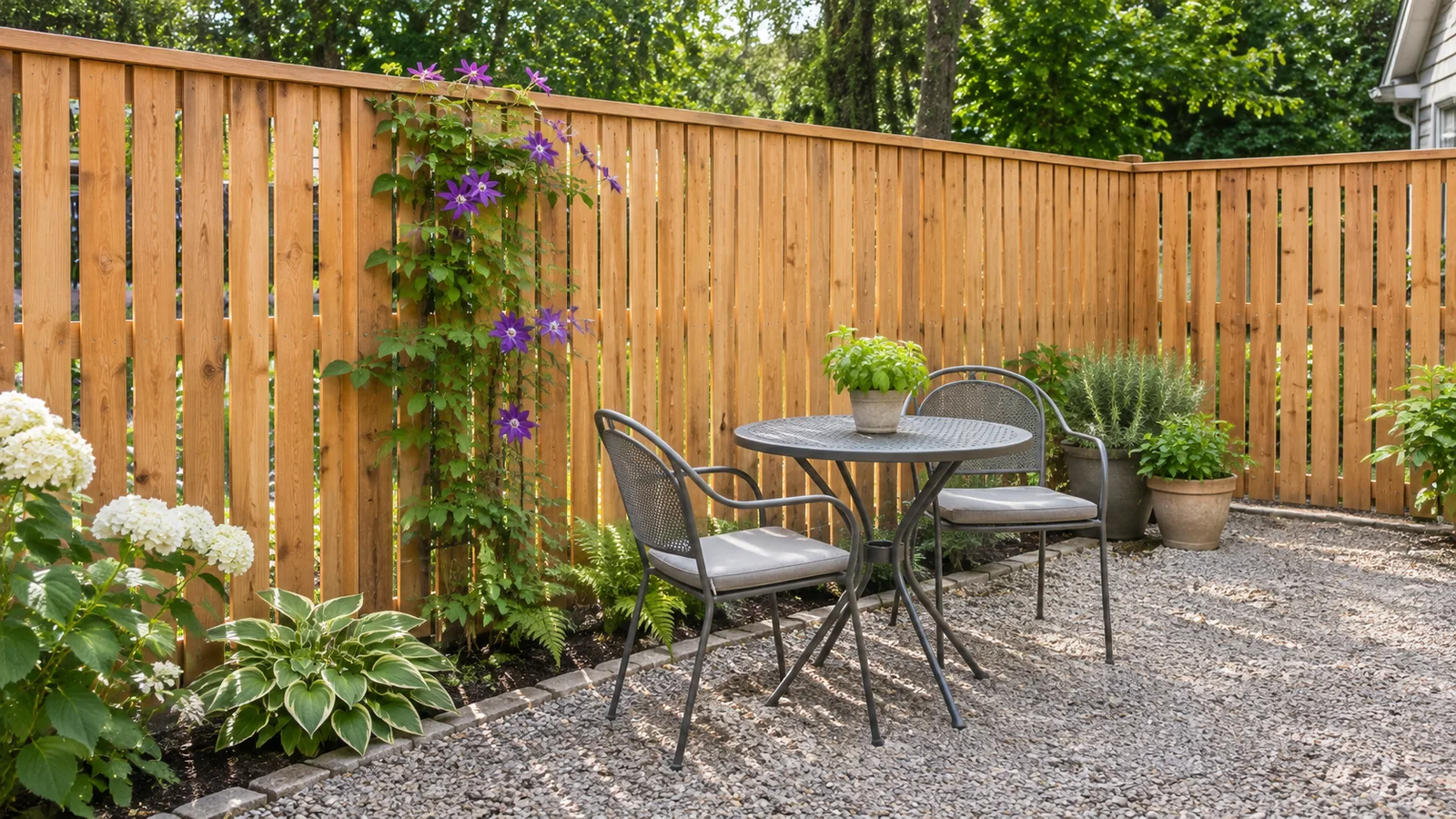
Dropped to 4 ft along a garden bed, the same 92-ft line keeps its 14 posts, 174 boards and 28 bags of concrete, but takes 2 rails per section instead of 3, so 24 rails with waste and 660 fasteners. At 4 ft a standing adult sees over the top, so the gaps there are about light and air for the bed rather than screening, and a climber can be tied to the rails through them.
What a semi-privacy fence costs
The national cost table has no row for spaced 1×6 boards. The nearest is wood privacy, at $37 per foot installed for a 6-ft fence at the mid figure, because it prices the same 1×6 boards on the same posts and rails. A semi-privacy fence at a 1-in setting uses 88% of the board face of a privacy fence (82.5 in of board per section against 93.5 in). The wood picket row, at $28 per foot, is priced for 1×4 pickets with 2.5-in gaps, and a section of those carries only 56 in of board, so spaced 1×6s hold 47% more wood than the fence that row describes.
Neither figure is a semi-privacy price. The holes, posts and rails are the same as on a privacy fence and the board saving is the 12% above, so the privacy rate runs a little high for this layout and the picket rate, with less wood and a lower labor line in the table, runs low. The wood fence cost calculator prices the privacy version for your length and state.
Key Takeaways
- Moving the posts 10 ft apart puts 18 boards in each 116.5-in span, and they hang with 0.92-in gaps, so the same 1-in setting comes out 15% open on that spacing.
- At 8 ft tall the calculator switches to 6×6 posts, which narrows the span to 90.5 in; 14 boards then hang with 0.9-in gaps.
- 1×8 boards with a 1-in gap setting hang only 0.42 in apart, 6% open, 12 to a section.
- In 60-lb bags the 92-ft line takes 42 bags of concrete.
Frequently Asked Questions
Is a semi-privacy fence the same as a picket fence?
Built the same way, with one row of spaced boards on the rails. The picket calculator starts at 1×4 pickets with 2.5-in gaps on a 4-ft fence, while a semi-privacy fence keeps 1×6 boards close together, here at 6 ft.
What gap should I use between 1×6 fence boards?
Pick the open share you want from the table and enter the setting beside it. For gaps you can see from across a yard, a setting of 1 1/4 in hangs at just over 1 in; for a screen that is mostly closed, 3/4 to 1 in hangs at 5/8 in.
Can I use 1×4 boards instead?
Yes. At a 1-in setting the calculator counts 21 per section, which hang 0.86 in apart and leave 21% open, 243 boards for the 92-ft line with waste.
Does the gap change how many posts I need?
No. The 92-ft line takes 14 posts and 28 bags of concrete at every gap in the table, because posts follow the length, the gates and the spacing.
Does a semi-privacy fence count as an open fence?
Only where its open share meets the local definition. Under Shorewood's 25% rule, a 1-in setting at 11% open does not, and a 2 1/4-in setting does.
Sources
- City of Southfield, Michigan, Zoning Ordinance Section 5.37-1, Fence Regulations (amended by Ordinance 1598), December 14, 2012, accessed November 1, 2026: cityofsouthfield.com/sites/default/files/2019-07/fence-ord-handout-1.pdf
- City of Shorewood, Minnesota, "Residential Fences" handout, January 15, 2026, accessed November 1, 2026: shorewoodmn.gov/DocumentCenter/View/129