What Is a Shadow Box Fence?
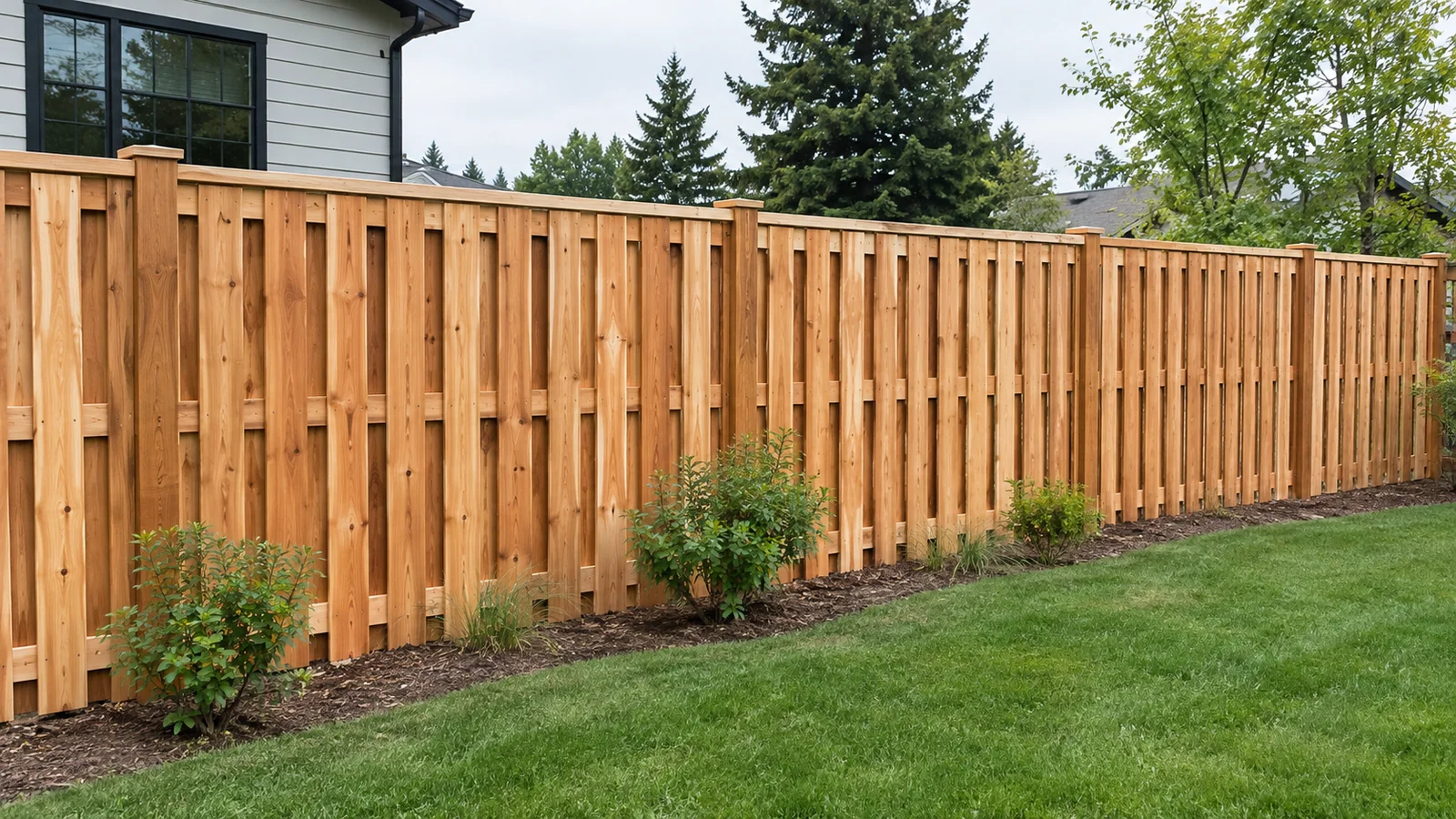
A shadow box fence alternates its boards between the two faces of the rails, so every gap on one face is closed by a board on the other and both yards see the same finished side. With 1×6 boards, 2.5-in gaps and posts 8 ft apart, each section takes 24 boards, 12 per face, and a 120-ft back line with one 4-ft gate needs 378 boards with 5% waste.
Updated
Advanced: Picket Width & Gap
16 line + 2 gate, 4x4
With 5% waste: 48 rails, 378 pickets/boards.
Hole: 10 in diameter x 2 ft deep, 0.92 cu ft per post.
Total: 36 bags (80 lb) / 54 bags (60 lb) / 54 bags (50 lb) for 18 posts, 16.57 cu ft.
Boards on both faces of the rails
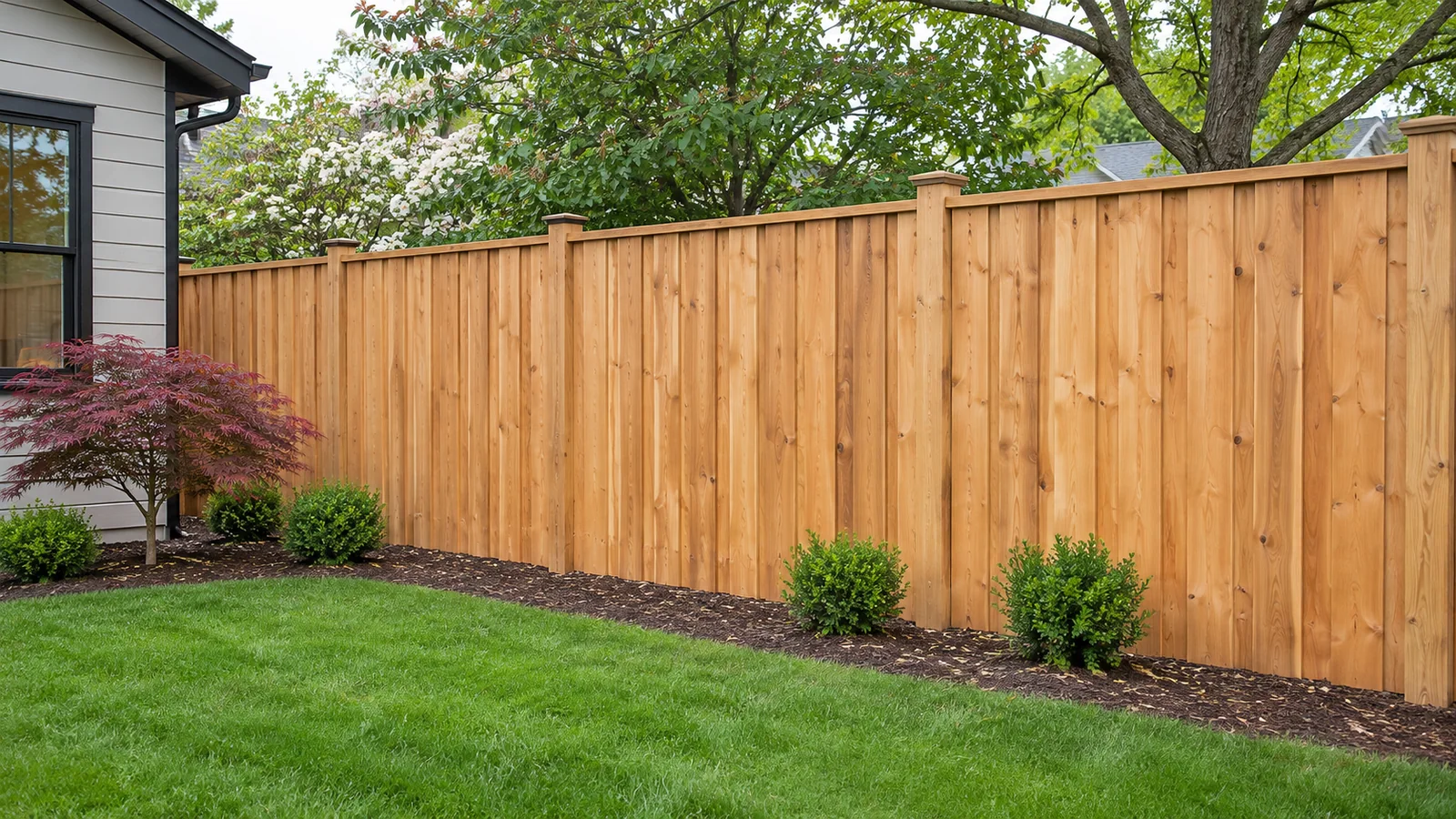
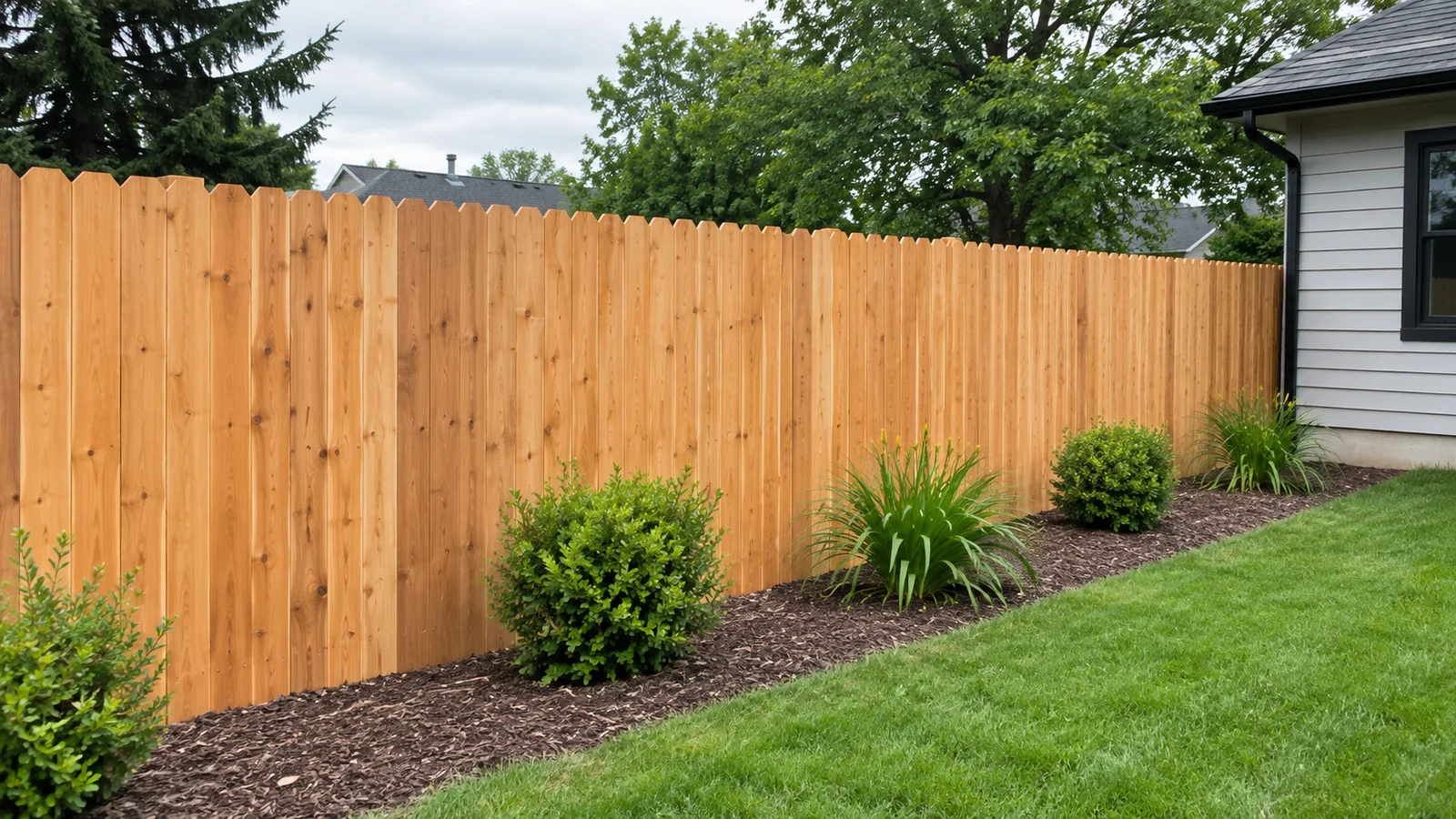
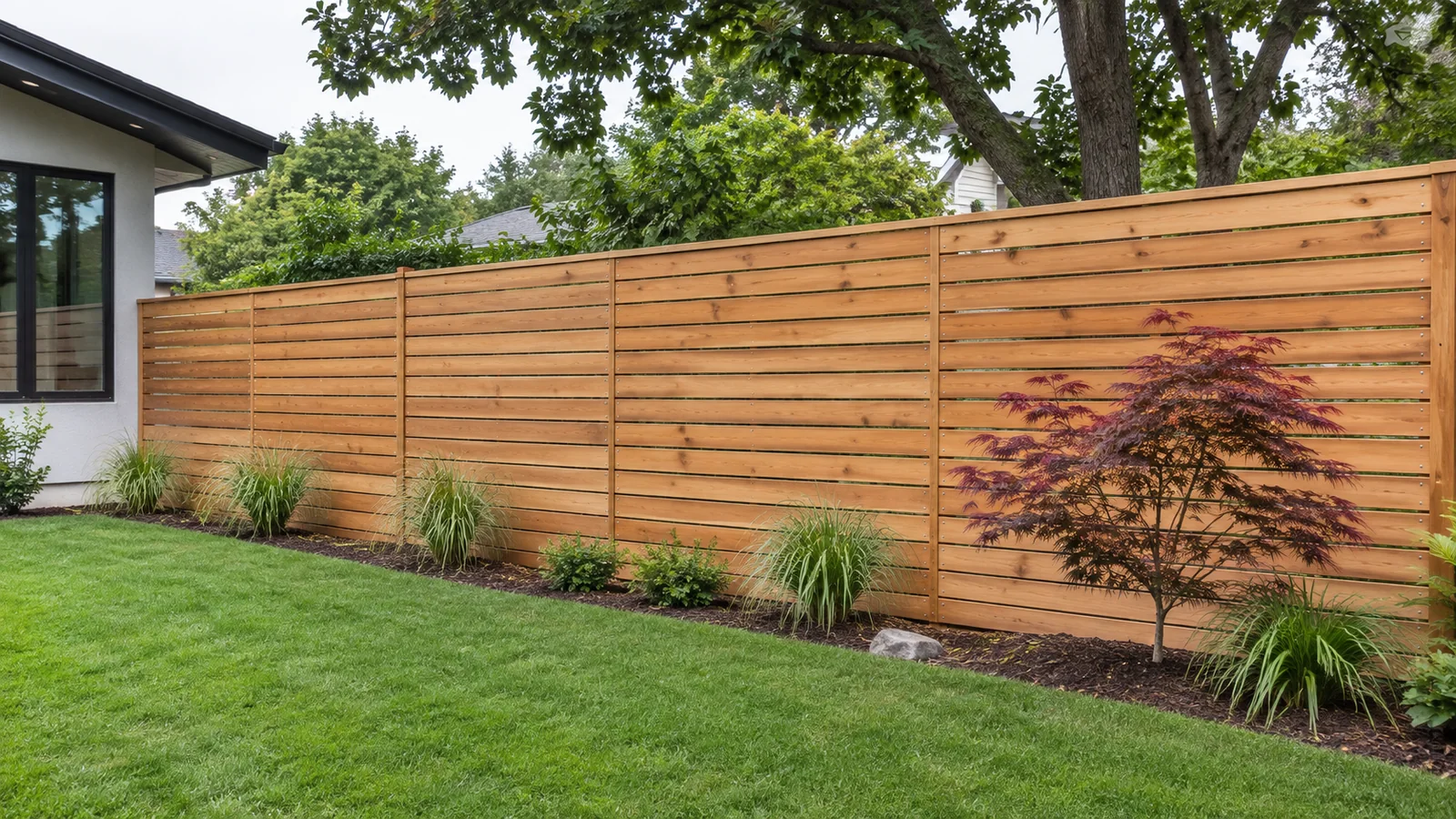
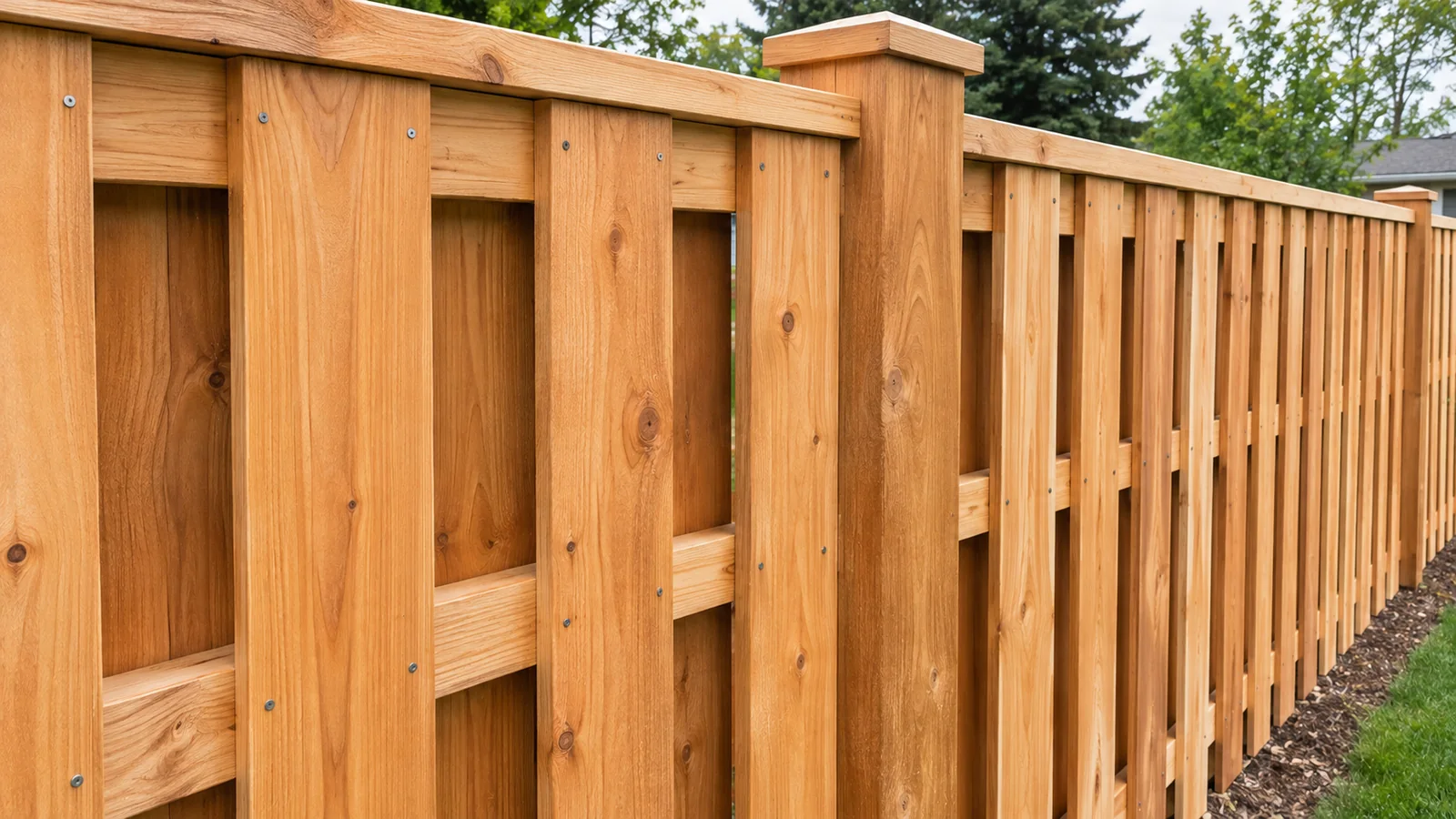
Stand at one end of the fence and look along the top. The first board sits on your face of the rails, the next on the far face, and the pattern repeats post to post. On your face the boards stand 2.5 in apart. Each board on the far face is centered on one of those gaps, and since a 1×6 is 5.5 in wide, it laps the boards beside it by 1.5 in on each edge. The rails run between the two rows, which is where the style gets its depth and its name. It is one of the closed wood layouts on the fence styles hub.
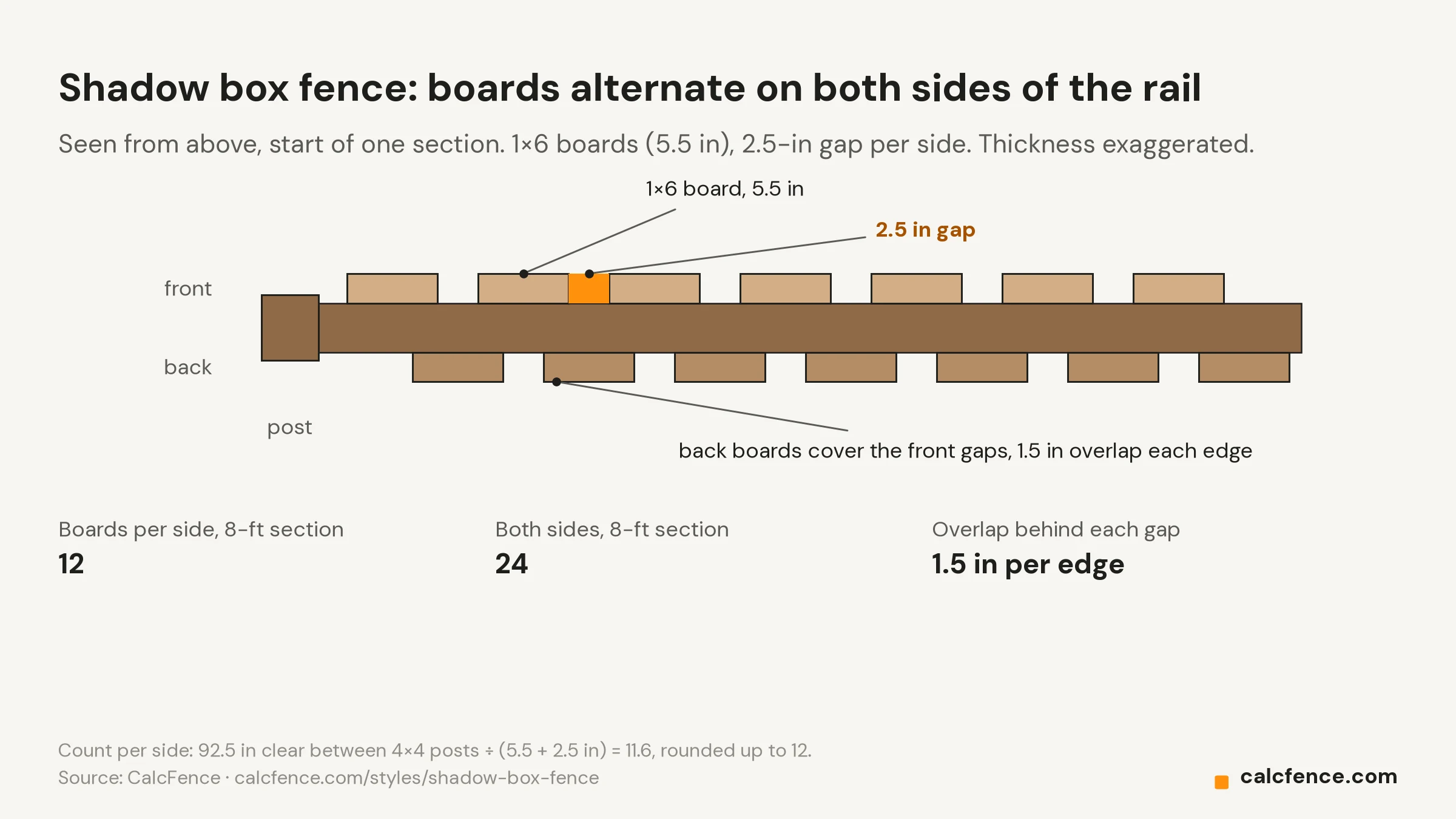
Between 4×4 posts 8 ft apart there are 92.5 in of open span, and each face takes 12 boards across it. The fence board calculator shows that division and what narrower or wider gaps do to the count. The calculator above is fixed to this layout and starts at the 120-ft example further down.
Can you see through it?
Not straight on. Square to the fence, the 1.5-in lap on each edge leaves no line of sight, so a neighbor's lawn chair stays hidden. Walk along it and look at a slant, and the slot between the two rows of boards opens up. You catch slices of the yard behind, and light and air come through the same slots. That is the trade against a board on board fence, where the second layer is fastened straight onto the first and nothing passes at any angle.
Local rules decide whether that counts as an open fence. Wheaton, Illinois, in fence Ordinance F-2045 passed on November 20, 2017, counts a shadow box as open only "when viewed perpendicular there is a one-quarter inch or greater separation between the alternating vertical boards." The layout on this page laps every gap by 1.5 in, so seen straight on it shows no separation and would count as a solid fence in Wheaton. The same ordinance allows only open fences, up to 4 ft, in a side yard along a street, apart from a named list of high-volume streets where 6 ft is allowed. There, a shadow box needs back boards narrower than the front gaps to qualify. Other towns word it differently, and the fence height rules and permits guide covers where to look up yours.
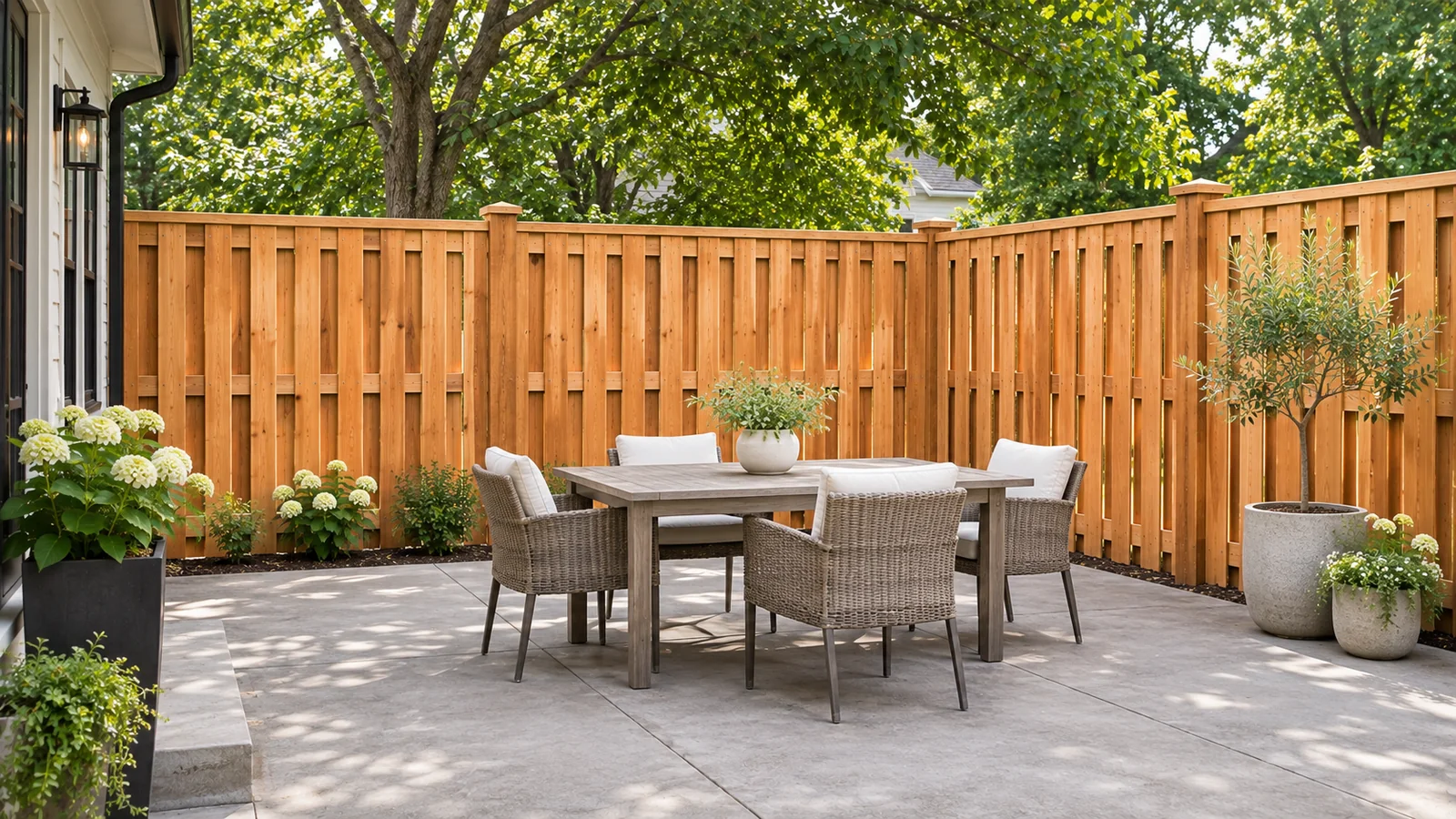
Around a patio the slant view matters less than you might expect, because seated guests look at the fence close to square. Two runs meeting at a corner post screen two sides of a table and still let a breeze through.
Shadow box vs board on board
The two names get mixed up. Wheaton's ordinance defines "shadow box or board-on-board" as one fence that "is the same on both sides." On this site they are two layouts with two board counts: board on board stacks both layers on the same face of the rails, and shadow box splits them across the rails. Here they are on the 120-ft example, next to a plain fence of tight 1×6 boards:
| Layout, 6 ft | Where the boards sit | Boards per 8-ft section | Boards for the 120-ft line, with waste | Fasteners | View at a slant |
|---|---|---|---|---|---|
| Shadow box | alternating on both faces, 2.5-in gaps | 24 | 378 | 2,160 | slots between the rows |
| Board on board | two layers on one face, 1-in lap | 21 | 331 | 1,890 | closed |
| Tight privacy | one layer, no gaps | 17 | 268 | 1,530 | closed |
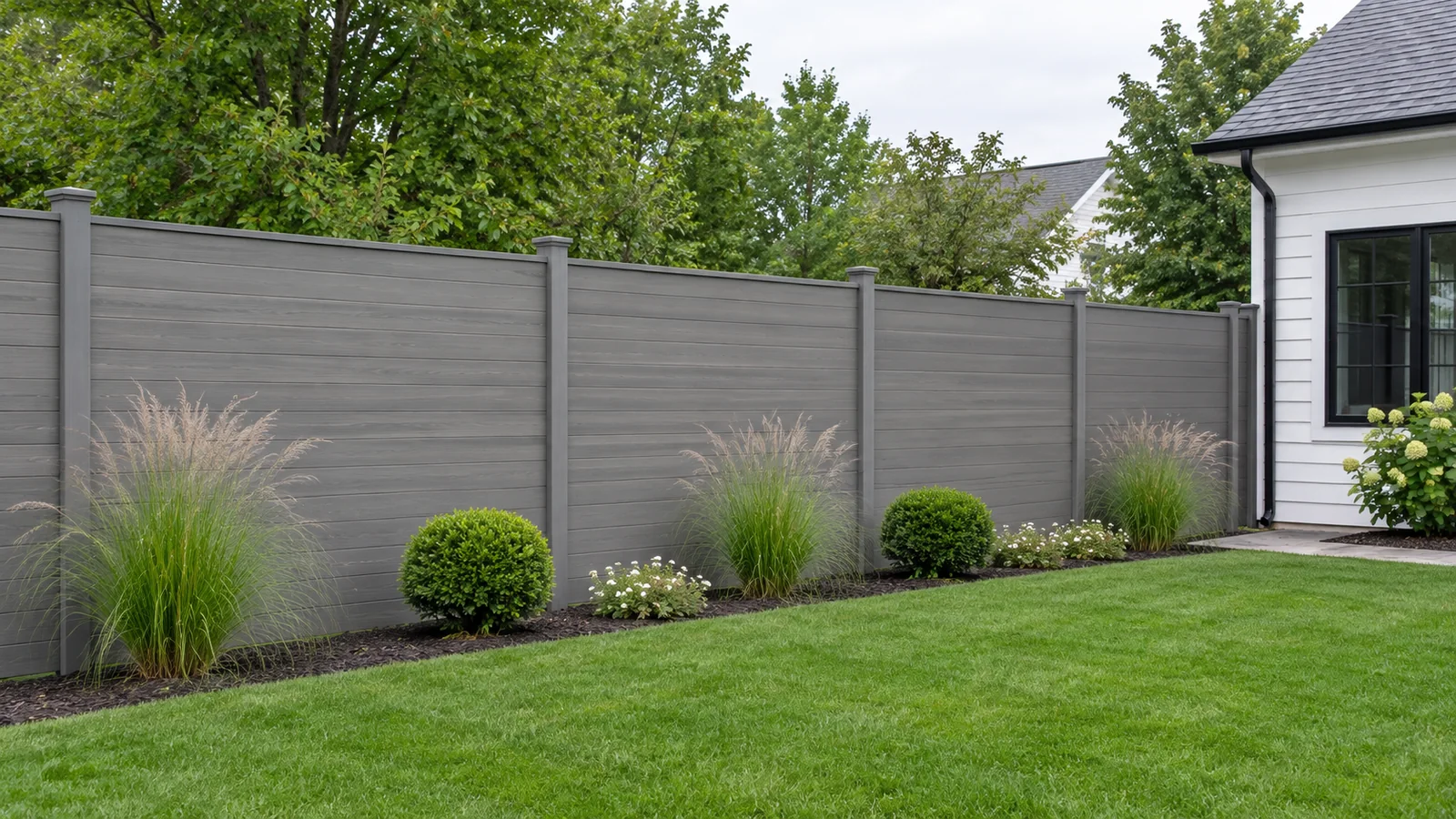
Shadow box uses 47 more boards than board on board on this line and 110 more than tight boards. Posts, rails and concrete stay the same in all three rows. A horizontal fence is the other way to change the look on the same posts, with boards laid flat instead.
How many boards does a shadow box fence take?
The worked example is a 120-ft back property line, 6 ft tall, with one 4-ft walk gate and posts 8 ft apart. Taking the gate opening out leaves 116 ft of fence, which divides into 15 sections.
| Line | Quantity |
|---|---|
| Fence line | 116 ft |
| Posts | 18 (16 line posts and 2 gate posts), 4×4, 8 ft long, 2 ft in the ground |
| Rails | 45, or 48 with waste, 3 per section, 8 ft long |
| Boards, 1×6 | 360, or 378 with waste |
| Concrete | 36 bags of 80-lb mix, 2 per post |
| Fasteners | 2,160, 2 per board at each rail |
Half of those boards go on the far face, and they are fastened from that side. On a back property line that means working from your neighbor's yard for half the boards, or building each section on your side and leaning over the top, which gets awkward at 6 ft. Ask before the first post goes in.
The national cost table puts a 6-ft shadow box at $27 per foot installed at the mid-range figure, and this 116-ft line with its gate and a permit comes to about $3,650. The wood fence cost calculator breaks that into materials, labor and gate, with a state adjustment.
A good neighbor fence on a shared line
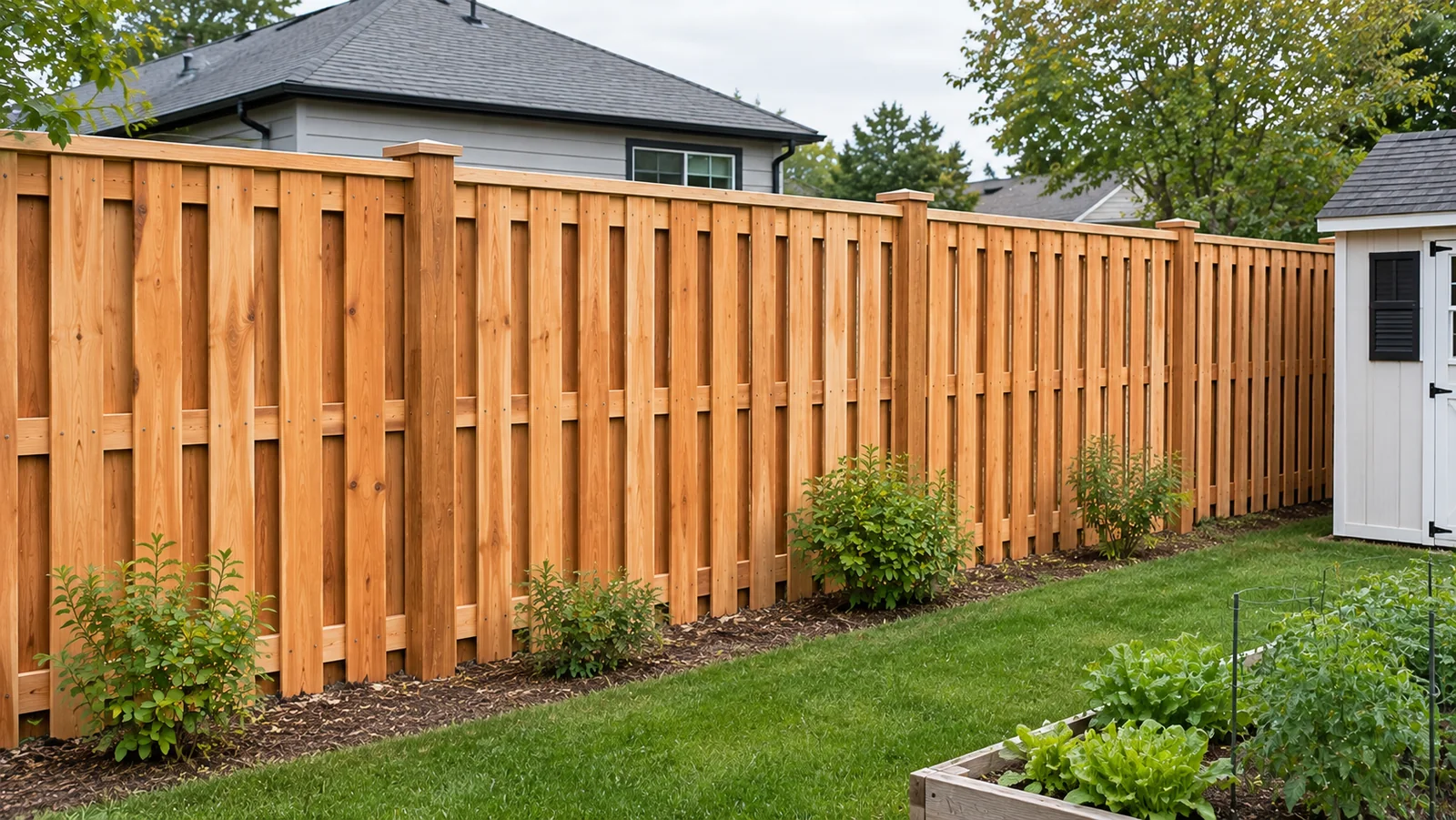
"Good neighbor fence" is the trade name for a fence with no back side. Top Rail Fence, an installer, defines it in an August 4, 2025 post as "a fencing style crafted with dual-sided design, offering an attractive appearance on both sides," built with "alternating panels, shadowbox designs, or symmetrical layouts." A shadow box built with the rails between the two rows of boards fits that description: the posts and rails show the same way from both yards.
That settles a rule some cities write into their fence codes. Eau Claire, Wisconsin's residential fence brochure says the "finished surface" of a wood fence faces the surrounding properties, and adds that for "a double-sided fence, where an equal amount of supporting posts and framing members are visible on both sides of the fence, each side shall be considered to be a 'finished surface'." Under Eau Claire's wording, a shadow box built that way has no wrong side to face the neighbor; other cities may word the rule differently, so ask your building department.
Stain, cap and trim
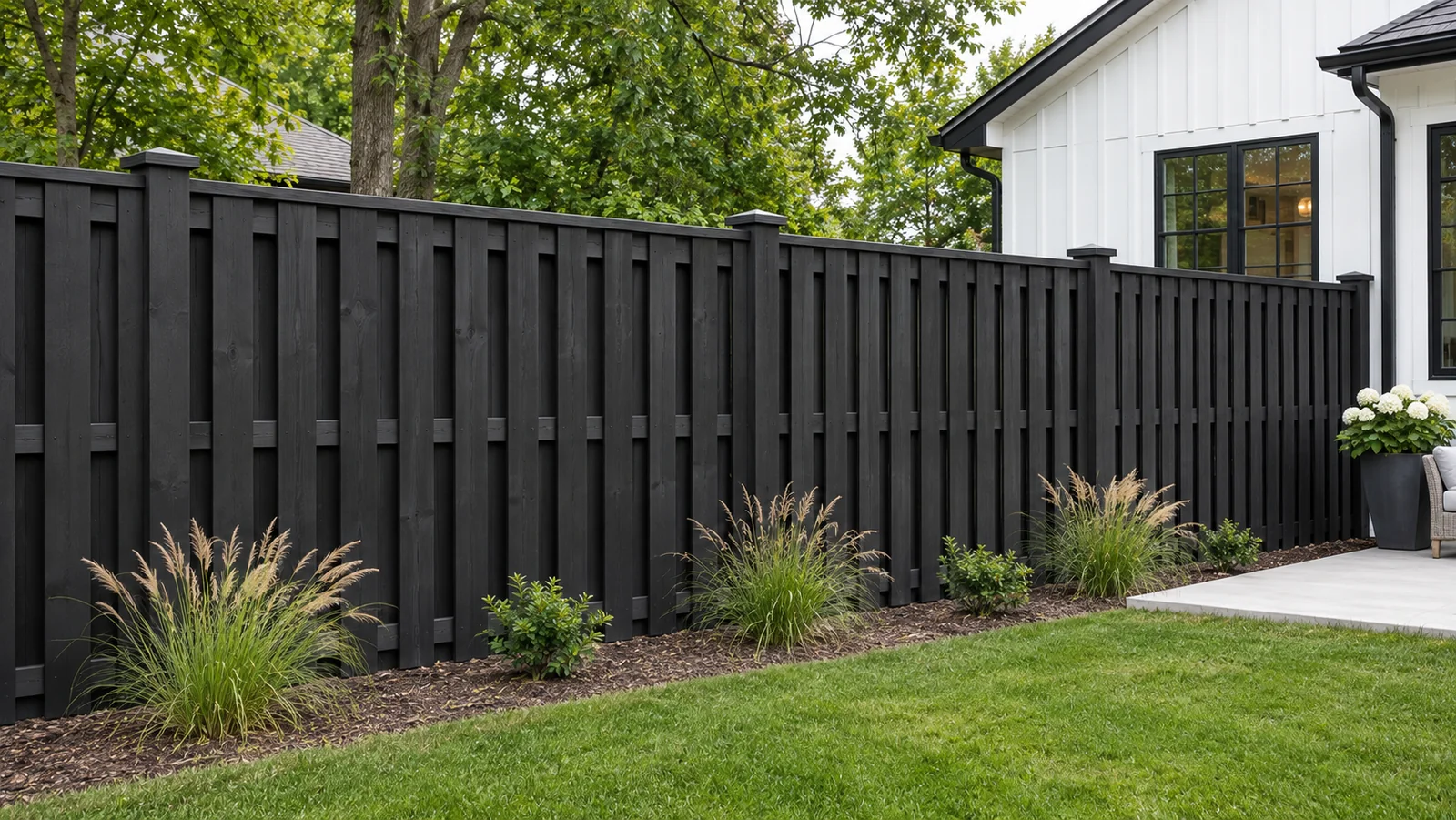
A solid stain covers the alternating faces in one even color, and a dark one makes the depth between the rows read as a shadow line. Stain both faces, plus the board edges inside the slots, before the far row goes on, since a brush barely reaches between the rows once both are fastened.
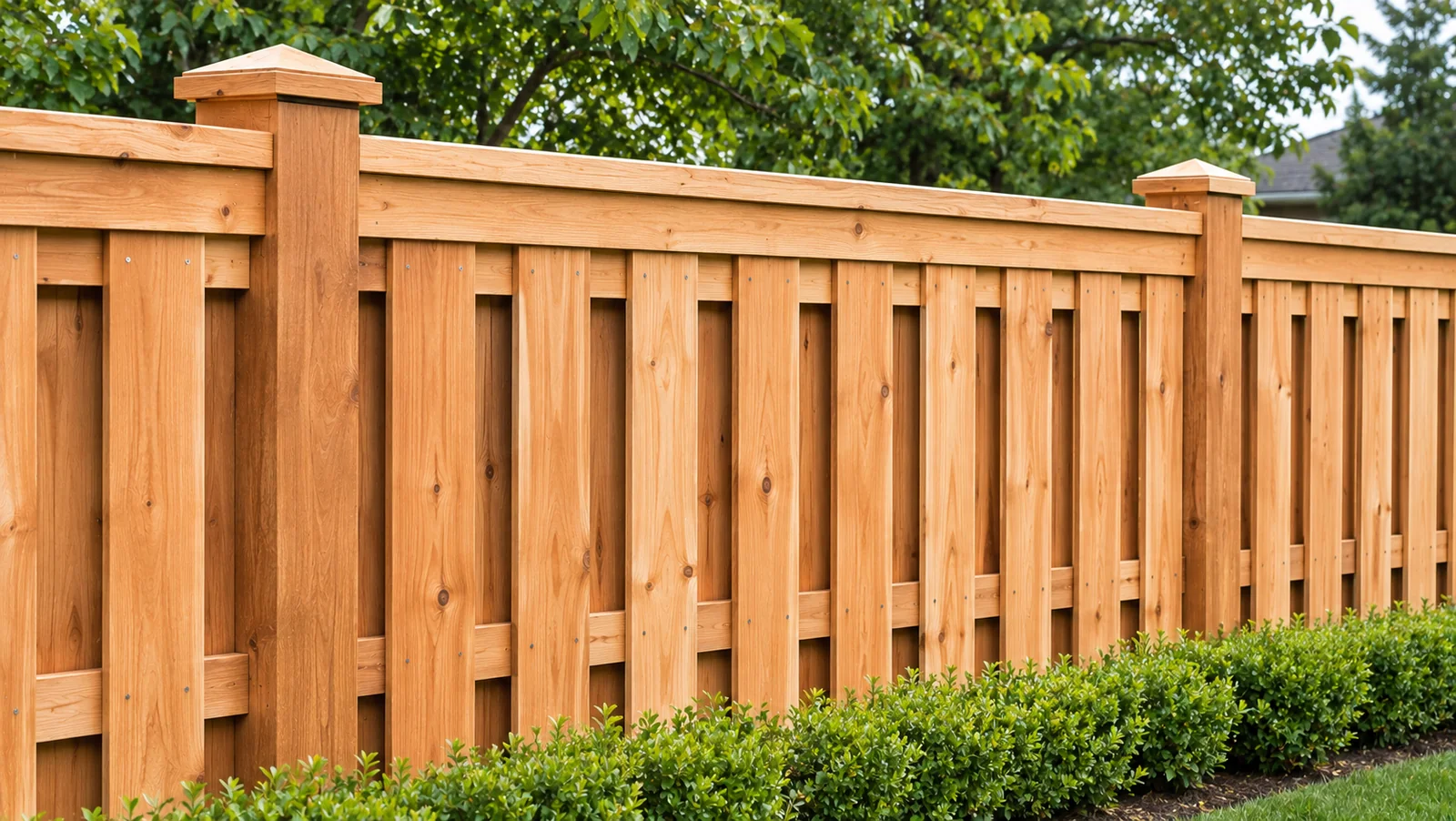
A cap board ties the tops of both rows together and covers their end grain. The calculator's list has no cap line, so add it yourself: 116 ft of fence is 14.5 lengths of 8-ft stock, call it 15 cap boards, and 15 more trim boards for each face that gets trim.
The shadow box gate
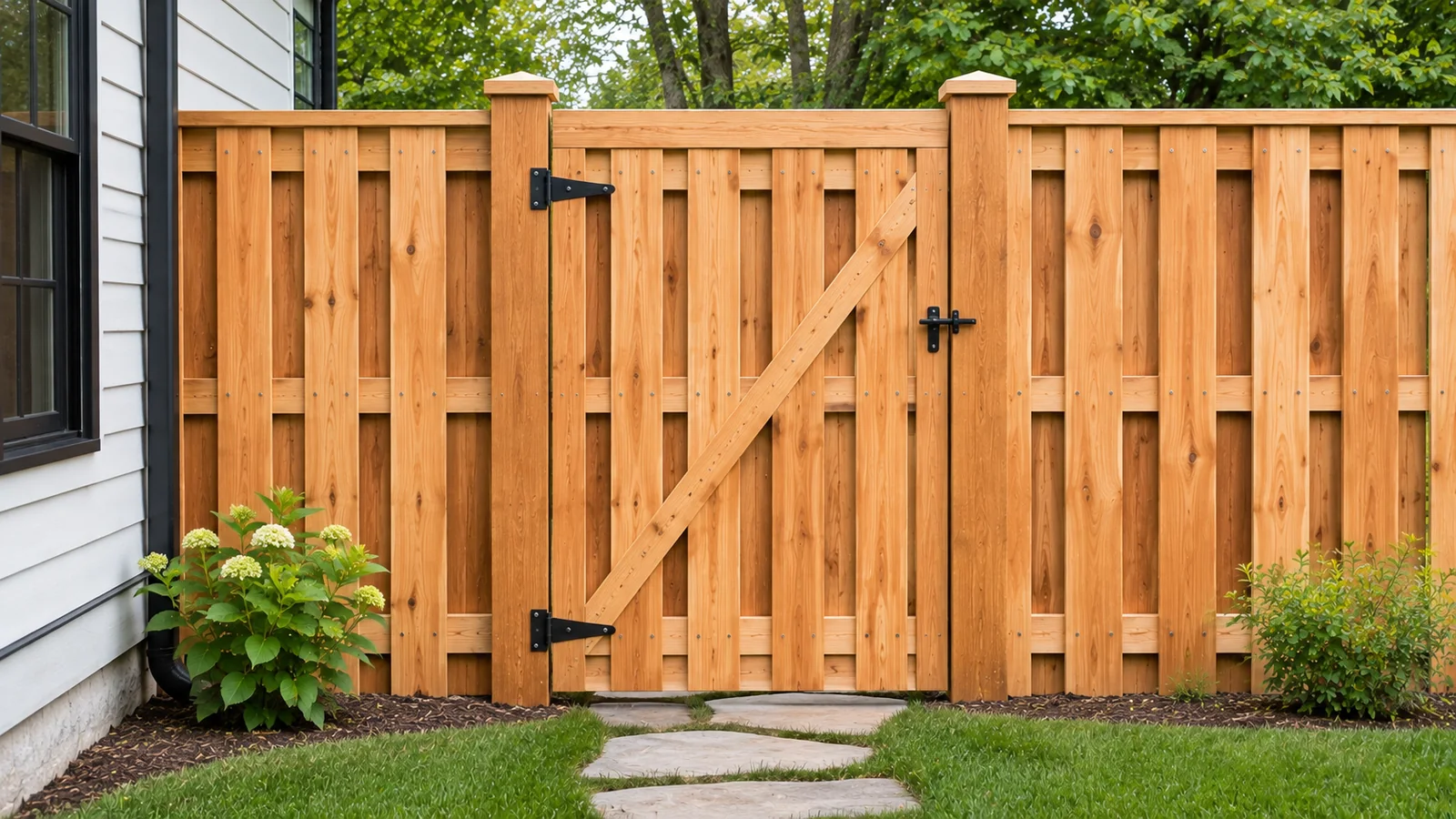
A gate that matches the fence carries boards on both faces of its frame, which makes it heavier than a single-faced leaf of the same width. The 44.5 in of clear span between two 4×4 posts 4 ft apart holds 12 shadow box boards, against 9 tight privacy boards, so a third more wood hangs on the hinges. The calculator takes the 4-ft opening out of the fence line and adds the 2 gate posts; the wood fence calculator lists what it leaves to you for the leaf itself.
A 4-ft shadow box along a garden
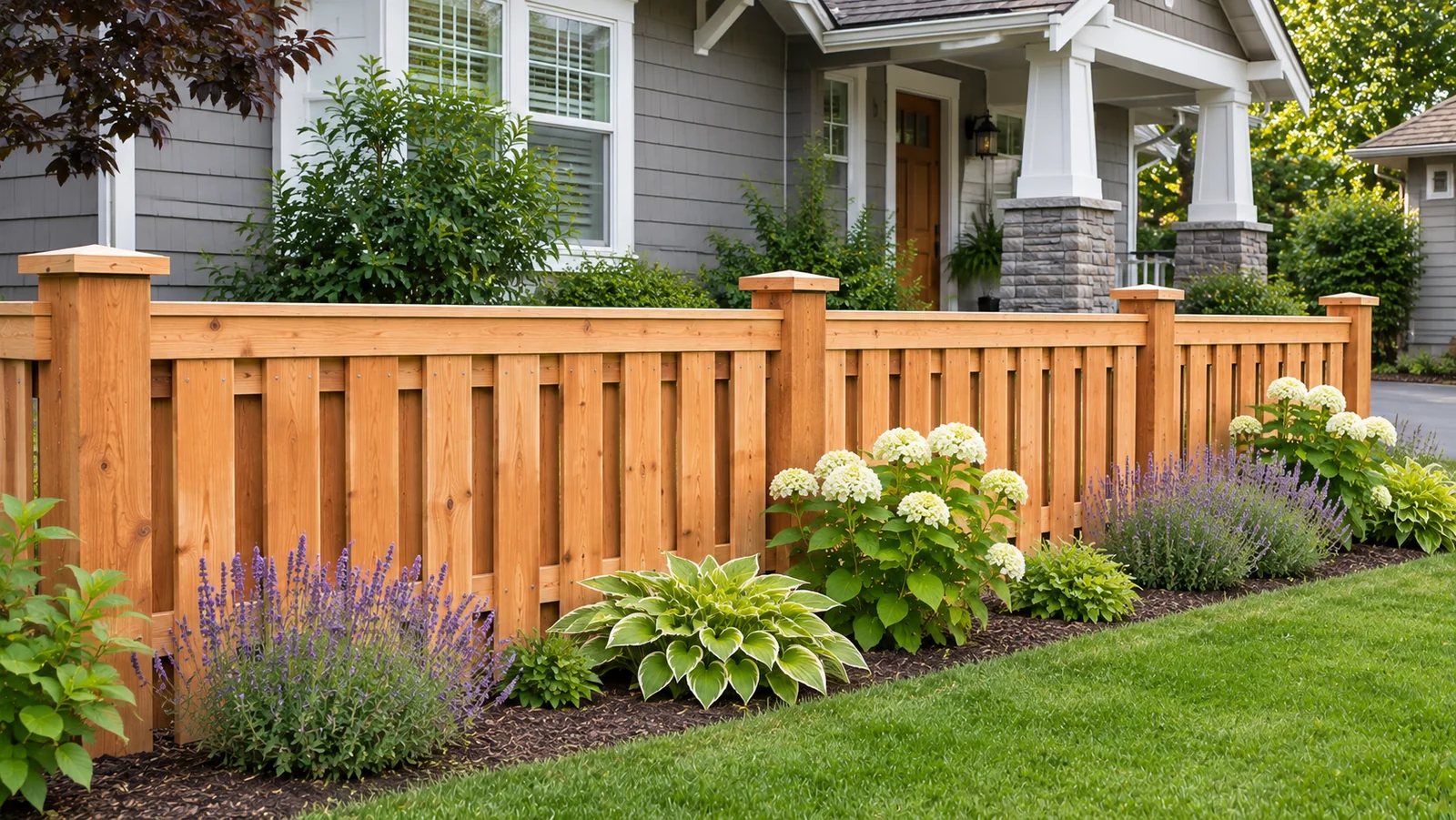
At 4 ft the layout keeps 24 boards per section but drops to 2 rails, so the 120-ft line needs 32 rails with waste instead of 48 and 1,440 fasteners instead of 2,160. Posts stay 4×4, 8 ft long, 2 ft deep, with the same 36 bags of concrete. The installed mid rate falls by about a fifth against the 6-ft fence. Low enough to talk over, it suits a front bed. Where a town allows only open fences, the lapped layout may not qualify, as the Wheaton test above shows.
Key Takeaways
- Set the posts 10 ft apart on the 120-ft line and the fence drops to 15 posts and 38 rails with waste (now 10-ft rails), while each bay grows to 30 boards and the board total stays at 378.
- The 5% waste allowance adds 18 boards to the 360 the sections need.
- In 60-lb bags the concrete for the 18 posts becomes 54 bags.
- The national cost table's mid installed rate for 6-ft board on board is about 1.67 times the shadow box rate.
Frequently Asked Questions
How many boards per foot does a 6-ft shadow box need?
Three. Twenty-four 1×6 boards cover each 8-ft section, before waste.
Can a shadow box be 8 ft tall?
The calculator handles it: on the same 120-ft line it switches to 6×6 posts 12 ft long, set 3 ft deep, with 4 rails per section and 54 bags of 80-lb concrete. Wheaton's 2017 ordinance, for one, allows 8 ft only in a few listed cases, such as along a railroad or a lot line bordering a business district, so check the limit first.
What board sizes work for shadow box?
Any width, as long as the gap is narrower than the board. With 1×4 boards and 1.5-in gaps the lap is 1 in per edge and a section takes 38 boards; 1×8 boards with 3.25-in gaps lap 2 in and take 18.
Is shadow box just a picket fence on both sides?
Close. Each face on its own is a row of spaced boards, but the gaps are narrower than the boards behind them, so the two rows close each other off when seen square, which a single picket row cannot do.