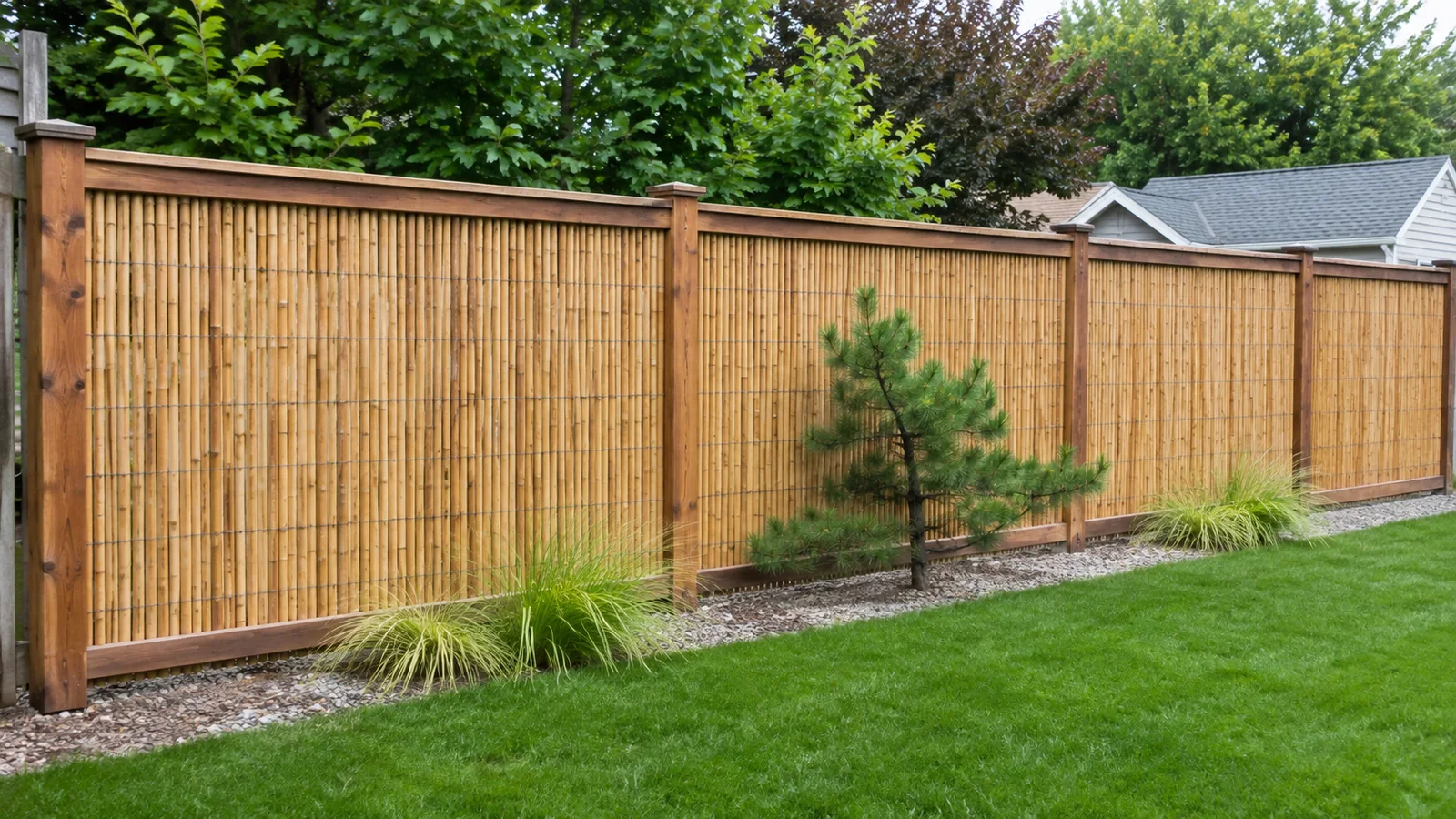
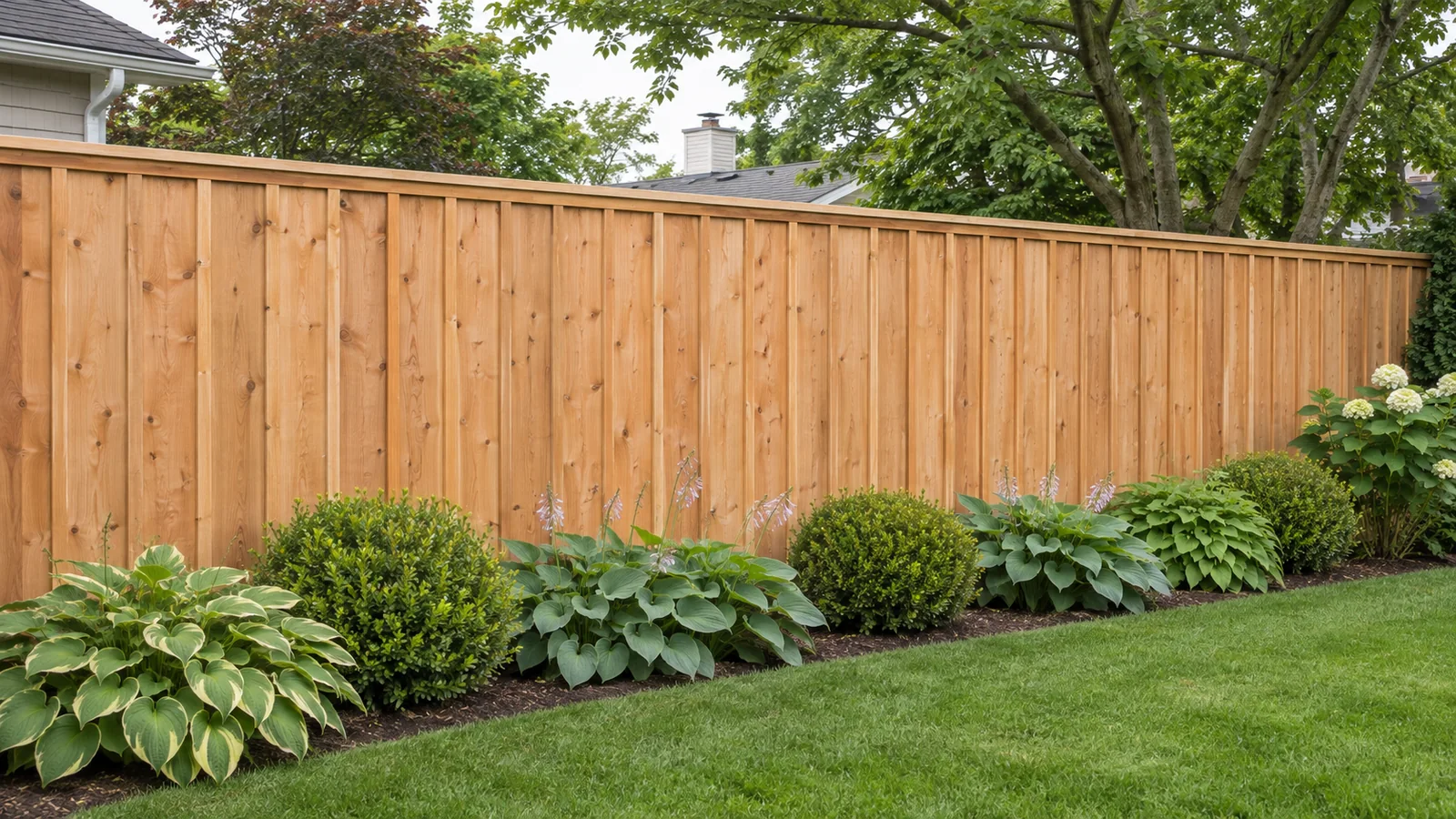
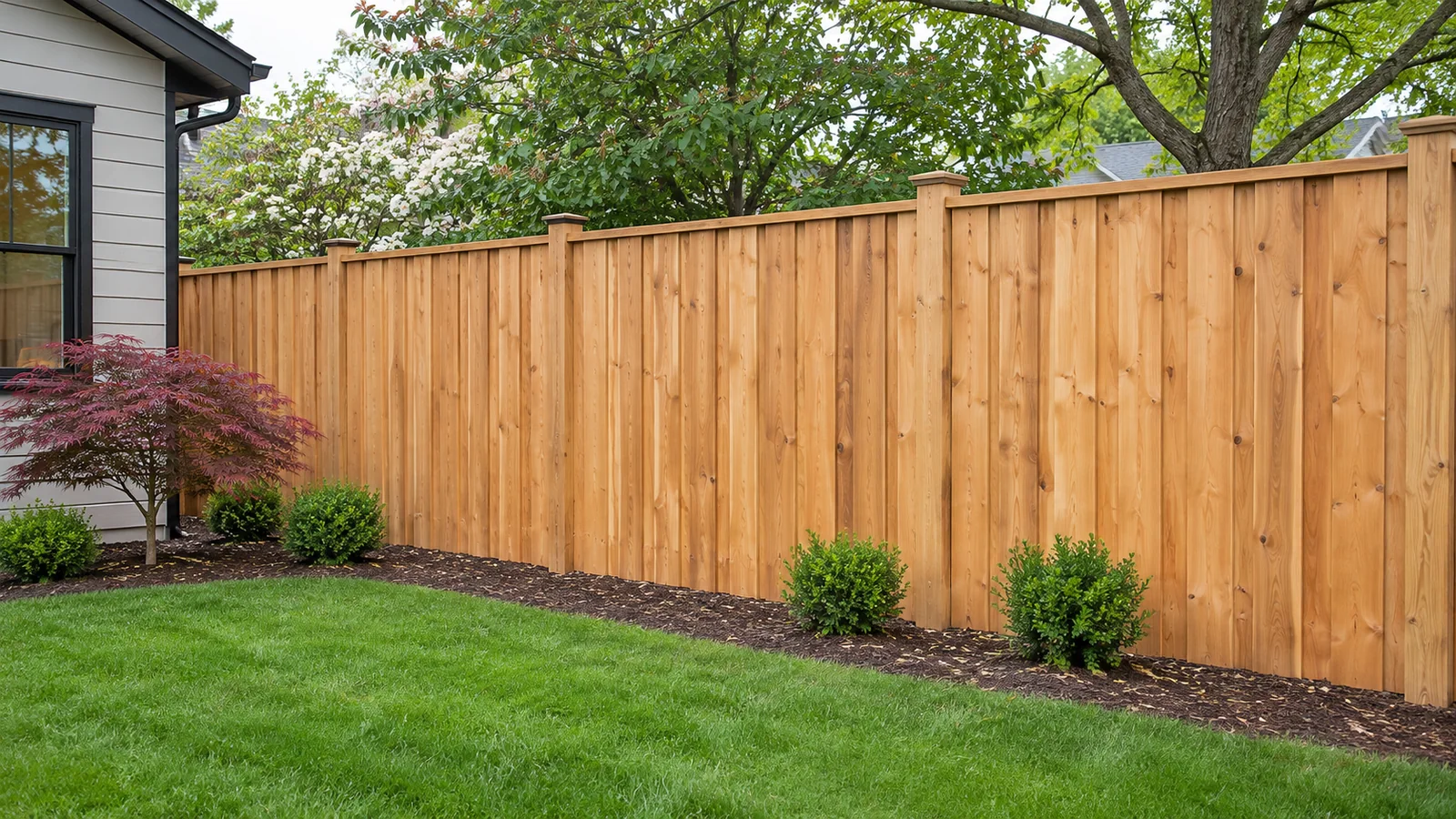
What is a dog ear fence?
A dog ear fence is a wood fence whose boards have both top corners clipped off at an angle, leaving a short flat top. Set tight between 4×4 posts 8 ft apart, 1×6 dog ear boards take 17 to a section, so a 68-ft front-yard run at 4 ft with one 4-ft walk gate needs 11 posts, 17 rails and 143 boards, 5% waste included.
Updated
Advanced: Picket Width & Gap
9 line + 2 gate, 4x4
With 5% waste: 17 rails, 143 pickets/boards.
Hole: 10 in diameter x 2 ft deep, 0.92 cu ft per post.
Total: 22 bags (80 lb) / 33 bags (60 lb) / 33 bags (50 lb) for 11 posts, 10.13 cu ft.
Set to a 68-ft run along the side of a front yard, 4 ft tall, with one walk gate, the calculator above counts posts, rails, boards, concrete and fasteners for tight boards, and it counts them the same whatever shape you cut into the top of each board. The other wood layouts, from overlapped boards to horizontal ones, are on the fence styles hub.
The cut that gives the board its name
Start with a plain 1×6, which is 5.5 in wide once dressed, and saw both top corners off at 45°. Woodworking Advisor, a woodworking site, describes the result in its October 10, 2026 picket guide: "A dog-ear picket has both top corners cut off at an angle, leaving a short flat section in the middle." Superior Fence & Rail, an installer, traces the name to "the corner of a page folded down in a book."
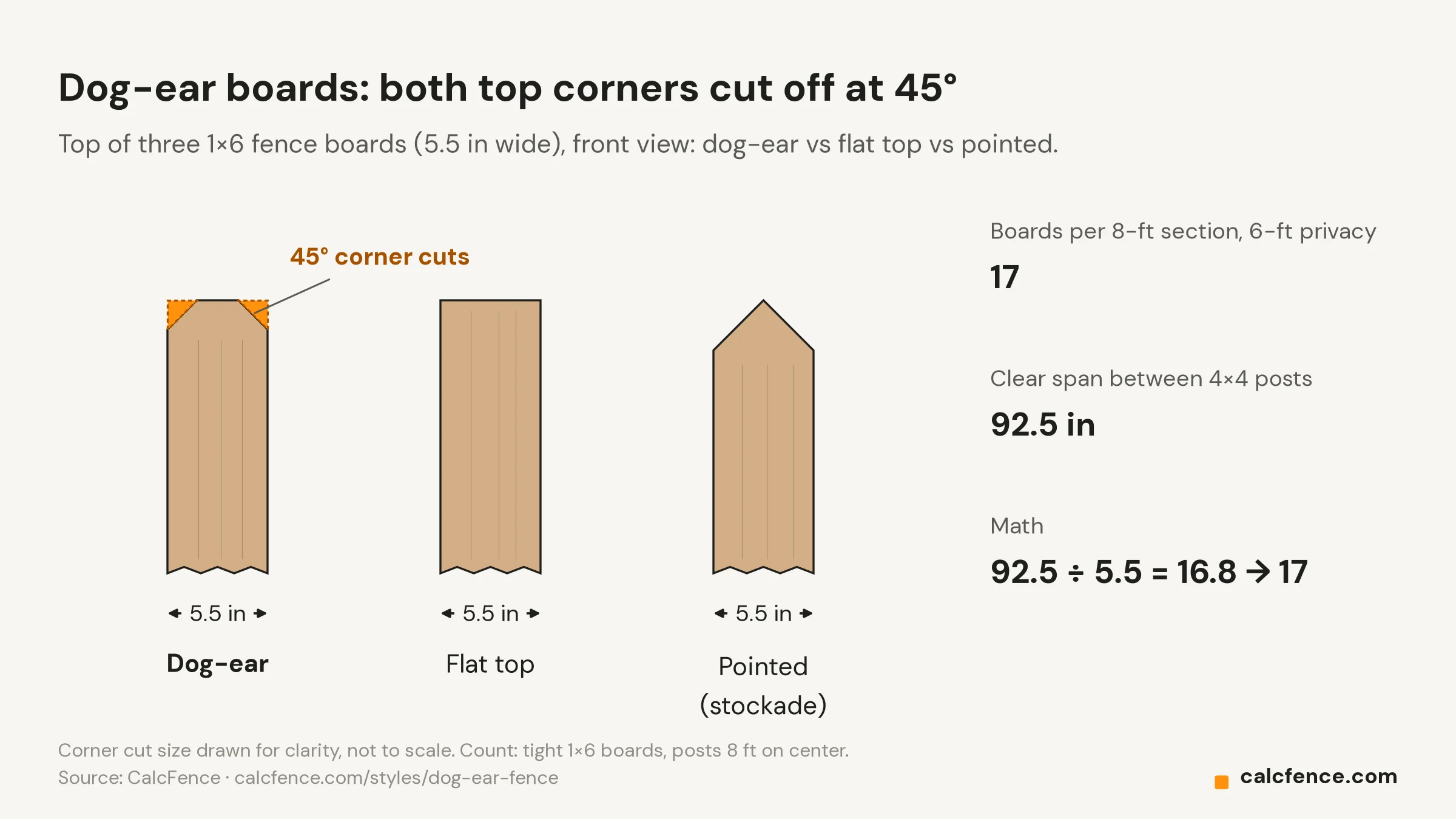
Both descriptions give the clip an angle but no length along the edge, and the diagram does the same: it shows the 45° shape, not how far down the cut runs. If you are adding boards to an old fence, take one of the old boards along and match its corner before you buy, since the new clips will sit in the same row as the old ones.
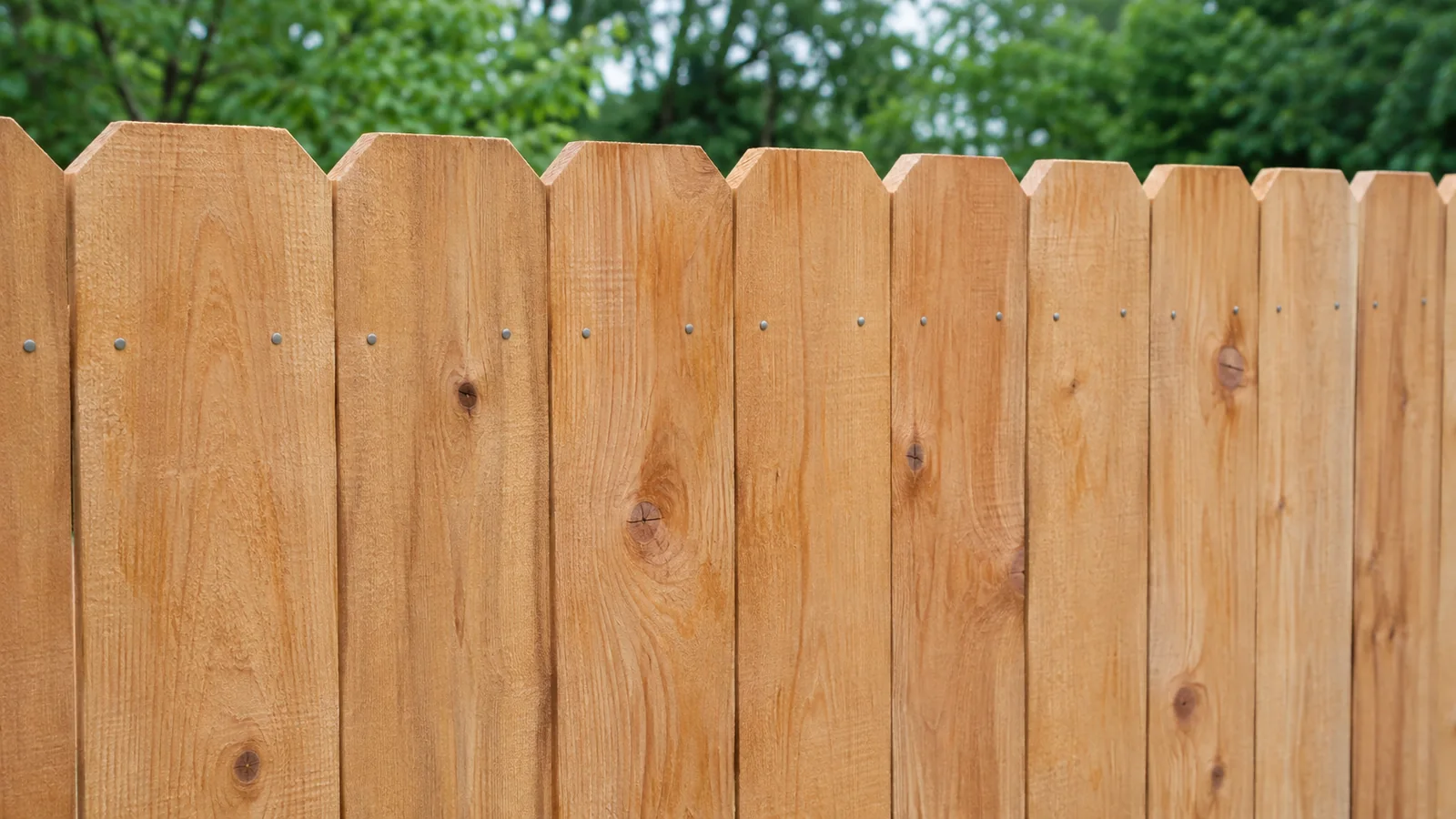
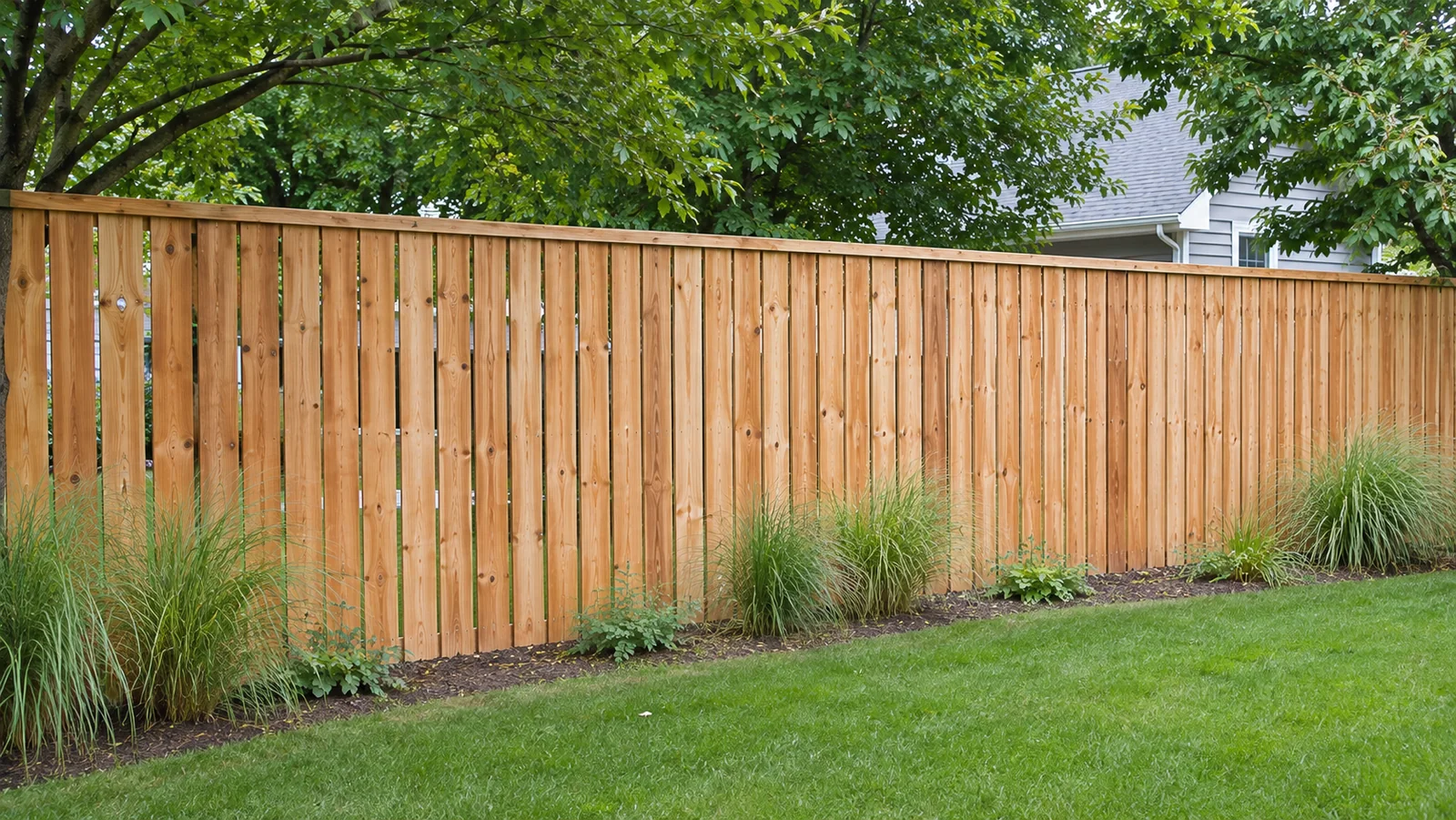
Along the fence, the clipped corners of neighboring boards meet in a small V at every joint, so the top edge reads as a row of shallow notches instead of one straight line. That notched line is the whole visual difference between dog ear boards and the same boards cut square.
Why are fence boards dog eared?
The explanations in print are mostly about looks. Superior Fence & Rail writes in its September 29, 2025 post that the "clipped corners give just enough detail to keep the fence line from looking harsh."
Weather is the other reason you will hear. Woodworking Advisor says of square tops that "the flat end grain is a small horizontal surface where rain can sit, which is why many builders cover a flat-top fence with a cap rail." The clip takes away the corners, but the short flat center it leaves is still horizontal end grain. So a dog ear top has less flat end grain than a square top, not none, and the finish you put on the tops still matters on both.
Dog ear vs flat top fence
Both use the same board, set the same way, and the calculator gives the same 17 boards per section for both. What changes is the top edge and the work at the saw. On the 143 boards of the front-yard run:
| Top | Cut at the top of each board | Top line of the fence | Saw cuts for 143 boards | Cap rail |
|---|---|---|---|---|
| Dog ear | two 45° corner clips, flat center kept | small V at every joint | 286, or none if bought precut | optional |
| Flat top | square cut | one straight line | 0 | often added to cover the end grain |
| Pointed | two angled cuts meeting at a peak | row of points | 286 | would cover the points |
Since the count is the same, the choice between the first two rows comes down to the top line you want and whether you buy the boards precut or set a saw to 45° yourself. A cap rail on a flat top is extra lumber the calculator does not list, and the pointed row in the last line is the stockade fence top.
How many boards does a 4-ft dog ear fence take?
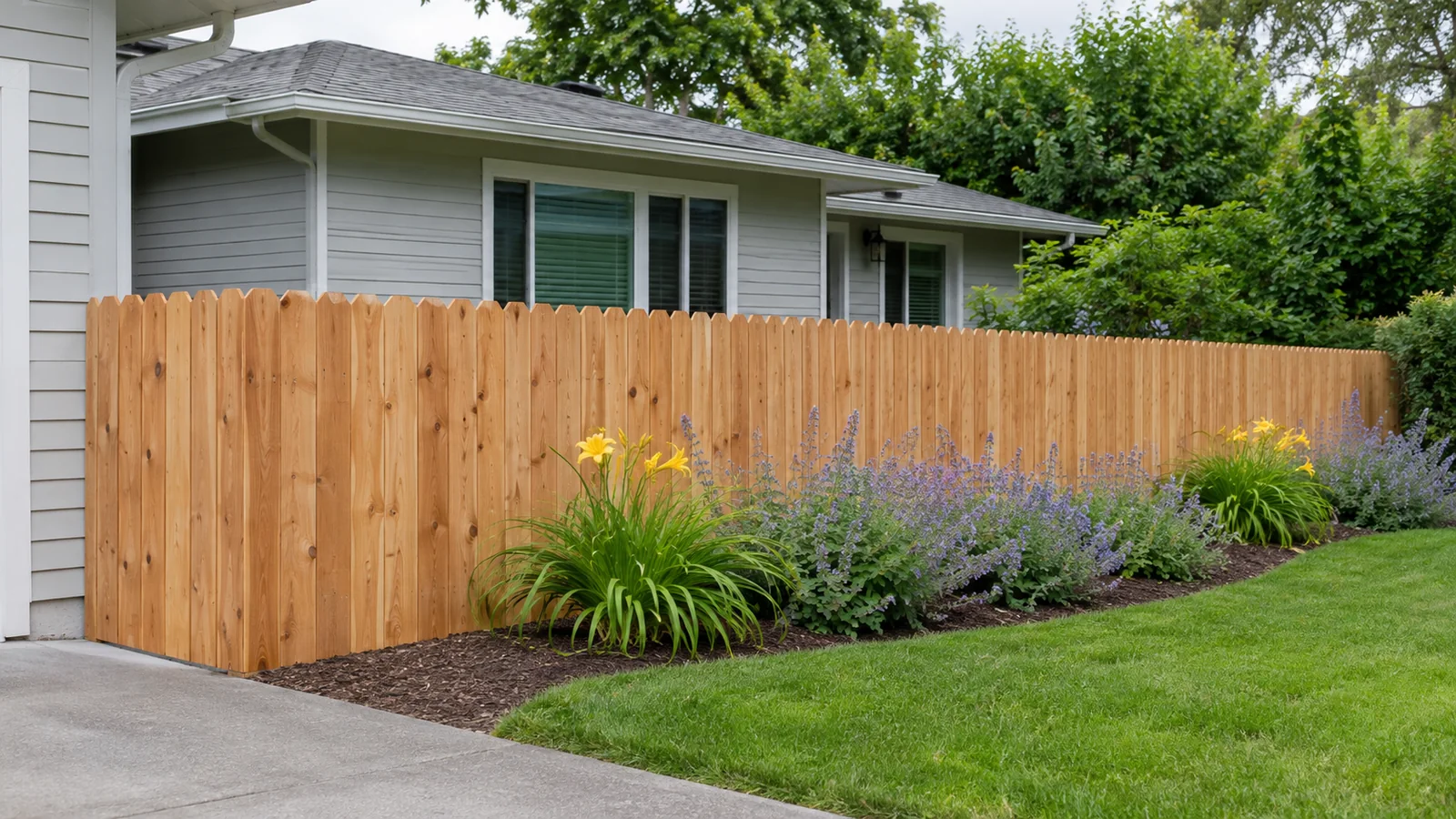
Inputs: one straight run of 68 ft beside a driveway, 4 ft tall, one 4-ft walk gate, posts 8 ft apart, 1×6 boards set tight, 5% waste on boards and rails. Taking the gate out leaves 64 ft of fence, which divides into exactly 8 sections, so there is no short bay at the end to cut down.
| Line | Quantity |
|---|---|
| Fence line | 64 ft |
| Posts | 11 (9 line posts, 2 gate posts), 4×4, 8 ft long, 2 ft in the ground |
| Rails | 16, or 17 with waste, 2 per section, 8 ft long |
| Boards | 136, or 143 with waste, 4 ft long |
| Concrete | 22 bags of 80-lb mix in 10-in holes |
| Fasteners | 544, 2 per board at each rail |
Build the same run at 6 ft and the posts, boards and concrete stay exactly where they are. Only the rails go up to 26 and the fasteners to 816, because a 6-ft section gets a third rail. The 4-ft fence also buys shorter boards, which matters if the lumberyard sells dog ear boards precut at 6 ft only and you have to cut 2 ft off each one.
Height is where a front yard differs from a back yard. Sioux Falls, South Dakota, in its residential fence handout revised July 2024, allows a "maximum 4' in the front yard" and warns that "you might have more than one front yard." The same handout bans fences "over 30% solid" within a triangle 30 ft along each property line from a street corner. Tight dog ear boards leave no gaps at all, so on a corner lot the last 30 ft before the corner could not be this fence in Sioux Falls. Other cities' limits are in the fence height rules and permits guide.
Dog ear fence gate
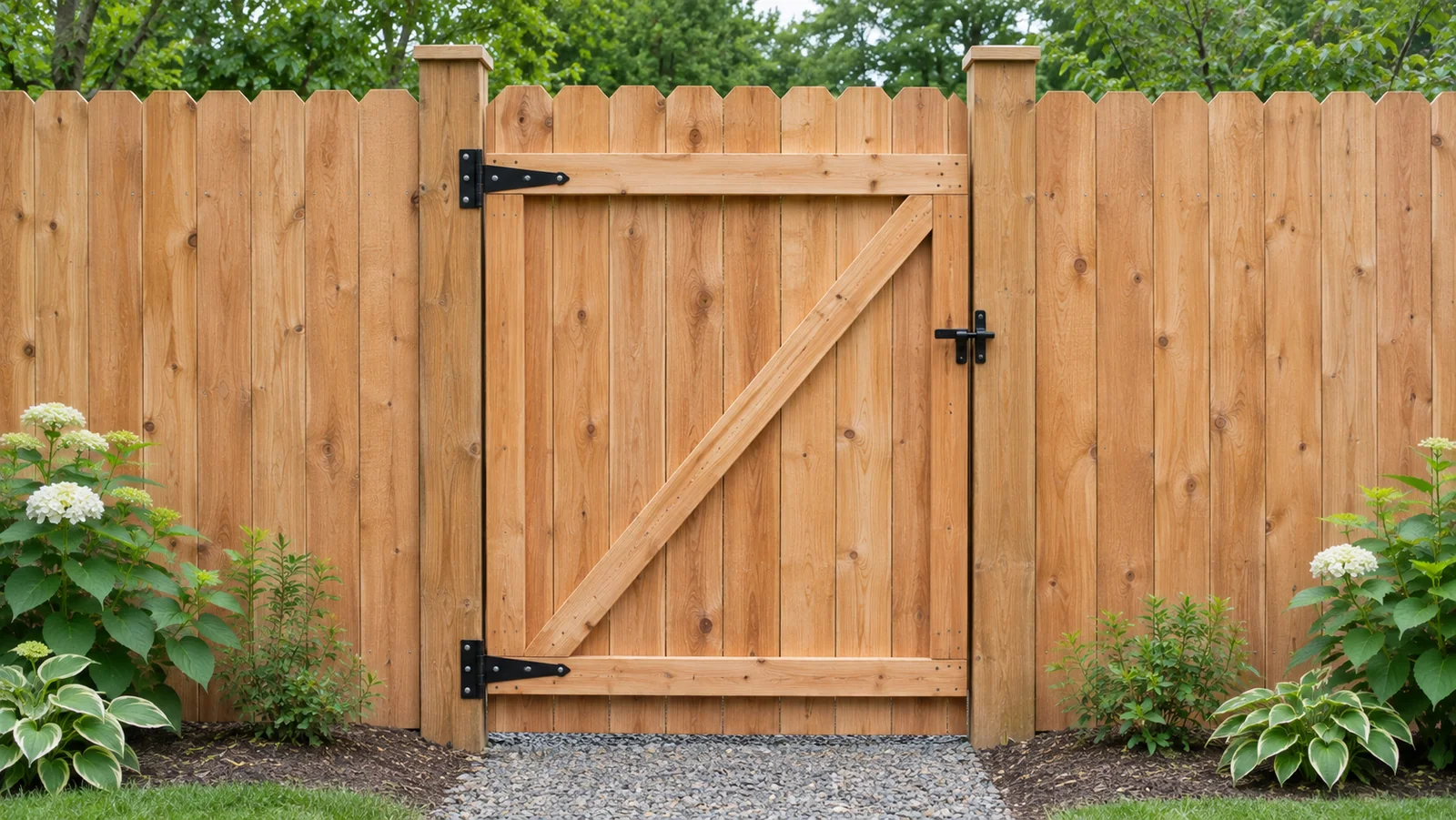
The calculator takes the 4-ft opening out of the fence line and adds 2 gate posts. It does not build the leaf. Two 4×4 posts set 4 ft on center leave 44.5 in between them, which holds 9 tight 1×6 boards before you take off the gaps at the hinge and latch side, so plan on 8 or 9 boards plus a frame and brace for each 4-ft leaf. Order those as their own line; the wood fence calculator lists the other parts the material list leaves out.
A second gate costs less than you might expect on this run. Add another 4-ft opening, one at the walk and one by the driveway, and the fence line drops to 60 ft but still rounds up to 8 sections. The board count stays at 143. You add 2 posts and 4 bags of concrete, and the last section shrinks to 4 ft, so a few boards come back as offcuts.
What the front-yard fence costs
The national cost table's wood privacy row is priced on standard-grade dog ear 1×6 boards on 8-ft spacing, so it is the price for this style rather than a stand-in. At 4 ft it gives a mid-range installed rate of about $29 per foot. The 64 ft of fence with its walk gate and a typical permit comes to about $2,390 at national mid-range prices.
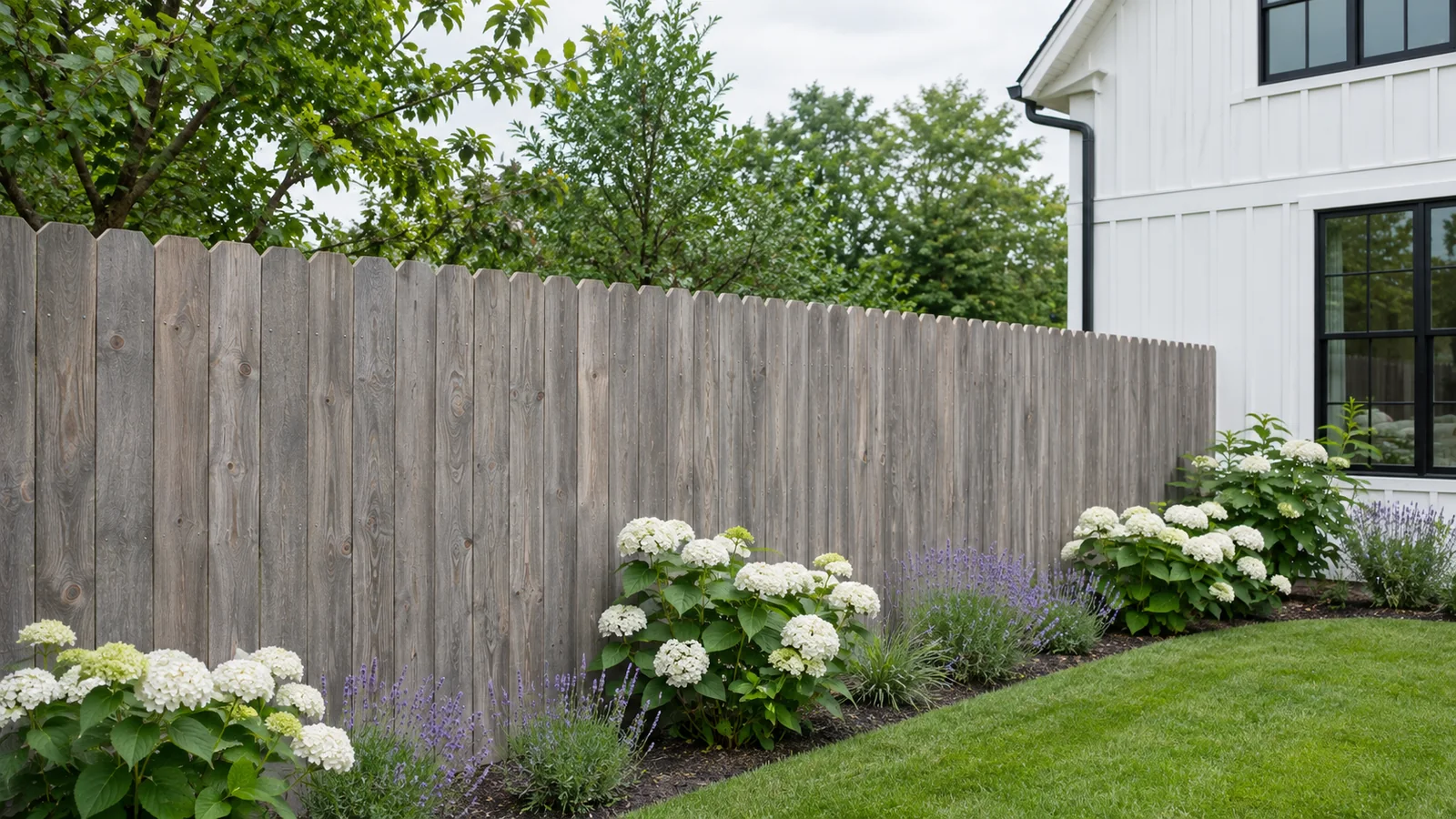
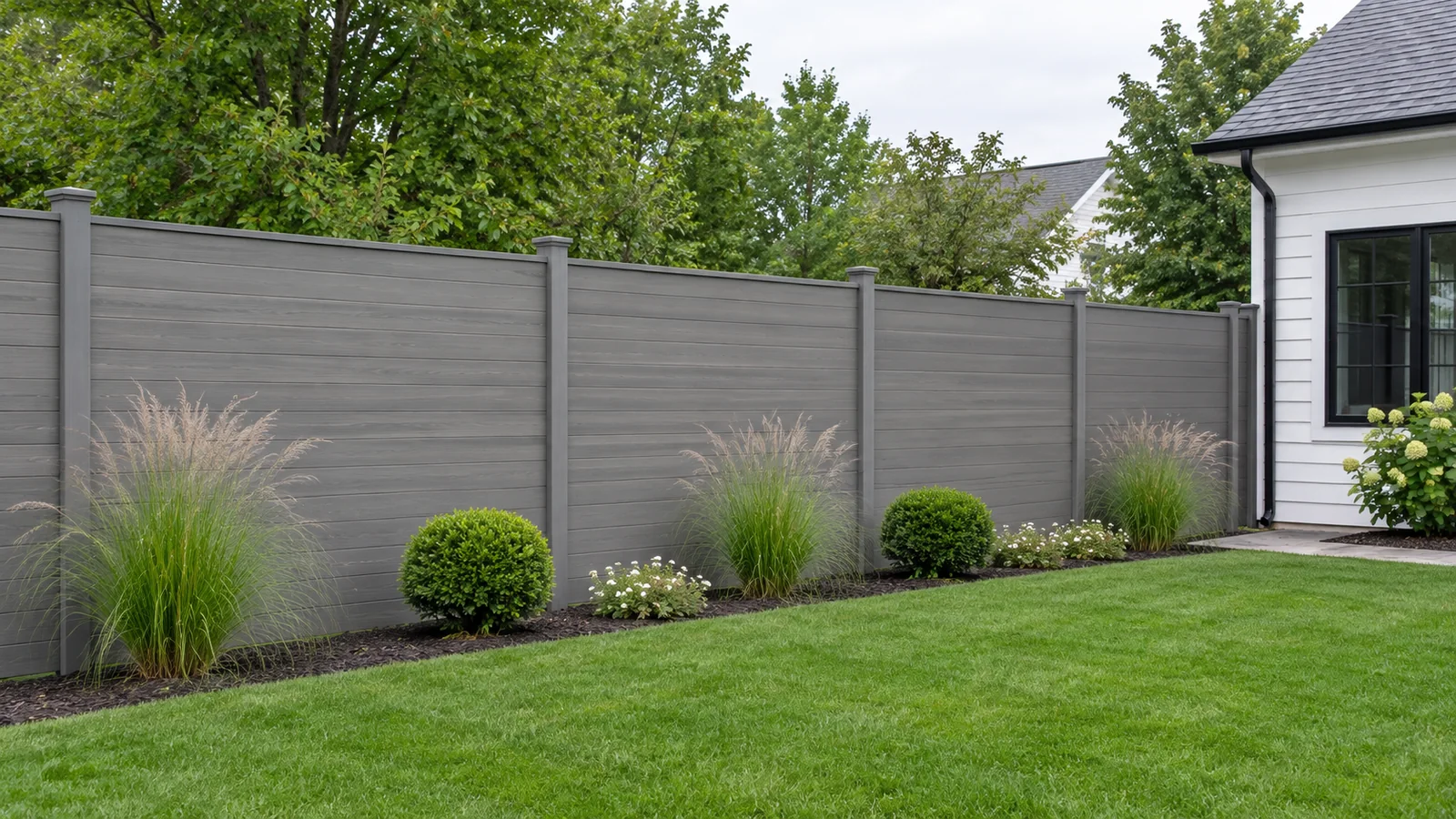
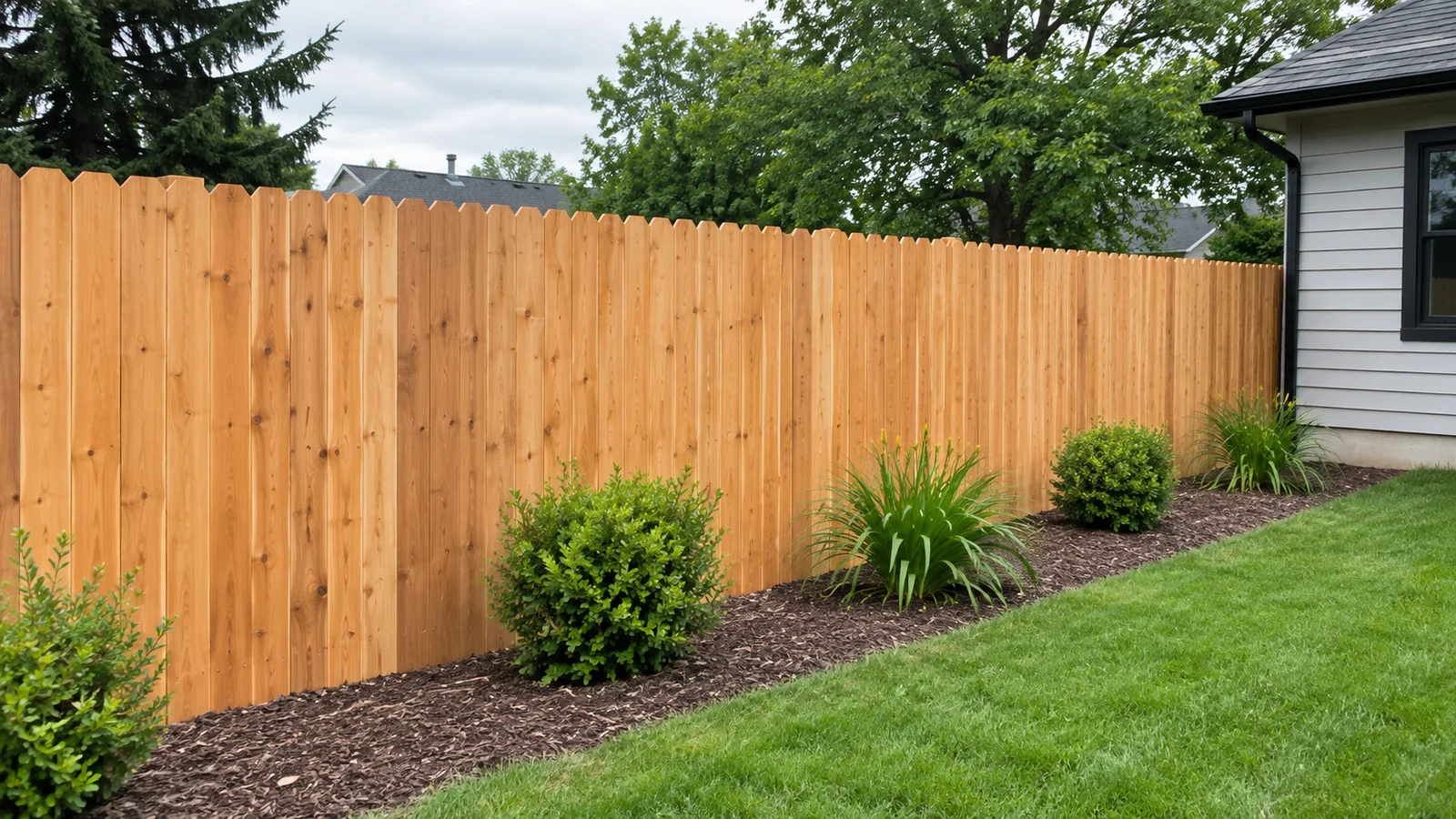
The walk gate alone is 17% of that total. On the same run at 6 ft the gate's share falls to 14%, because the fence around it costs more while the gate price stays put. A stain like the weathered grey above is not a line in either calculator. The wood fence cost calculator splits the total into materials, labor and the gate, and adds your state.
Other ways to close a wood fence
Tight dog ear boards are the simplest closed layout. A board on board fence laps a second layer over the first and keeps the joints closed as the boards dry. A shadow box fence alternates its boards across both faces of the rails, and a horizontal fence turns the boards on their side. Each of those can still use dog ear boards wherever the tops show; the fence board calculator counts all three on one run.
Key Takeaways
- The 5% waste allowance leaves 7 spare boards across the 8 sections.
- With waste the front-yard run takes 2.1 boards per foot of its 68 ft.
- The mid installed rate at 4 ft is 21% below the 6-ft rate per foot.
- Each 4×4 post takes 0.92 cu ft of concrete in its 10-in hole.
Frequently Asked Questions
Is every dog ear fence a privacy fence?
No. Dog ear is only the cut at the top of the board. Set the boards with gaps and you have a dog ear picket fence, which the picket fence calculator counts.
How far apart should the posts be at 4 ft?
The calculator starts at 8 ft. Move them to 6 ft on the 68-ft run and you get 11 sections of 13 boards, 14 posts, 151 boards with waste and 28 bags of concrete, with 6-ft rails.
What if the front-yard fence turns a corner at the driveway?
Enter it under Multiple Runs. As an L of 40 ft and 28 ft with the gate, the same 68 ft becomes 9 sections and 12 posts with 161 boards, because each leg is divided into sections on its own.
Do dog ear boards need a cap rail?
The calculator does not add one either way. Woodworking Advisor ties the cap rail to flat tops, where rain sits on the square end grain; dog ear boards keep only a short flat center, so a cap there is a choice you make for the look.