What Is a Picture Frame Fence?
A picture frame fence is a wood privacy fence whose board sections sit inside a frame: a cap on top, a trim board under it, a bottom board, and trim at each post, so every section reads as a framed panel. A 100-ft run with one 4-ft gate takes 15 posts, 36 rails and 204 boards, plus 60 frame pieces with one face framed or 108 with both.
Updated
Advanced: Picket Width & Gap
13 line + 2 gate, 4x4
With 5% waste: 38 rails, 215 pickets/boards.
Hole: 10 in diameter x 2 ft deep, 0.92 cu ft per post.
Total: 30 bags (80 lb) / 45 bags (60 lb) / 45 bags (50 lb) for 15 posts, 13.81 cu ft.
Cap, trim and the boards inside
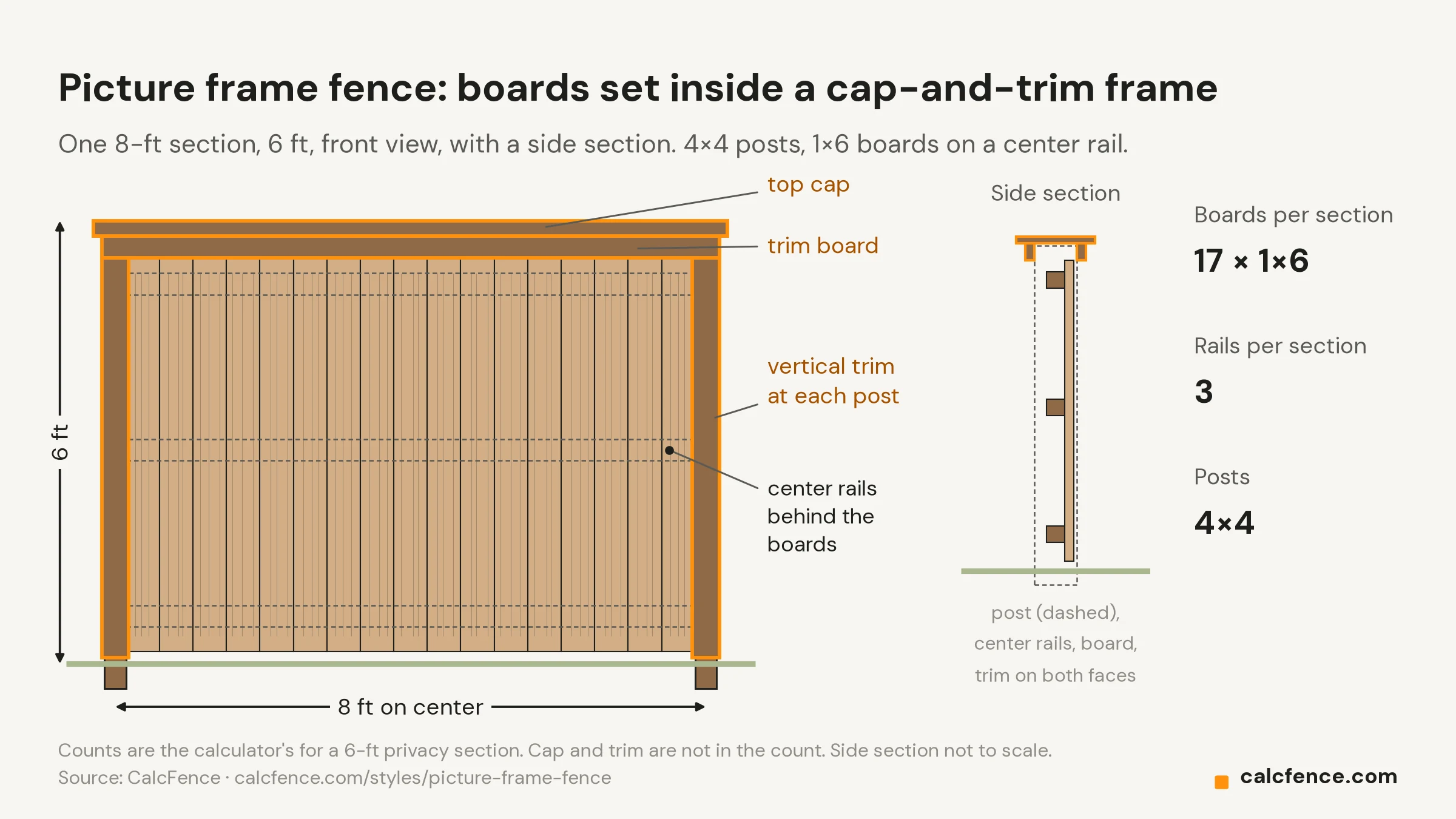
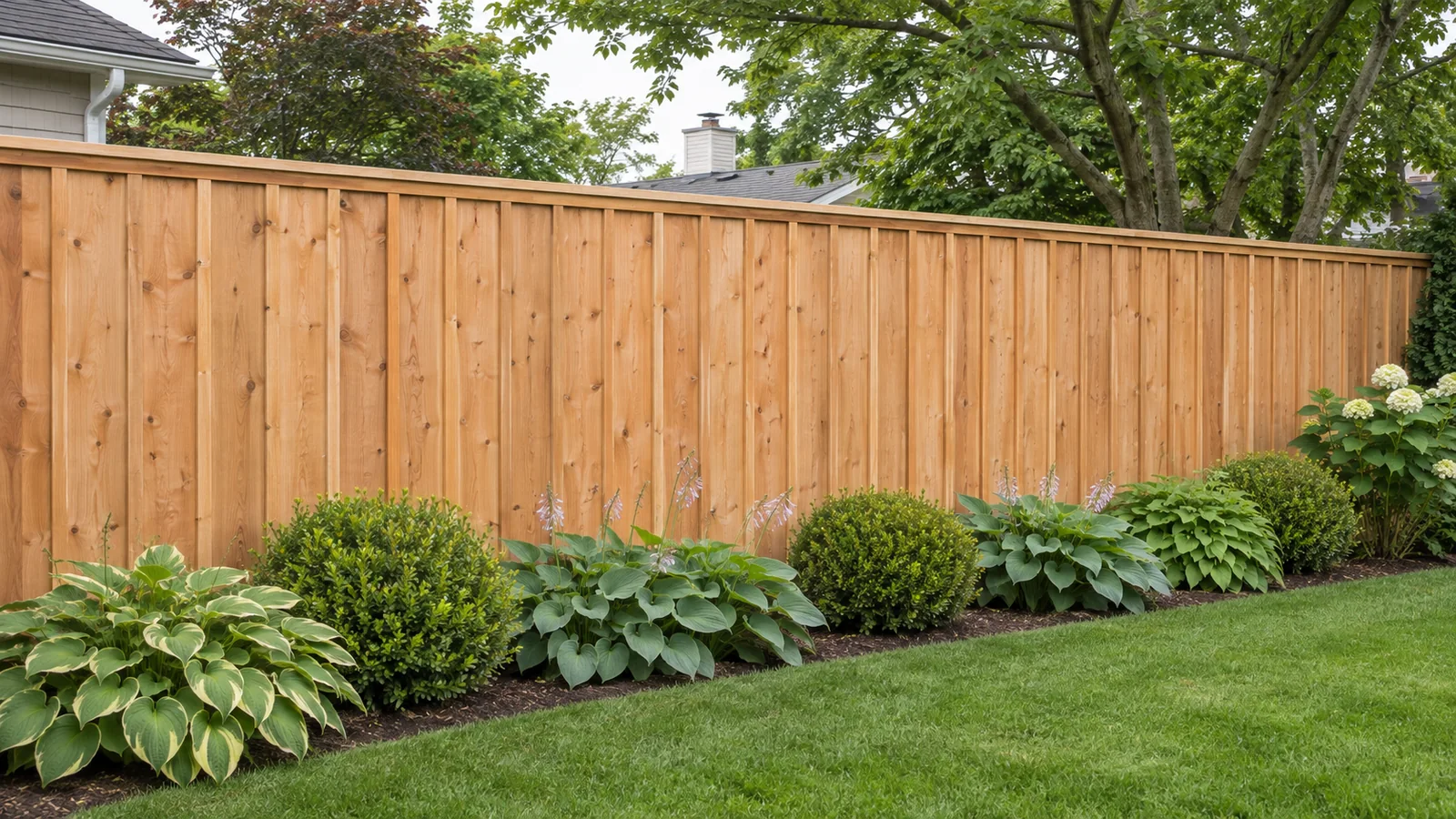
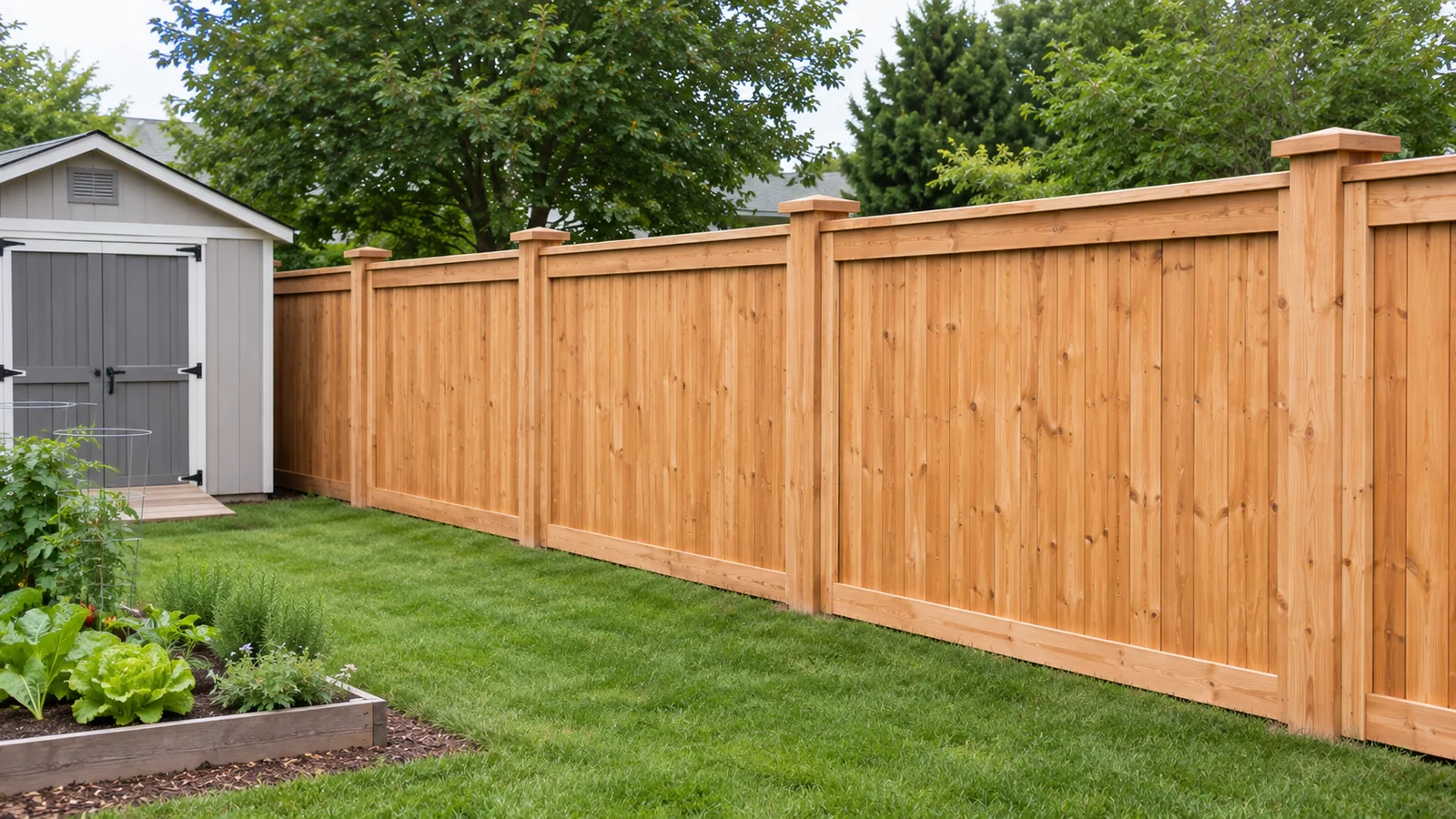
Superior Fence & Rail, a Kansas City installer, says the style takes its name from "the top and bottom horizontal boards" that "create an aesthetic like a picture frame." The diagram draws the top half of that frame and the sides: a cap along the top, a trim board under it, and a vertical trim board at each post. It leaves out the bottom board, which both photos of the style on this page show and which the count below includes. Inside the frame, 1×6 boards hang on three rails between 4×4 posts 8 ft apart, the same skeleton as the other wood privacy builds on the fence styles hub.
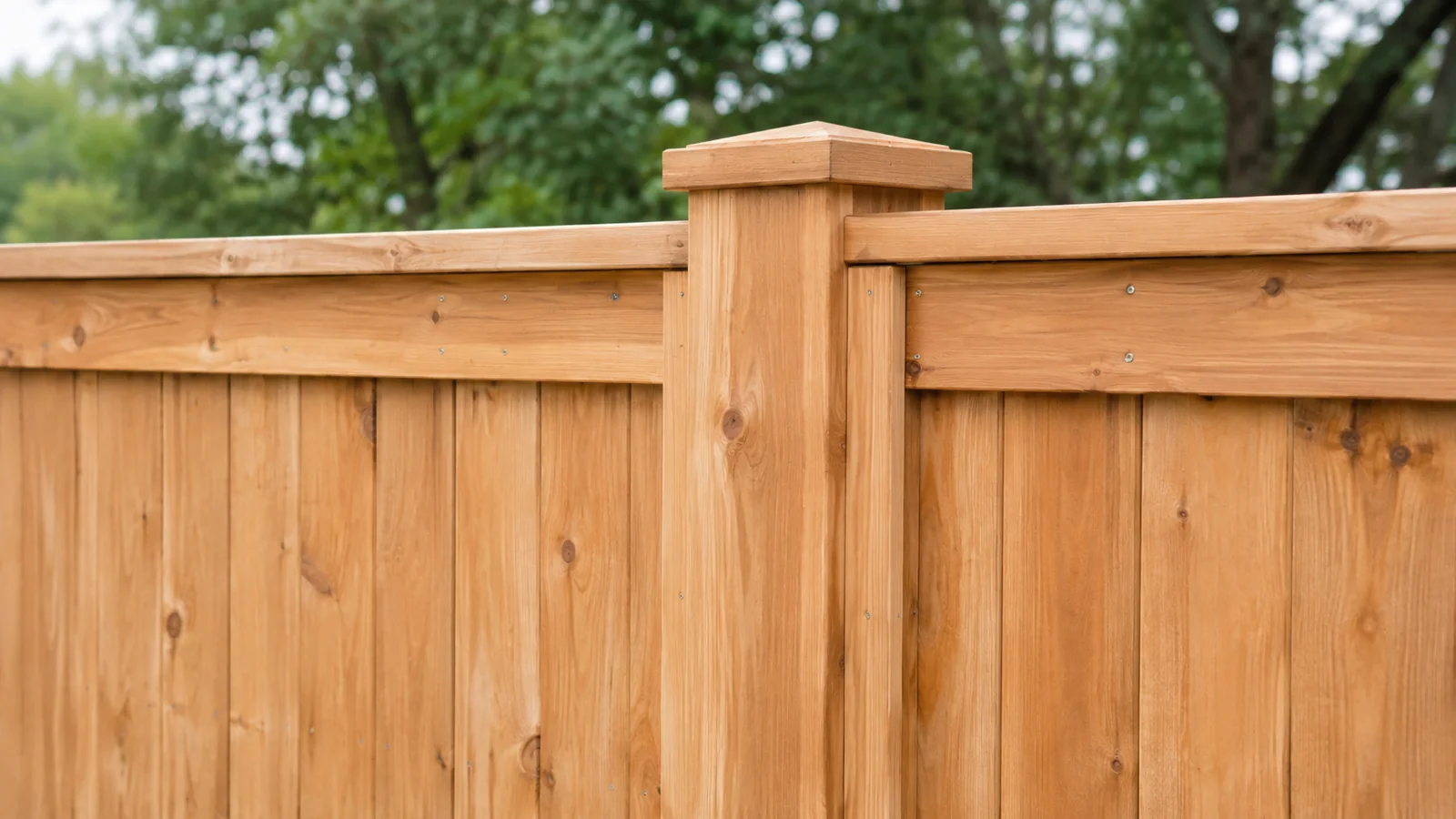
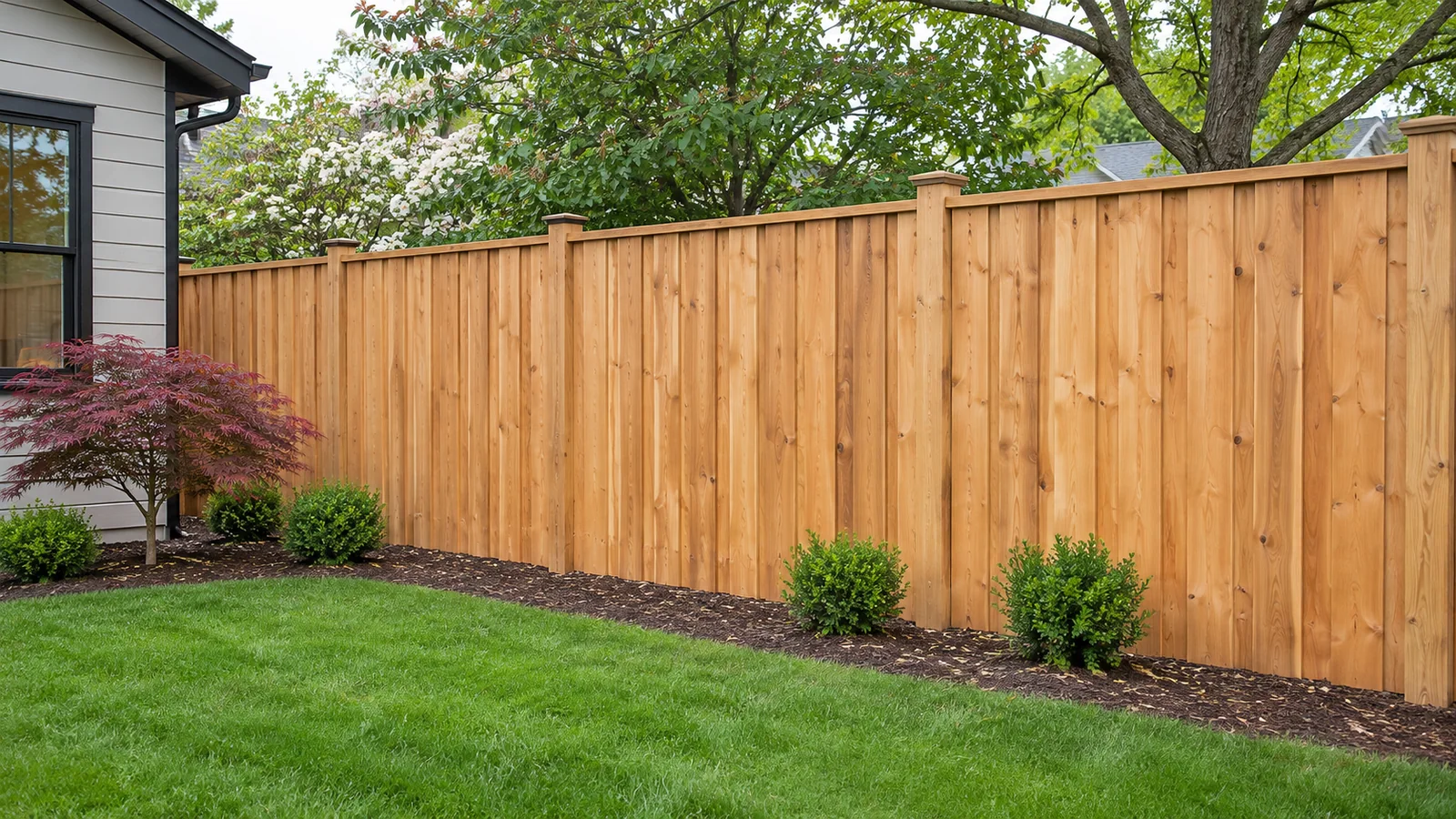
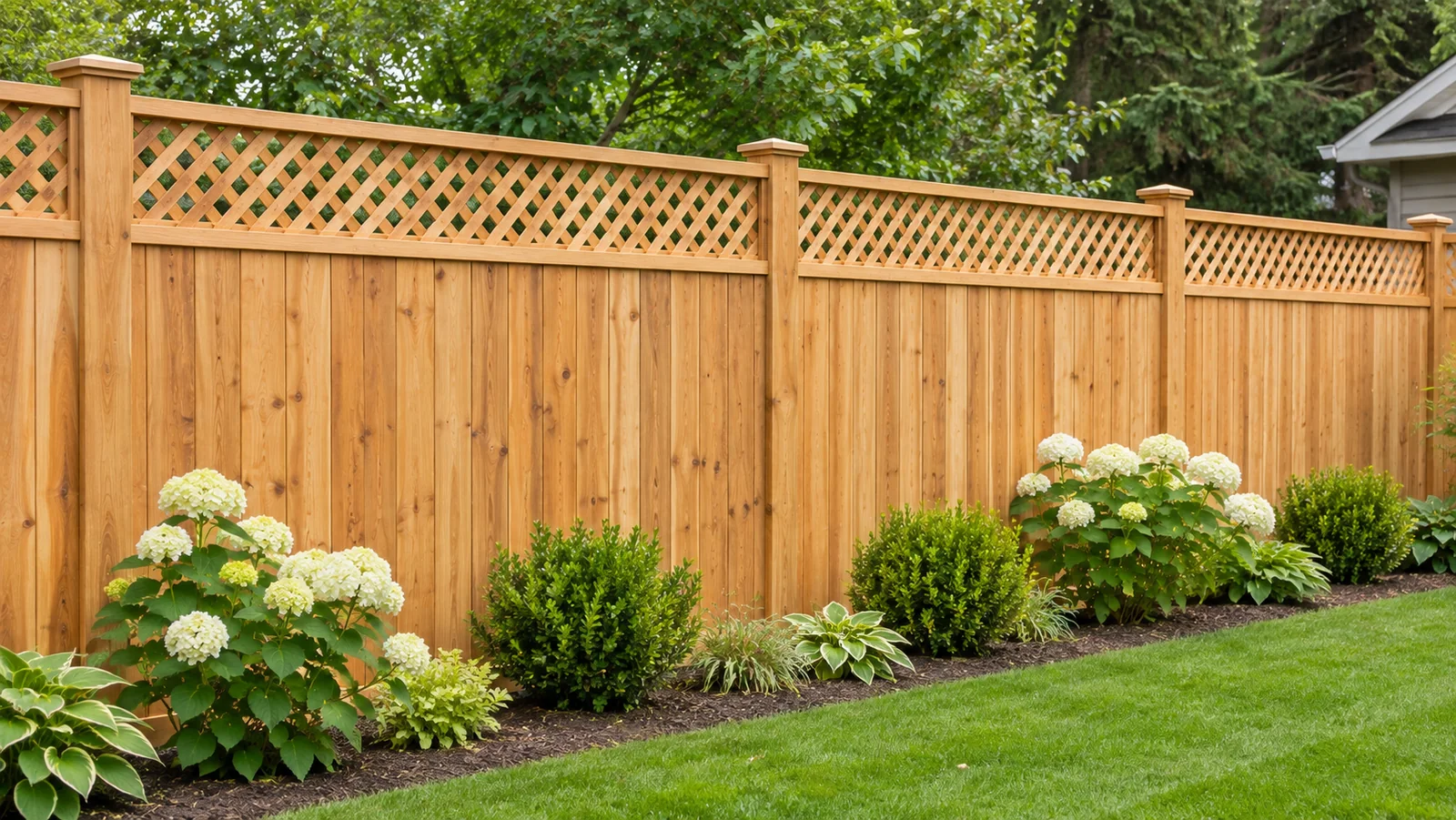
In the close-up, a trim board stands on either side of the post, and each section's cap and trim board run up to it. The post and its cap rise above the cap line, so the posts stand out as columns between the panels.
Picture frame vs cap and trim fence
The three sources behind this page treat the two names as one fence. Superior Fence & Rail writes that "this style of fence is called the wooden cap and trim fence" at its own company. Fence Armor, which sells fence protection products, describes the plainer style as "a type of wood privacy fence that includes horizontal boards," finished with a bottom trim board across the base. Trex, a composite fence maker, sells "a picture-framed, board-on-board, cap & trim composite fence system," using all three labels for one product.
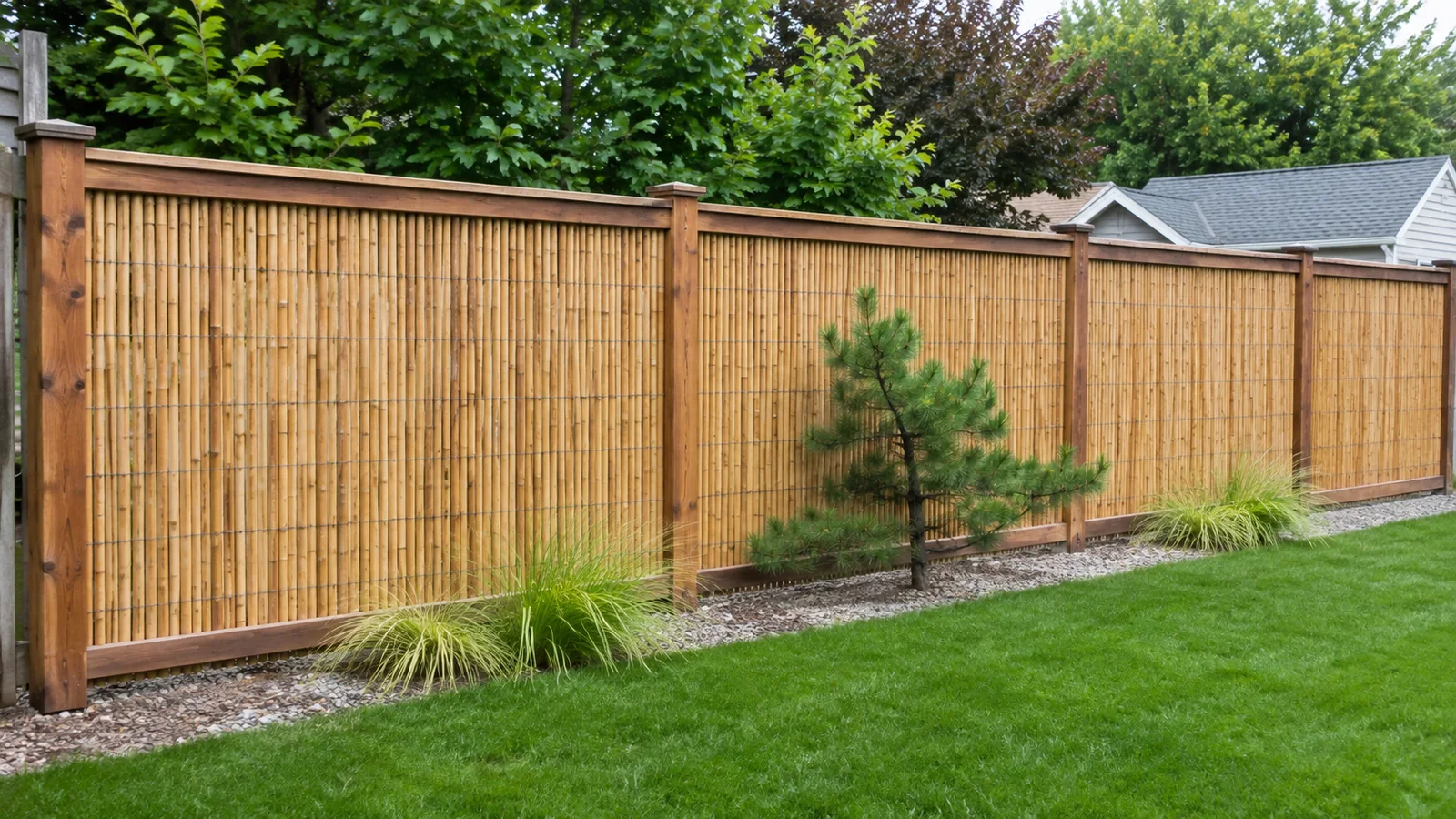
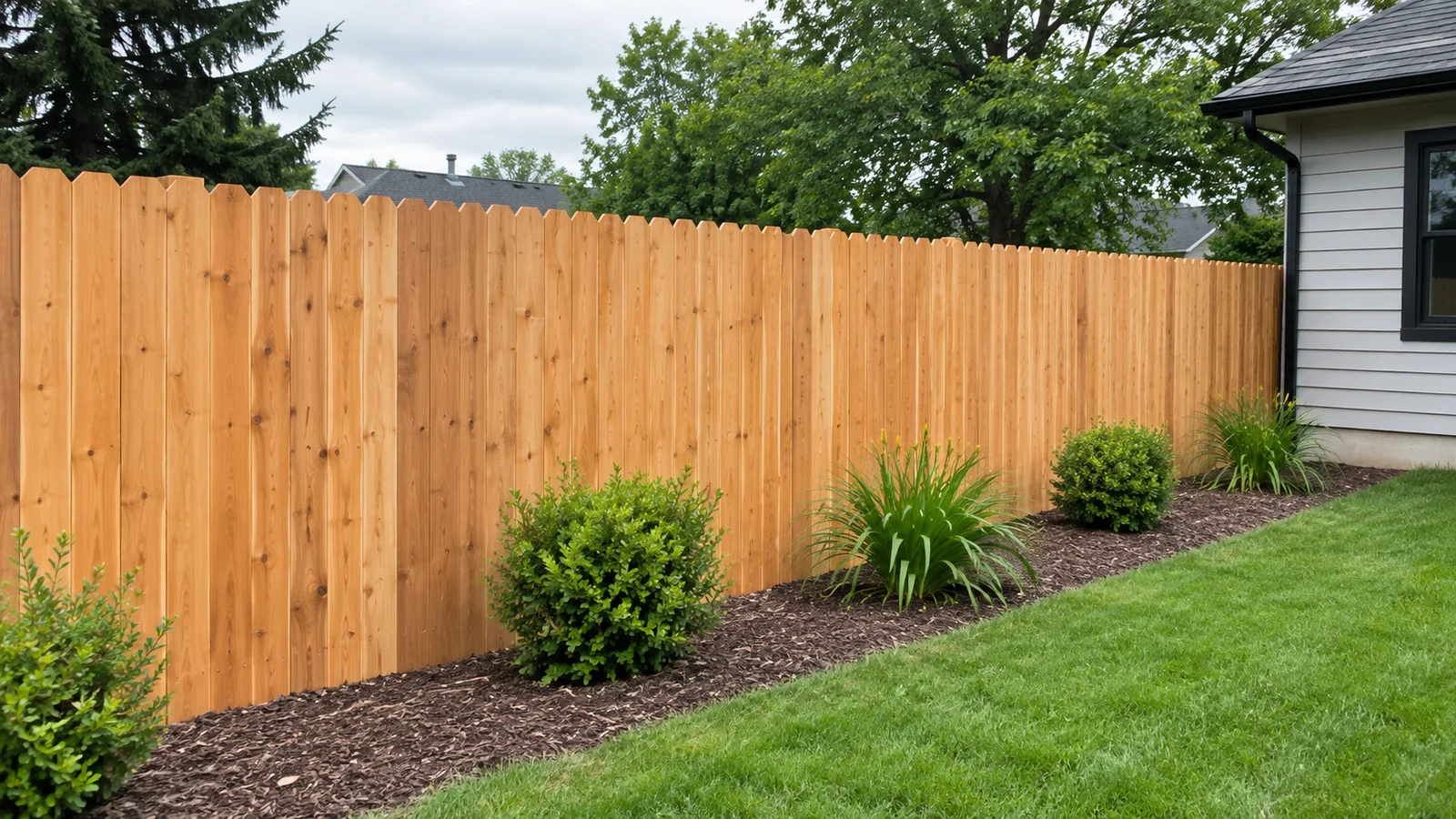
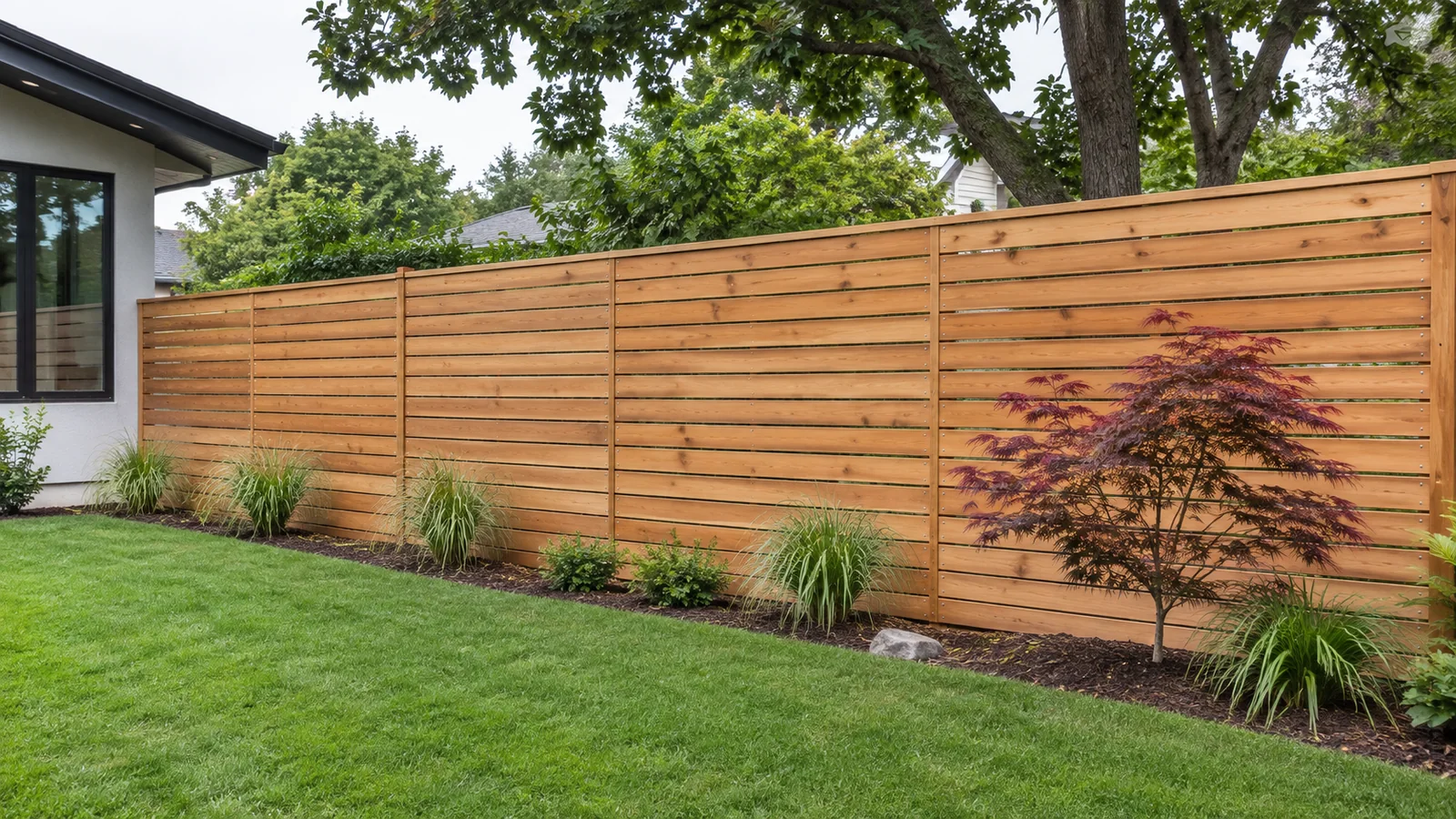
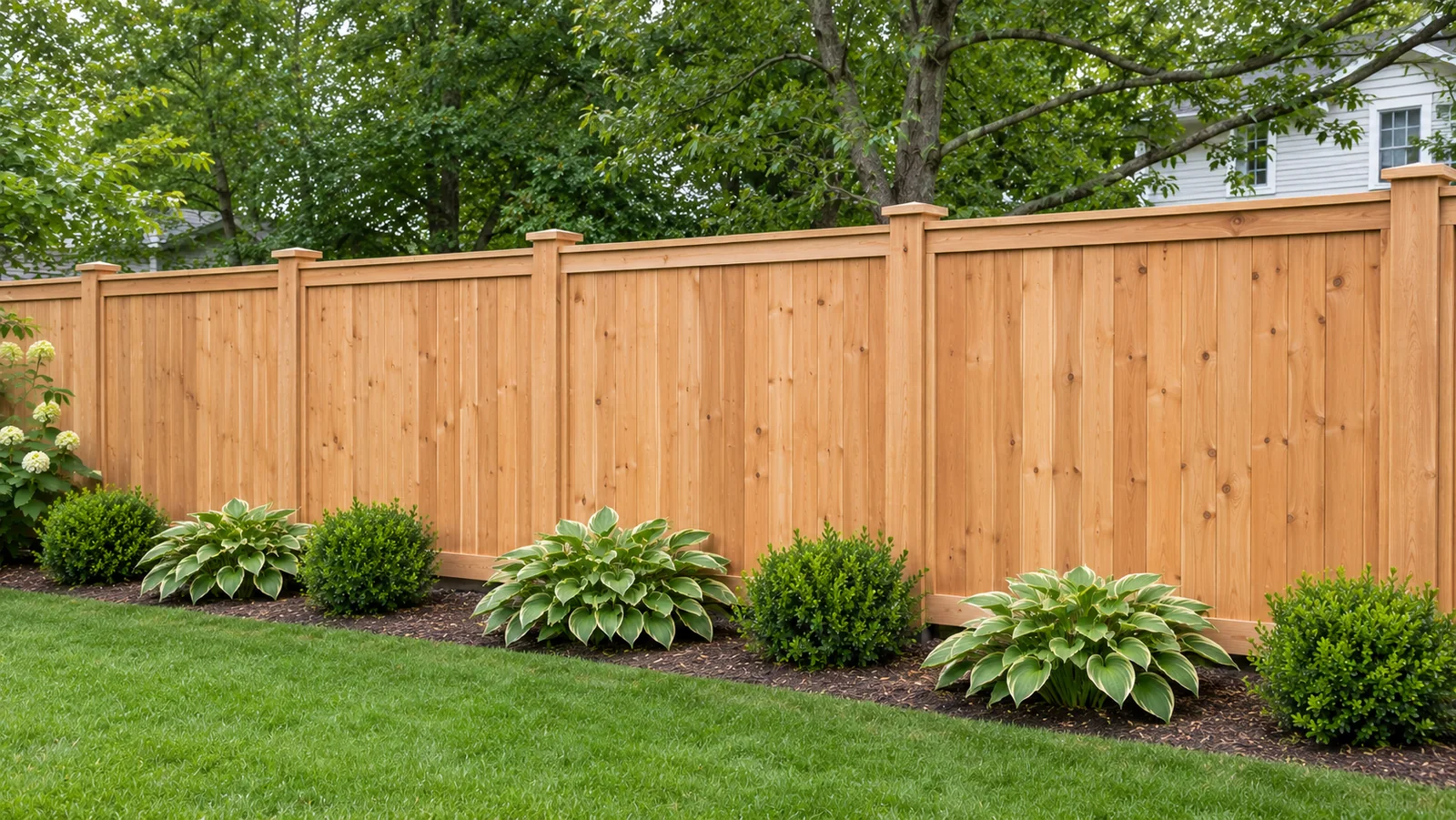
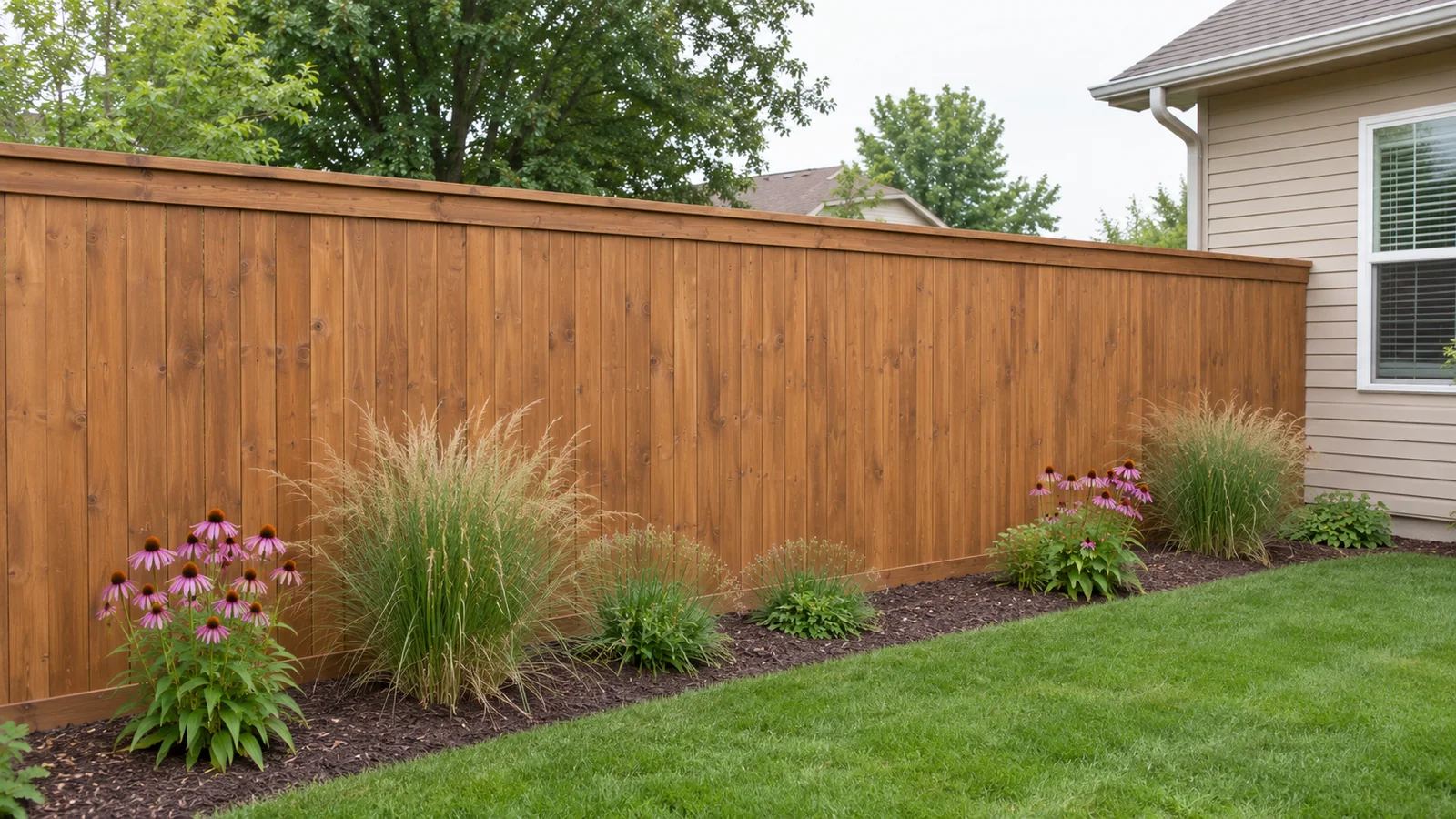
Where the photos on this page split the two is post trim. The stained fence above has a cap, a trim board and a bottom board, and nothing on the posts. The framed fence further down adds a trim board at every post. That split is how this page sorts them; no source draws it, so a quote that says "picture frame" may still mean the plainer version. For the 100-ft run with one gate, 12 sections:
| Frame piece | Stained cap and trim photo | Framed photos | Pieces, one face | Pieces, both faces |
|---|---|---|---|---|
| Cap board | yes | yes | 12 | 12 |
| Trim board under the cap | yes | yes | 12 | 24 |
| Bottom board | yes | yes | 12 | 24 |
| Post trim, 2 per section | no | yes | 24 | 48 |
Without post trim the frame is 36 pieces on one face and 60 on both. Add the post trim and it is 60 and 108. Ask any quote to name each of the four lines and the faces it covers, since the gap between the cheapest and the fullest reading is 72 pieces.
How many boards does a picture frame fence take?
The calculator counts the boards as it would for a plain 6-ft privacy fence, because the frame sits on top of an ordinary board field. The 4-ft gate comes out of the 100 ft first, which leaves 96 ft, or 12 sections of 8 ft on 15 posts, 2 of them gate posts. Each section gets 3 rails, 36 in all. Between two 4×4s set 8 ft apart there are 92.5 in, and 1×6 boards are 5.5 in wide, so each section takes 17 boards and the run takes 204.
That 17 holds only while the trim leaves the 92.5 in alone. In the diagram the post trim is as wide as the post and sits on its face, so it takes nothing from the boards. Trim wider than the post overhangs into both neighboring sections, and once it reaches 8 in wide on a 3.5-in post, the opening shrinks to 88 in, room for 16 boards. Trim set beside the post in the plane of the boards, as the close-up seems to show, costs the field its whole width: two 3.5-in trim boards leave 85.5 in, again 16 boards. Either way that is 12 boards fewer than the calculator shows on this run, so measure the trim before ordering the boards.
Superior also writes that on its fences "the boards overlap as part of the design," which describes a second layer of boards. The count here is a single layer. An overlapping field is counted on the board on board fence page.
Framed on both faces
Superior says the style "is sometimes called a 'good neighbor fence' because the fence is identical on both sides." The boards are counted once whichever way the fence faces. What doubles is the frame: trim board, bottom board and post trim go on each face, while the cap covers both, which is why the frame goes from 60 pieces to 108 in the table above.
A shadow box fence gets the same both-sides look from the boards instead of the trim, with boards alternating on the two faces of the rails, 24 per 8-ft section against 17 here.
What the frame adds to the price
CalcFence's national cost data has no picture frame line. The nearest is 6-ft cedar privacy at $44 a foot installed, mid-range, before any frame. Fence Armor says the plainer style "typically costs more per linear foot than a standard wooden fence," and on this run the extra is between 36 and 108 pieces of trim lumber plus the labor to cut and fit them. The wood fence cost calculator prices the fence underneath.
Key Takeaways
- The 17 boards add up to 93.5 in against 92.5 in between the posts, so about 1 in comes off one board in every section.
- The two gate posts need trim on their gate side too, which the table leaves out: 2 more pieces per framed face.
- With the 5% waste the calculator uses for boards, the frame on both faces comes to 13 caps, 26 top trims, 26 bottom boards and 51 post trims.
Frequently Asked Questions
Is it the same as a good neighbor fence?
Superior Fence & Rail uses the two names for one fence. Top Rail Fence, another installer quoted on the shadow box page, uses "good neighbor" more widely, for any fence that looks finished from both yards.
How many boards does it need per foot of fence?
On the 100-ft run, 204 boards over 96 ft of fence is 2.125 boards per foot, or about 2.24 with waste. The fence board calculator works it out for your own length and board width.
Can the style be built 8 ft tall?
The board count stays at 17 per section, while the posts move up to 6×6s set 3 ft deep and each section gets a fourth rail, 48 rails on this run. Eight feet is over the side and back yard limit in three of the four cities in fence height rules and permits.
Does composite come in a picture frame style?
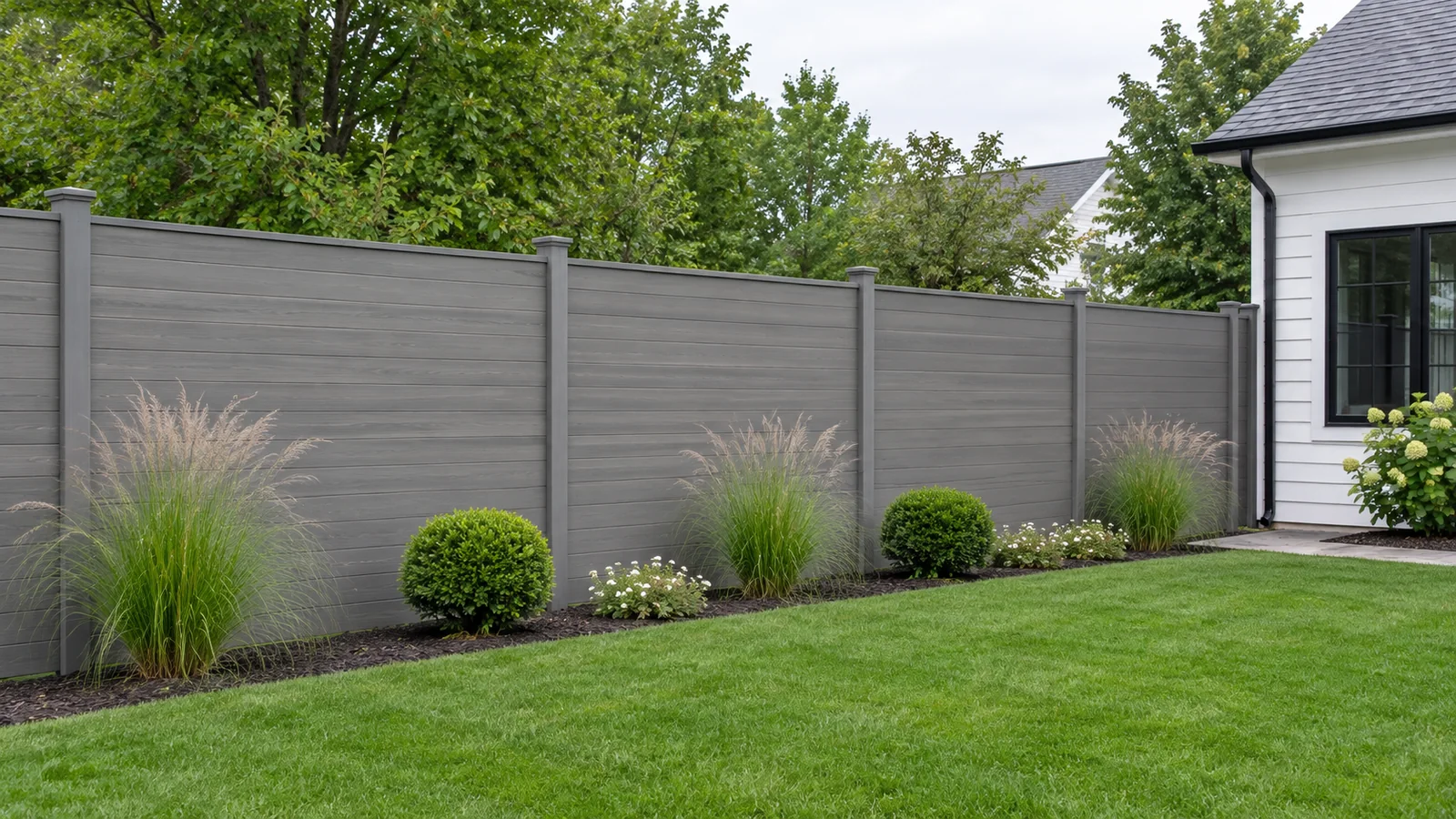
Trex's system has a bottom trim piece, which "is not necessarily included with all wood fences," and it hides the aluminum bottom rail. Composite is counted and priced differently, so the wood fence calculator does not apply to it.
Sources
- Superior Fence & Rail, "We Have Picture Frame Fence And Color Options For Your Kansas City Fence," installer blog, December 18, 2024, accessed November 1, 2026: superiorfenceandrail.com/kansas-city/we-have-picture-frame-fence-and-color-options-for-your-kansas-city-fence/
- Fence Armor, "Understanding Cap and Trim Fences: Design, Benefits, and Costs," seller blog, May 19, 2025, accessed November 1, 2026: fencearmor.com/blogs/news/understanding-cap-and-trim-fences-design-benefits-and-costs
- Trex fencing help center, "What is a Board-on-Board, Cap & Trim Fence?," last updated March 22, 2023, accessed November 1, 2026: trex-fencing-fds.helpscoutdocs.com/article/401-what-is-a-board-on-board-cap-trim-fence