What is a board on board fence?
A board on board fence is a wood privacy fence built in two layers: one row of boards with gaps between them, then a second row over the gaps, each board lapping its neighbors by 1 in on both edges. With 1×6 boards, every board adds 4.5 in of width, so an 8-ft section takes 21 boards where a butted privacy fence takes 17.
Updated
No gates added.
Advanced: Picket Width & Gap
9 line + 0 gate, 6x6
With 5% waste: 34 rails, 177 pickets/boards.
Hole: 12 in diameter x 3 ft deep, 1.73 cu ft per post.
Total: 27 bags (80 lb) / 36 bags (60 lb) / 45 bags (50 lb) for 9 posts, 15.53 cu ft.
The calculator above opens on a 64-ft side-yard run, 8 ft tall, posts 8 ft apart and no gate. Change the length or height and the board, post, rail and concrete lines follow. The other styles we cover, from shadow box to horizontal boards, are on the fence styles hub.
What it looks like up close
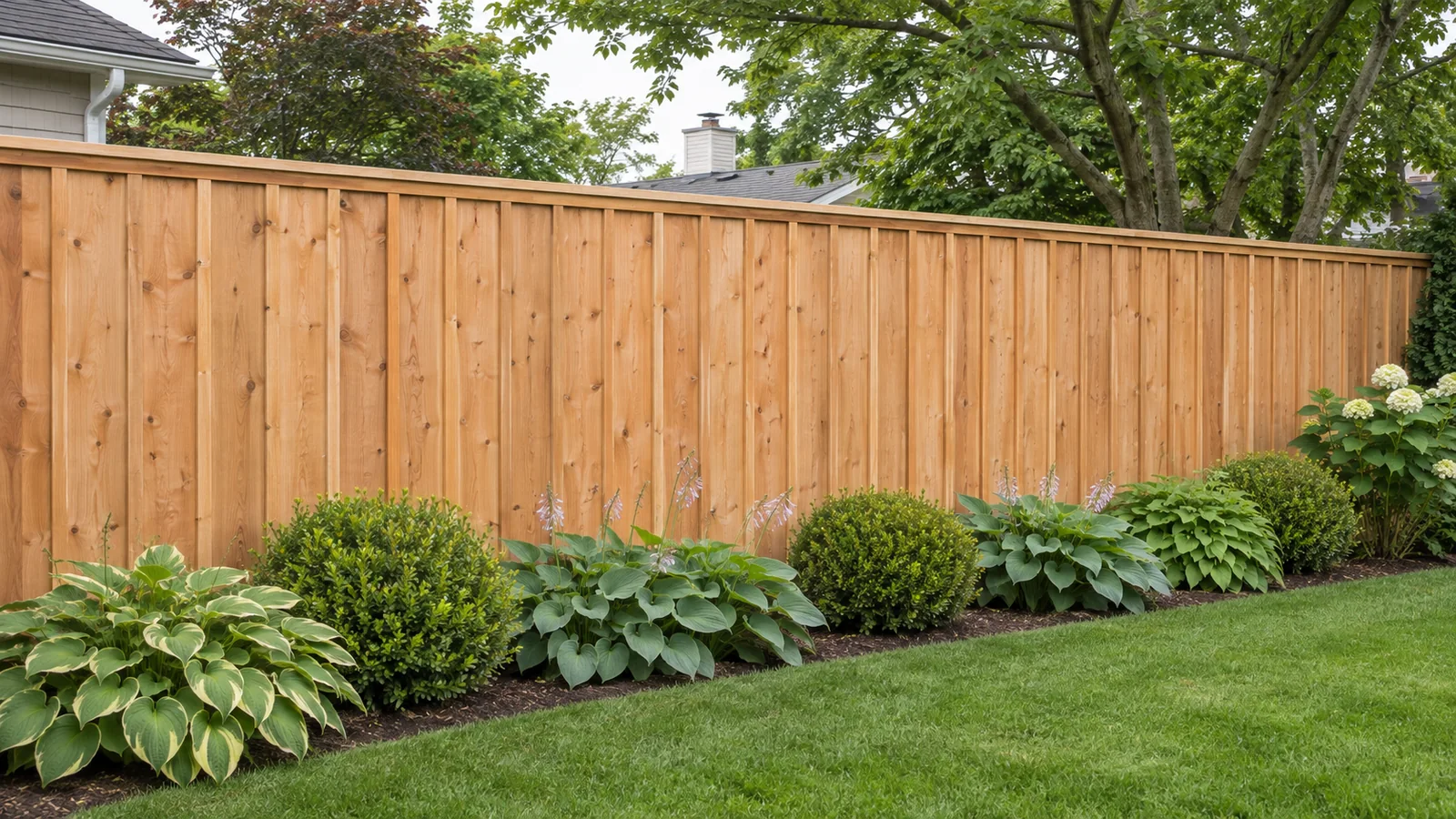
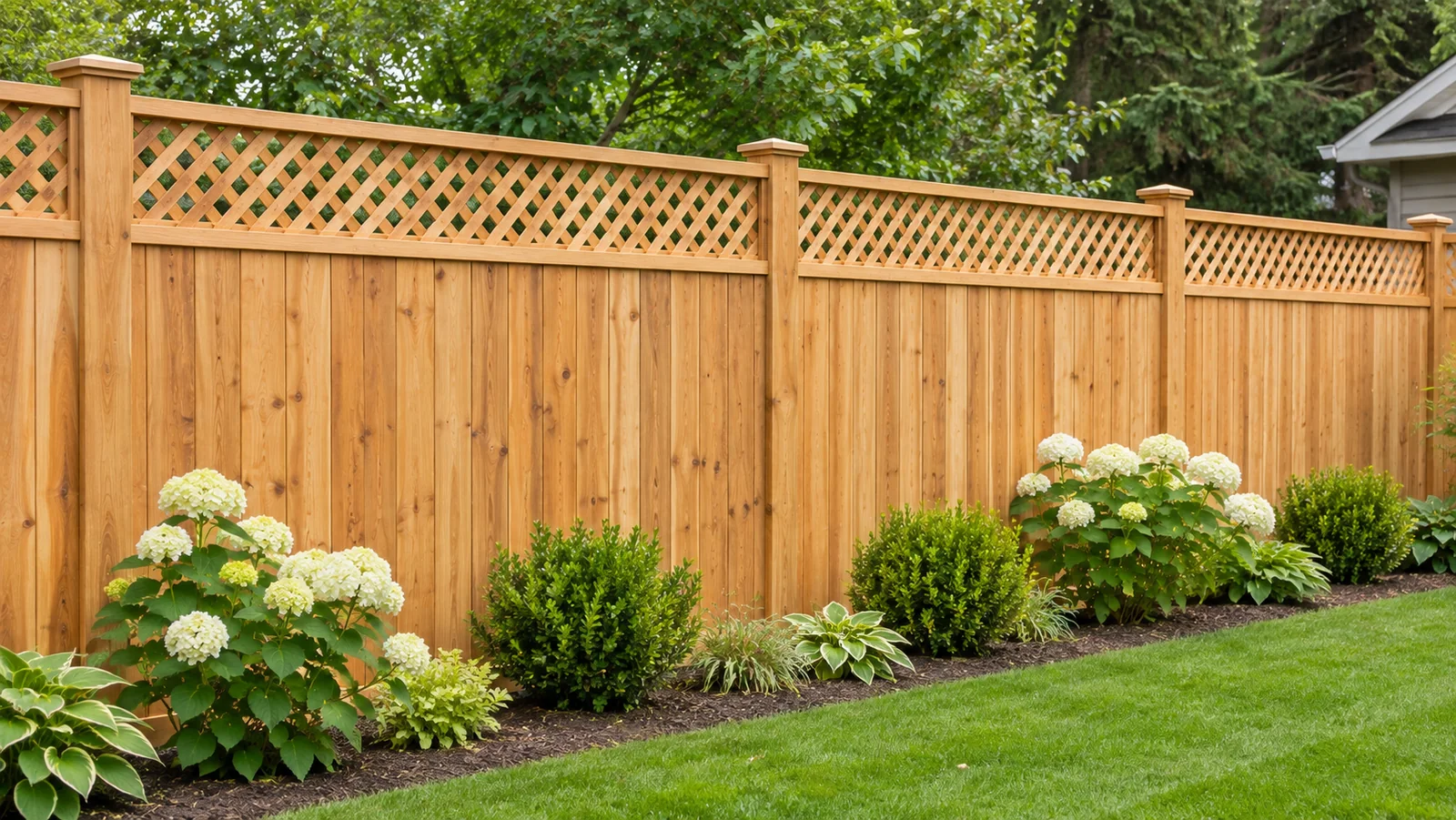
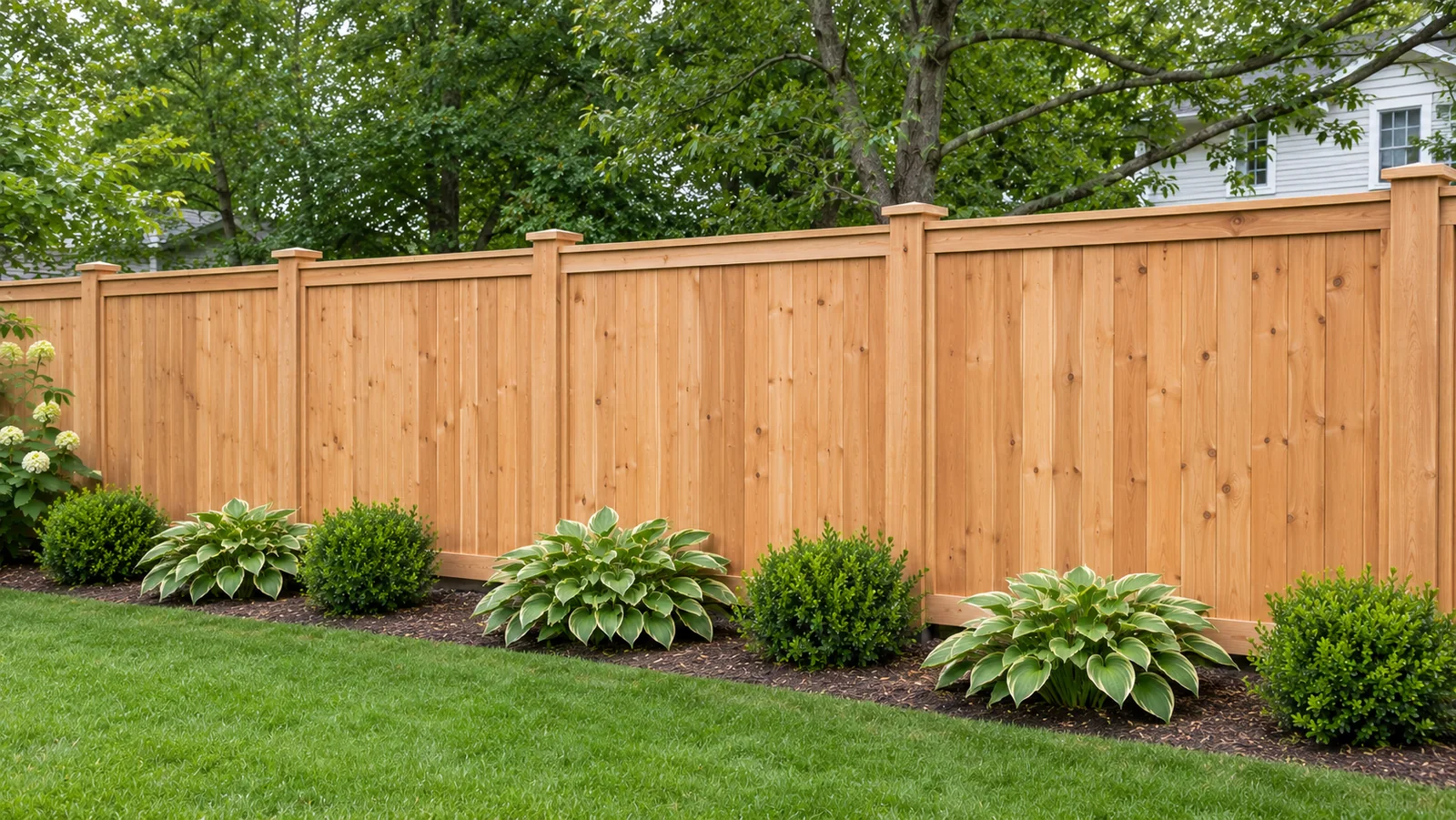
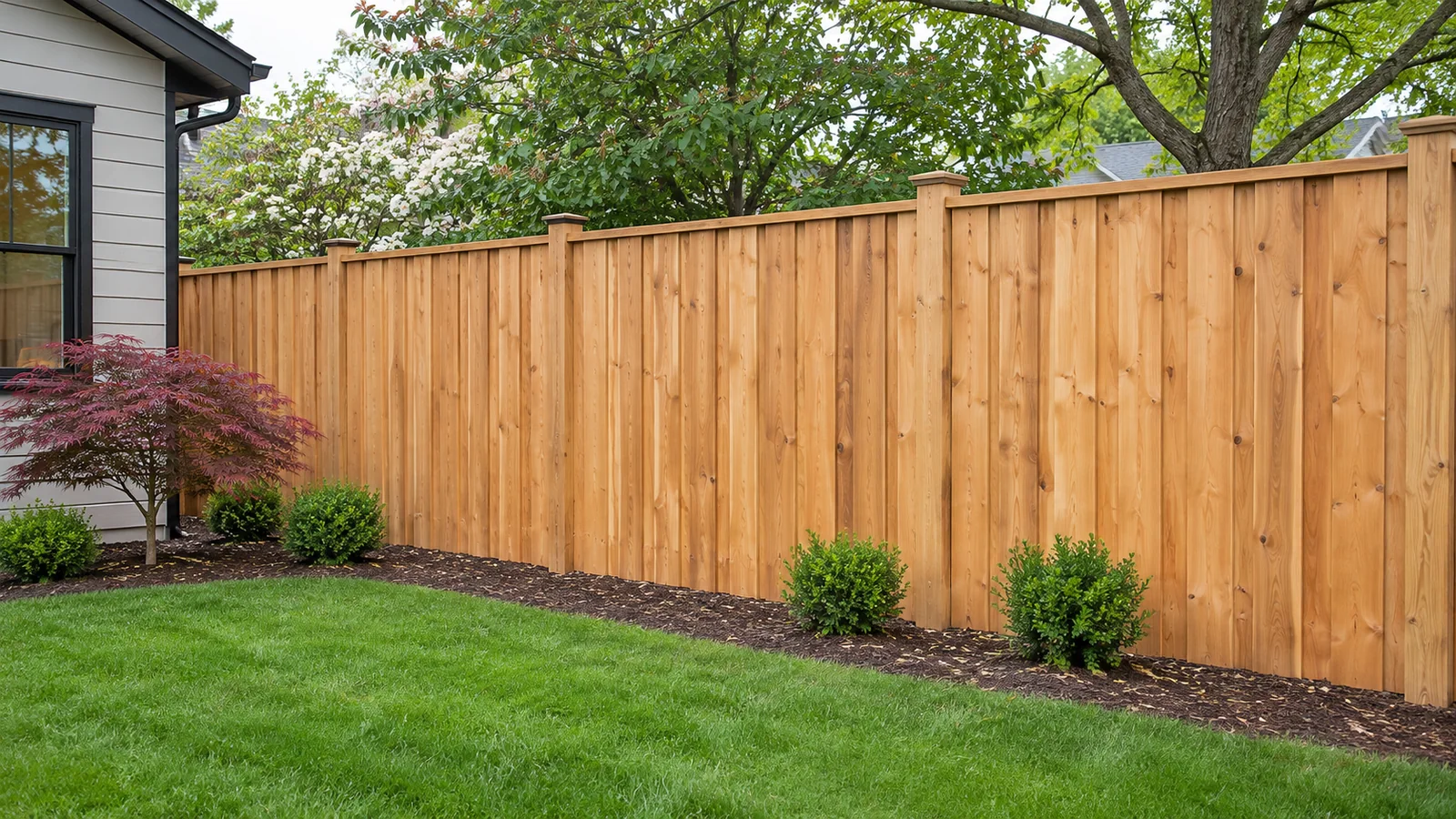
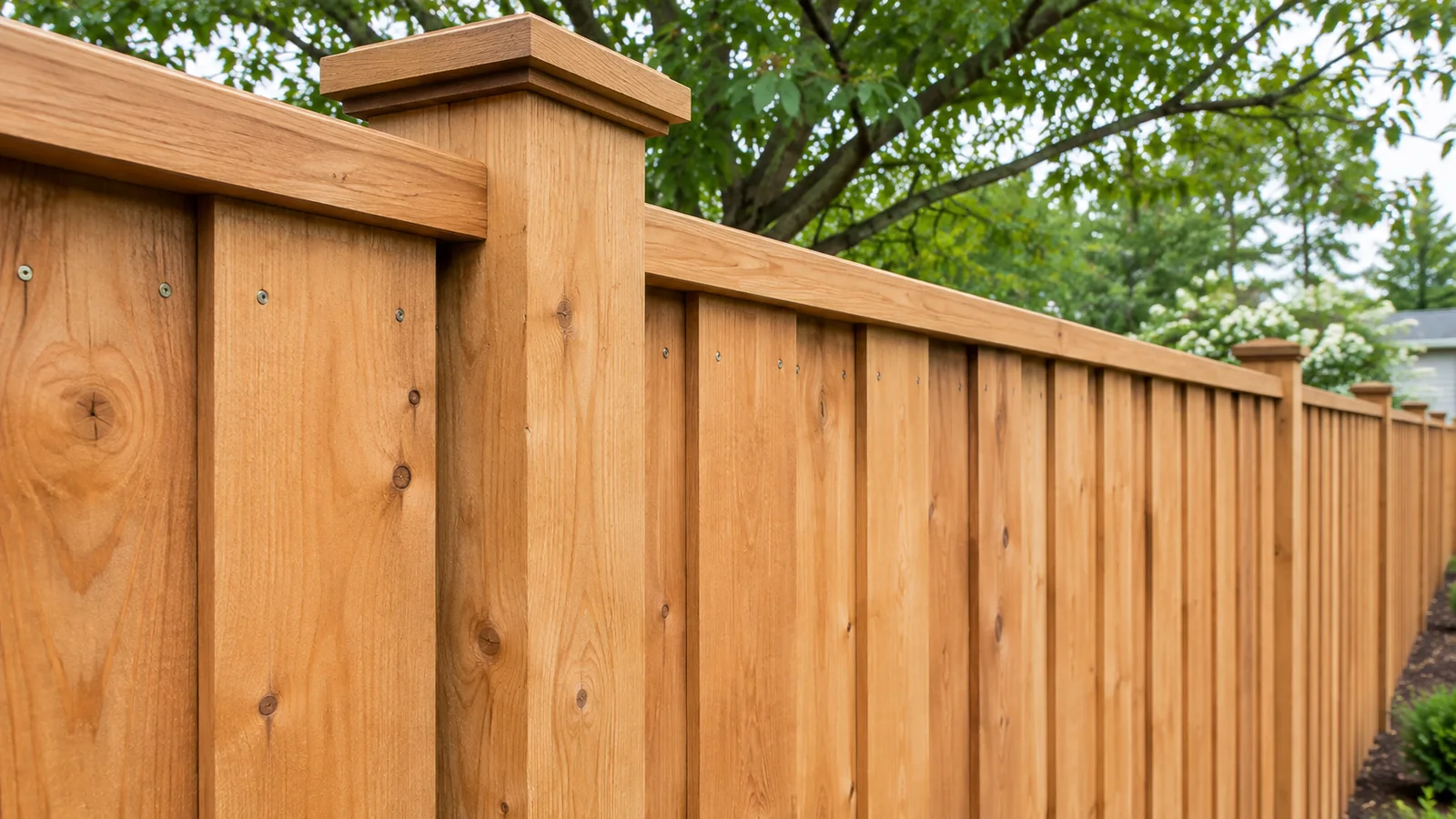
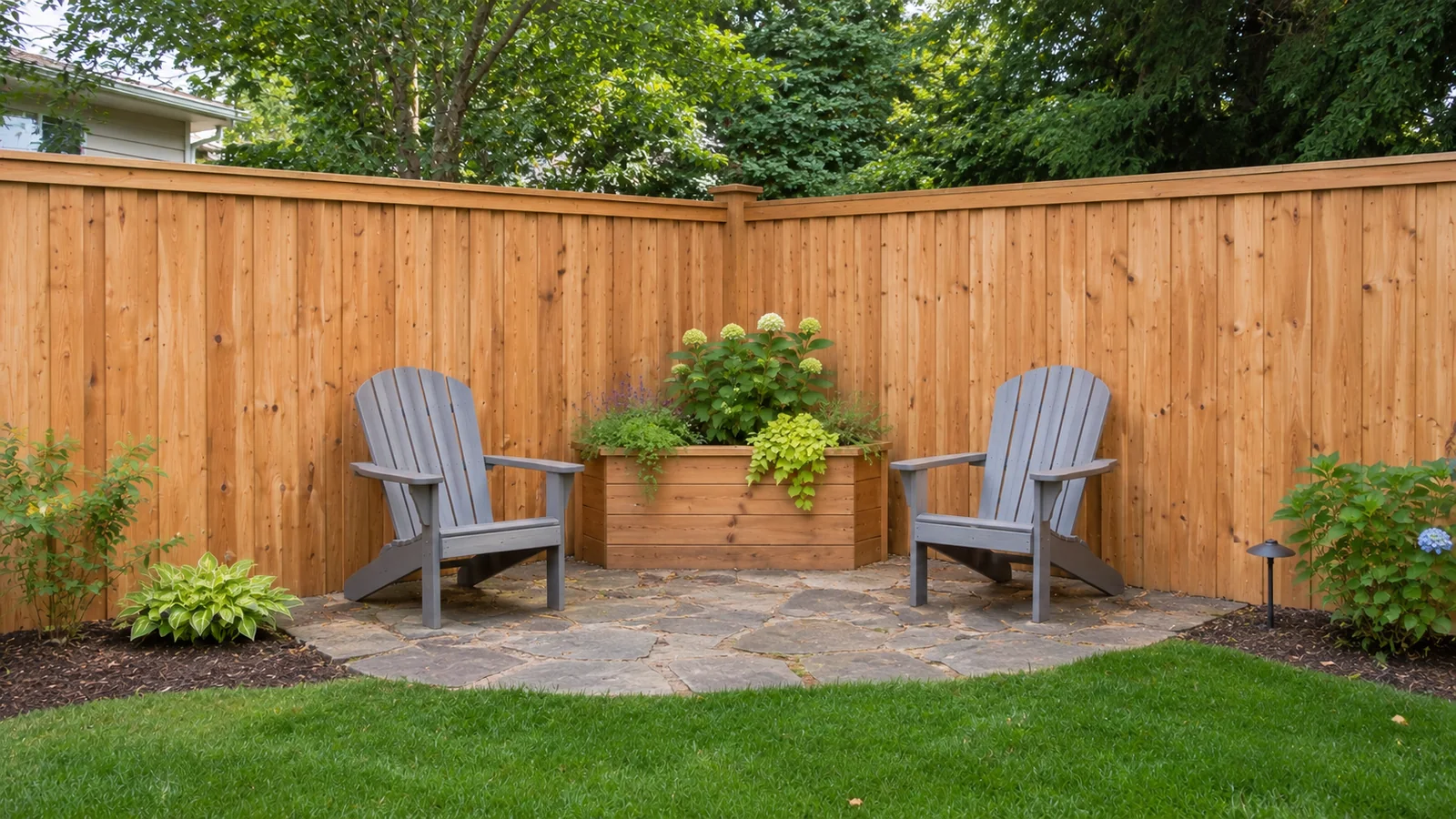
Seen from the finished side, the second layer stands proud of the first by one board thickness, so the face of the fence reads as a row of narrow vertical shadow lines with no daylight between them. The rails and posts sit behind the boards on that side.
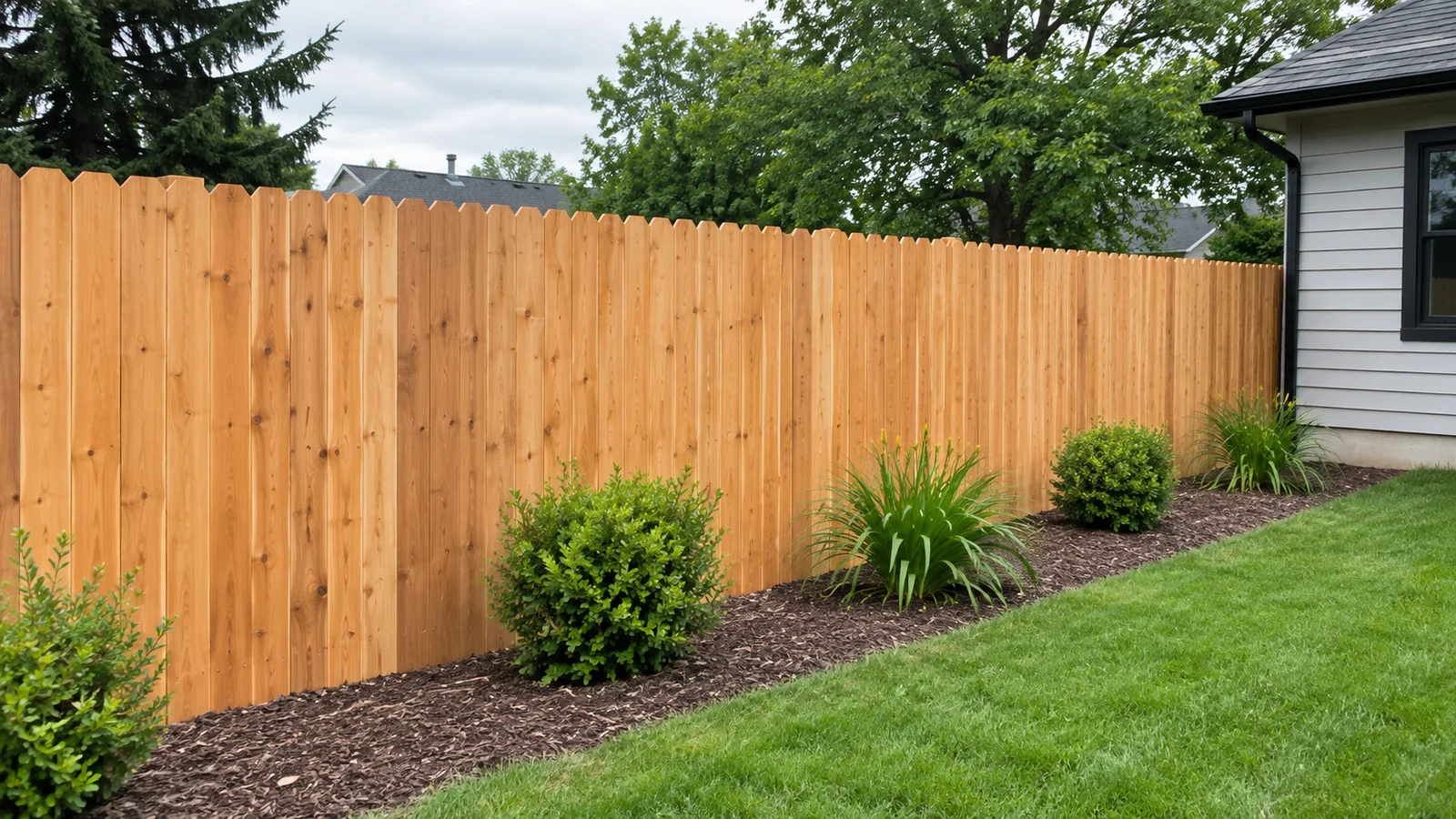
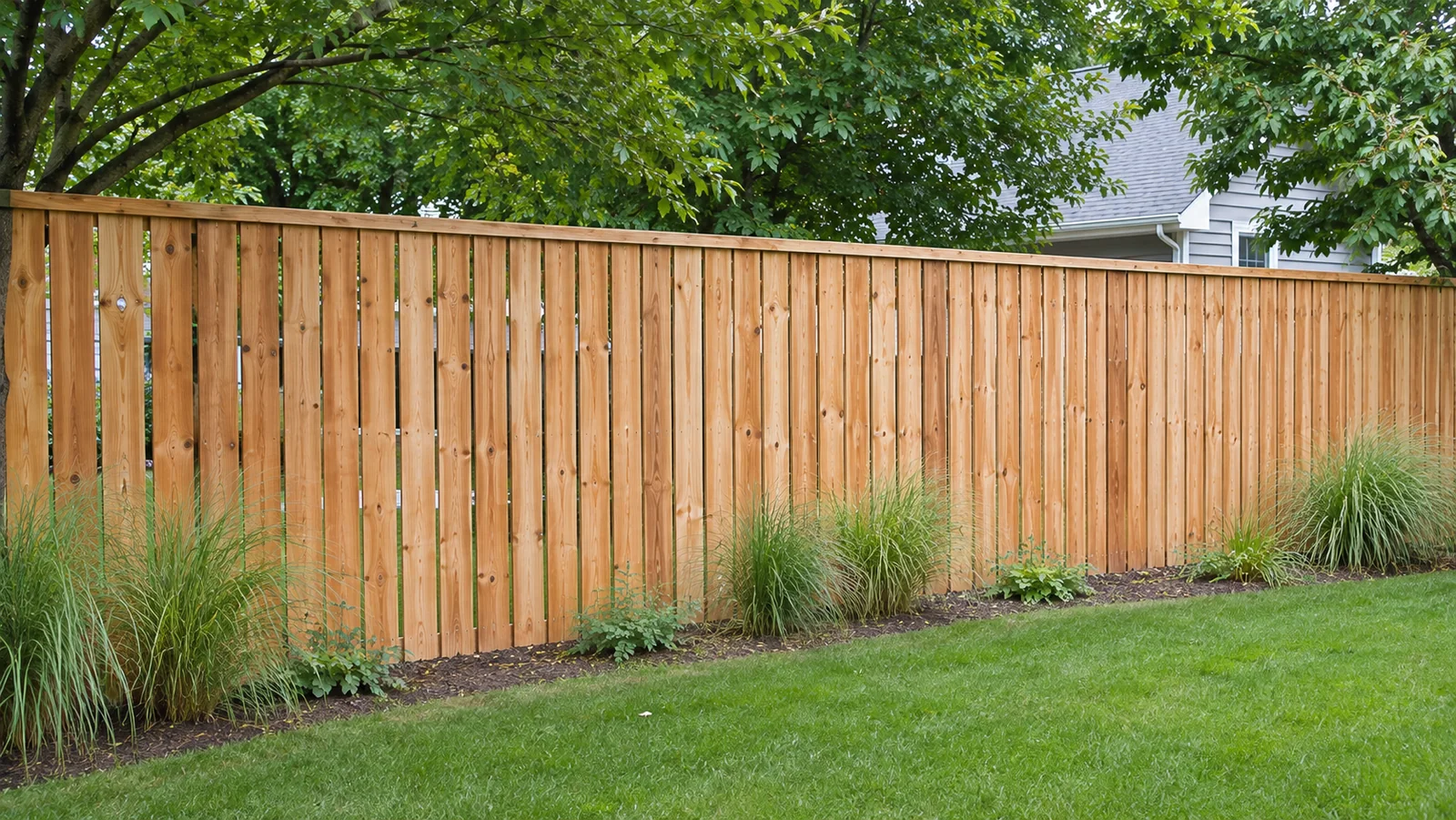
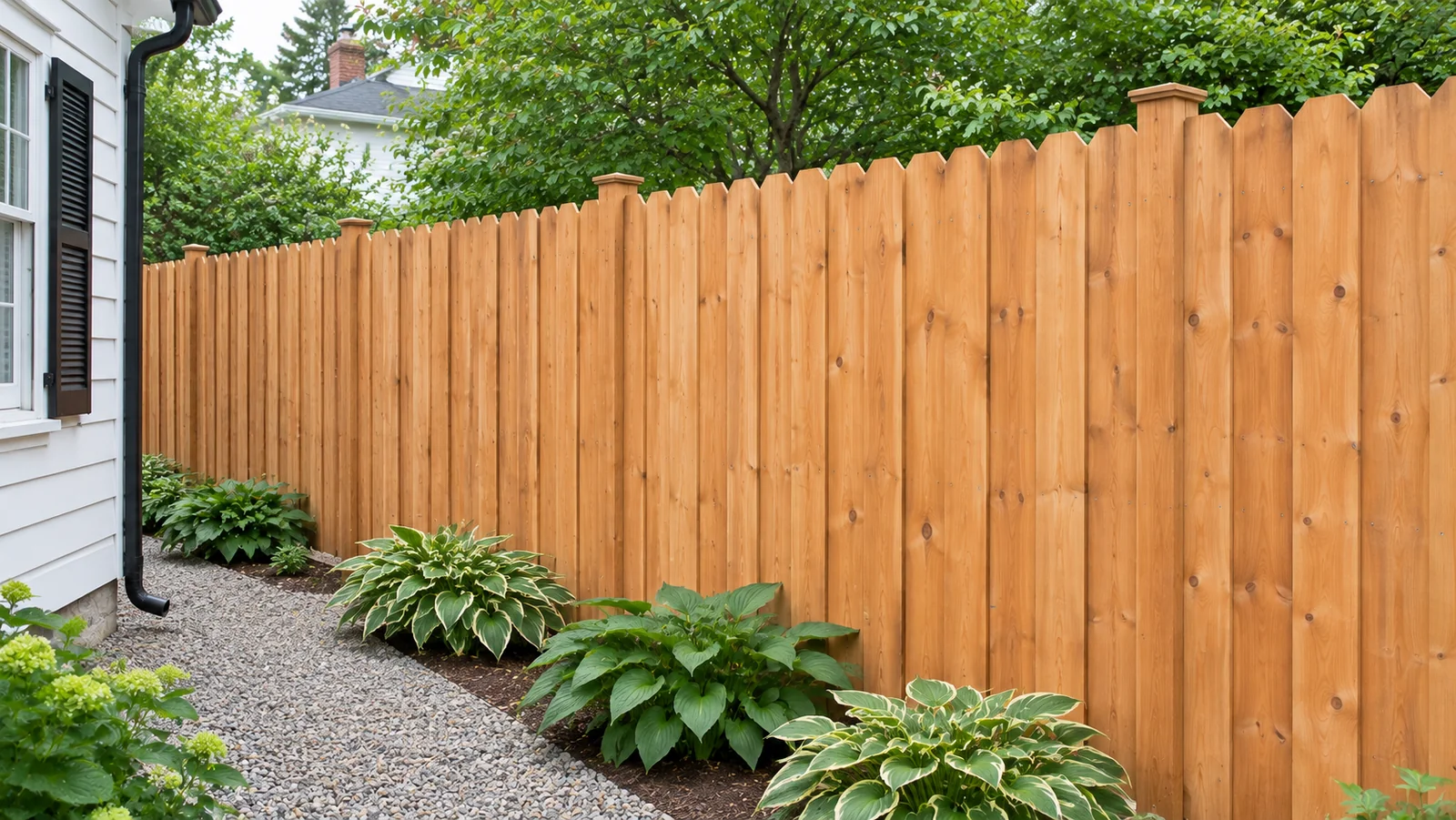
Left as they come from the yard, dog-ear boards give the top a sawtooth line, and because the two layers sit at different depths the points step in and out along the run. A cap board laid across the tops hides that line, which comes up again further down.
How much overlap does a board on board fence need?
The calculator works with 1 in on each edge. A 1×6 is 5.5 in wide once dressed, so the first-layer boards go up with 3.5-in gaps and each second-layer board covers one gap with an inch to spare on both sides.
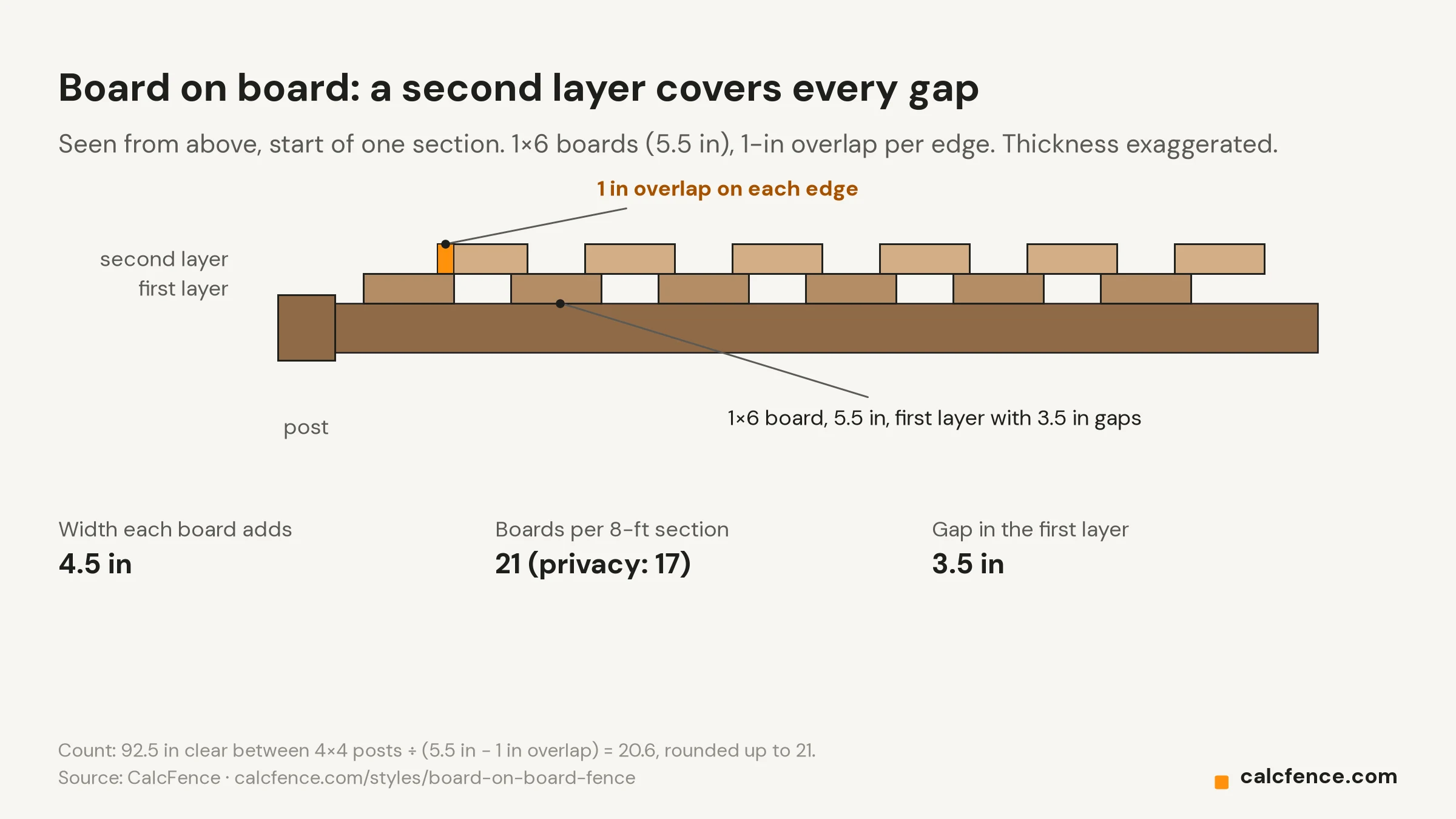
The lap is there for shrinkage. A USDA Forest Products Laboratory fact sheet on western redcedar, hosted on Virginia Tech's dendrology site, gives 4.0% tangential shrinkage from green wood to 6% moisture content, a worst case for boards that are sold already dried. On a flatsawn 5.5-in board that is 0.22 in of width. If two neighboring boards each shrink that much about their centers, the lap between them loses about 0.22 in, and a 1-in lap still closes the joint with roughly three quarters of an inch left. A butted privacy fence has no lap to give up, so the same shrinkage opens a crack at every joint.
In practice you will not hit 3.5 in exactly. On the 8-ft example, the posts are 6×6, the open span between them is 90.5 in, and 11 first-layer boards spread evenly across it leave 10 gaps of 3.0 in. Each second-layer board then laps 1.25 in per edge, which leaves you just over an inch of lap even after the 0.22 in of shrinkage. A single 3.0-in block, set between boards as you nail, keeps all 10 gaps equal. Other overlaps and board widths, and what they do to the count, are worked through on the fence board calculator.
A 64-ft side yard at 8 ft tall
Inputs: one straight run of 64 ft, no gate, posts 8 ft apart, 1×6 boards with a 1-in overlap, 5% waste on boards and rails. The 8-ft column is the calculator's default. The 6-ft column is the same run two feet lower.
| Line | 6 ft tall | 8 ft tall |
|---|---|---|
| Sections | 8 | 8 |
| Posts | 9 of 4×4, 8 ft long | 9 of 6×6, 12 ft long |
| Buried depth | 2 ft | 3 ft |
| Rails per section | 3 | 4 |
| Rails with waste | 26 | 34 |
| Boards with waste | 177 | 177 |
| Hole diameter | 10 in | 12 in |
| 80-lb concrete bags | 18 | 27 |
The board line does not move with height. Board count comes from the width of each section, and a taller fence only makes each board longer, so you buy 177 boards either way, 8 ft long instead of 6.
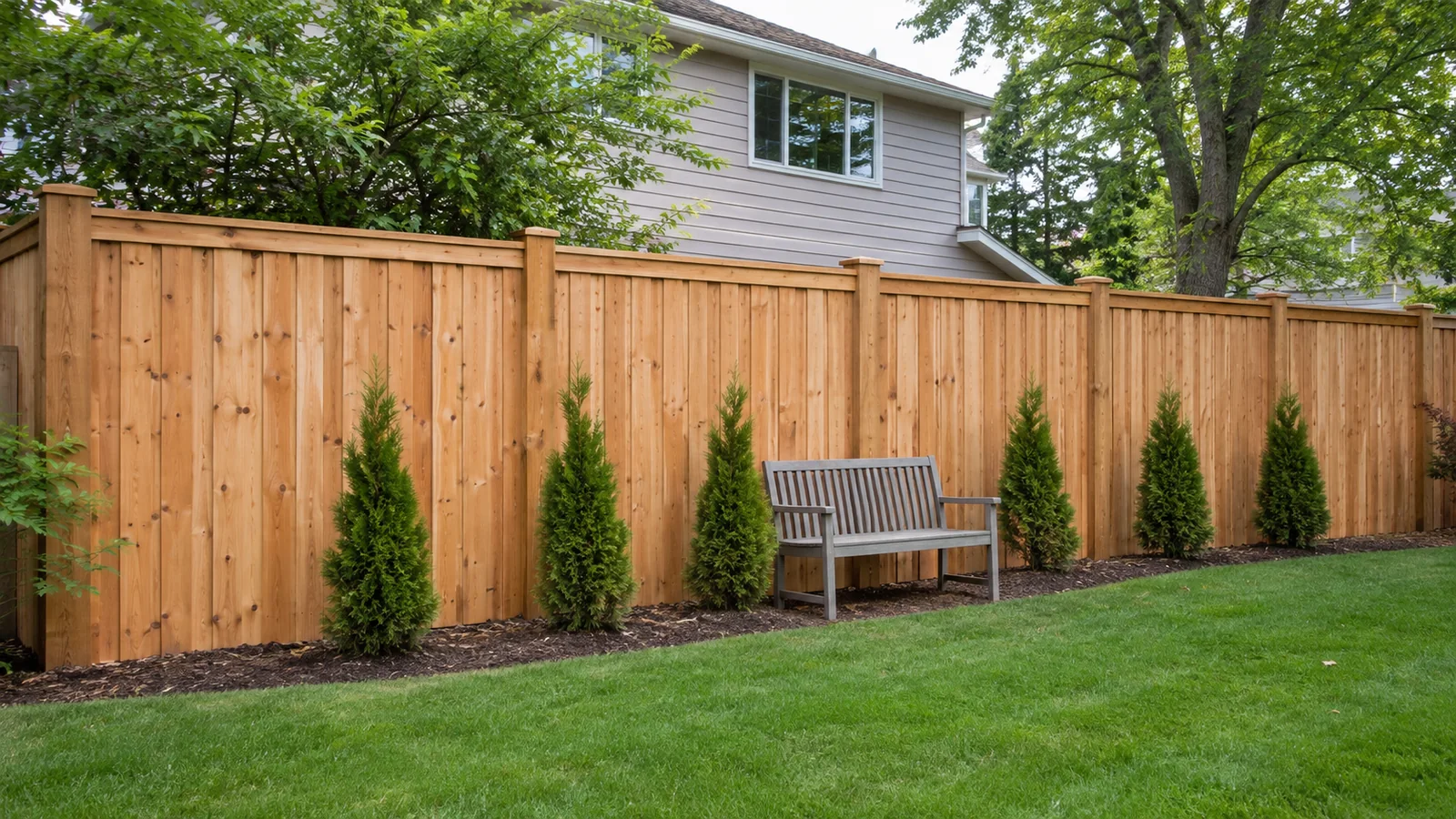
Everything below the boards changes. The calculator's rule buries a post one third of the fence height, at least 2 ft, rounded up to the next half foot, which puts an 8-ft fence 3 ft into the ground and needs 11 ft of post, bought as 12-ft stock. Above 6 ft it also switches to 6×6 posts in 12-in holes, and each hole then takes 3 bags of 80-lb mix instead of 2. A fourth rail goes into every section, so the run takes 8 more rails. Your frost depth may call for a deeper hole than the calculator's rule: fence post depth and frost line by state has it. An 8-ft fence is also past the side and back yard limit in three of the four cities in fence height rules and permits, so read your own code before you order 12-ft posts.
Board on board vs shadow box and a privacy fence
The three styles share posts, rails and concrete. On the 64-ft run at 8 ft, each takes 9 posts, 34 rails and 27 bags, and only the boards differ.
| Style, 64 ft at 8 ft | Boards with waste | Where the boards sit | Head-on view |
|---|---|---|---|
| Privacy, butted 1×6 | 143 | one face, edge to edge | closed until the boards shrink |
| Board on board, 1-in lap | 177 | one face, two layers | closed |
| Shadow box, 2.5-in gaps | 202 | both faces, alternating | closed head-on, open at an angle |
Top Rail Fence, an installer, describes shadow box in its February 2025 style guide as "alternating pickets on either side of the fence rails, creating a semi-private design", and rates board-on-board low for airflow. The names are not used the same way everywhere. Fence Armor, an online seller of post caps and fence care products, describes board-on-board in its January 2025 article as "attaching fencing boards on either side of the horizontal rails", which is a shadow box layout with tighter laps. The calculator counts the one-face build in the middle row, so if a quote says "board on board", ask which face the second layer goes on. The shadow box fence page covers the two-faced build. A horizontal fence turns the boards on their side and needs neither layer.
Installed price, as an estimate
Installed, a 6-ft board-on-board fence comes to about $45 per foot at mid-range national prices, and that figure is an estimate. The national cost guides price board-on-board only as a premium over a plain wood fence, 30% in Angi's board-on-board guide, and none gives a per-foot figure by height. Against 6-ft wood privacy at the same tier it is 22% more per foot. For the 64-ft example at 8 ft the estimate comes to about $3,980 including a typical permit fee, before any gate, removal or state adjustment, 33% more than the same run at 6 ft. The wood fence cost calculator prices your own length and state.
Caps, trim and stain
A cap board runs flat along the tops of the boards from post to post, and a trim board under it, against the face, ties the two layers together visually. Neither is on the calculator's list. At 8-ft spacing each section takes one 8-ft board of each, so the 64-ft run adds 8 cap boards and 8 trim boards, plus post caps if you want them.
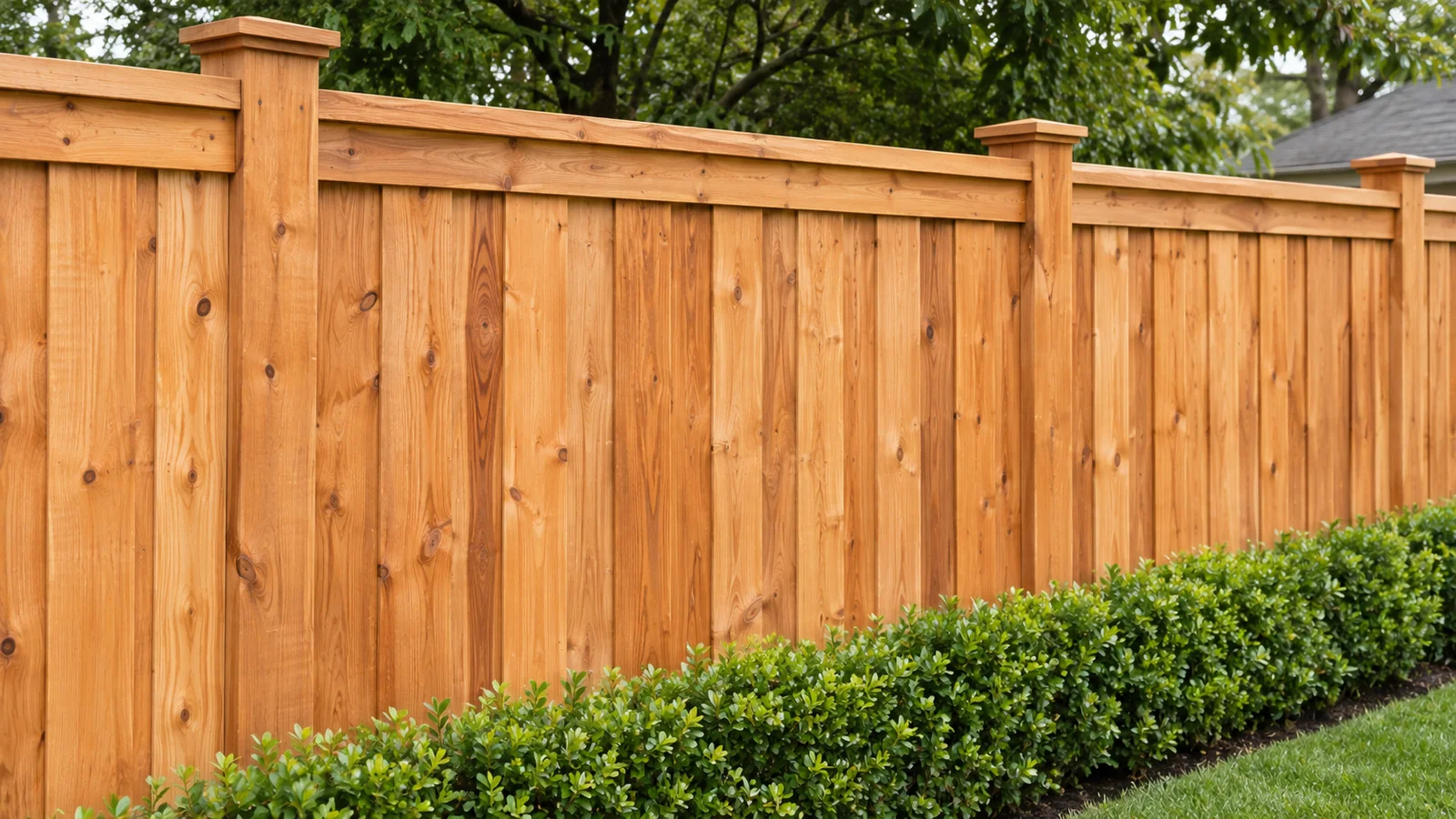
Stain is easier to plan around the lap than around the face. Once the second layer is on, the inch of each first-layer board under the lap is out of reach of a brush or a sprayer, so if you want every surface coated, stain the boards before they go up and touch up the faces after.
Gates and corners
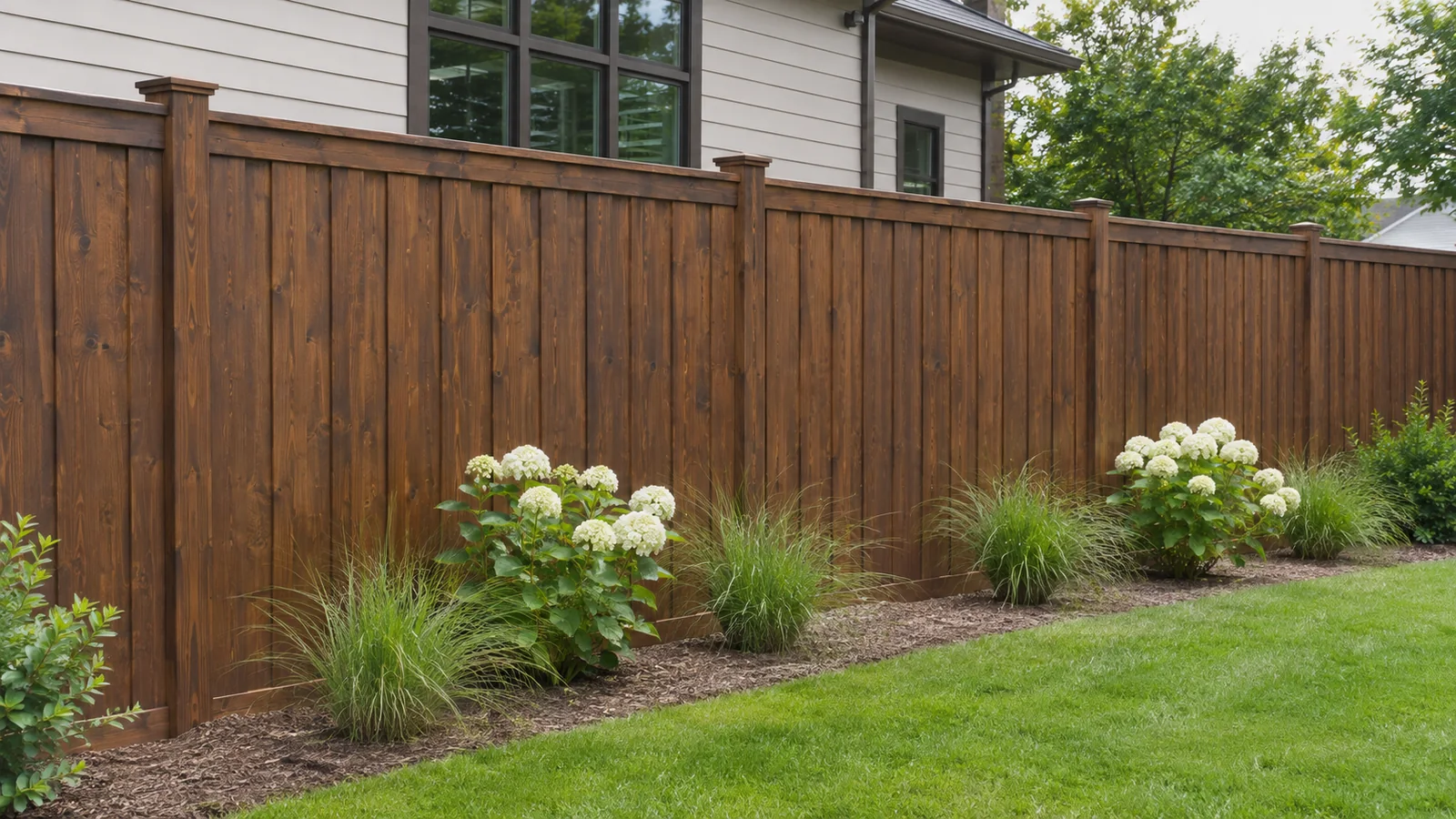
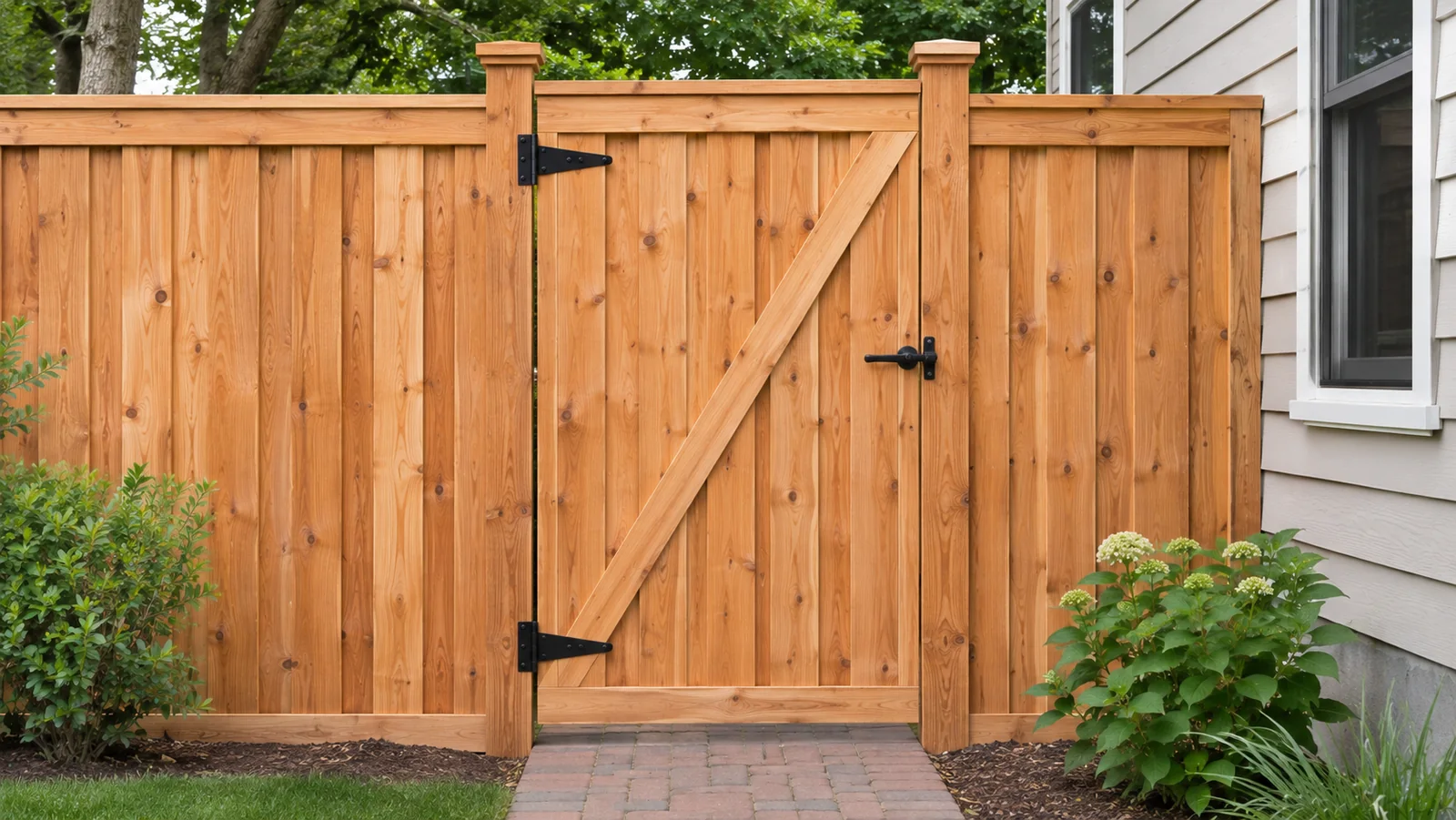
Add a 4-ft gate to the 64-ft run and the calculator takes 60 ft of fence, which still rounds up to 8 sections. The gate brings 2 more posts, 11 in total, and 33 bags instead of 27, while the board count stays at 177 because the last bay is now 4 ft wide but still counted as a full section. The gate leaf itself, with its frame, boards, hinges and latch, is not on the list.
If your side yard turns a corner, enter it under Multiple Runs. As an L of 36 ft and 28 ft, the same 64 ft becomes 9 sections and 10 posts with 199 boards, because each side is divided into 8-ft sections on its own and both leave a short bay.
Key Takeaways
- Over the 64-ft run at 8 ft the fence takes 2.77 boards per foot of length, waste included.
- Each board crosses 4 rails at 8 ft, so the fastener estimate rises from 1,008 to 1,344, a third more for the same 177 boards.
- 6×6 posts take 2 in off every section's open span (92.5 in down to 90.5 in) without changing the 21-board count.
- Setting the posts 6 ft apart on the 8-ft example gives 11 sections, 12 posts and 174 boards.
Frequently Asked Questions
Is board on board more private than a plain privacy fence?
When new, both block the view head-on. The difference shows once the wood dries: a butted fence opens a crack at every joint, while the two layers keep lapping each other, which is why the style takes 34 more boards on the 64-ft run.
How long should posts be for an 8 ft board on board fence?
The calculator sizes them as 12-ft 6×6 posts with 3 ft in the ground. Where the frost line runs deeper than 3 ft, the hole and the post get longer.
Which side faces the neighbor?
In the one-face build the rails and posts show on the back, so whoever gets the face with the boards gets the finished look. If the fence is shared, agree on the facing before the first board goes up, since turning it around later means rebuilding the boards on the other face of the rails.
Which handles wind better, board on board or shadow box?
Top Rail Fence says the gaps in a shadow box "allow wind to pass through, reducing resistance". A board-on-board fence leaves no such path, and on the 8-ft example every one of its 9 posts is already a 6×6 in a 12-in hole.
Sources
- USDA Forest Service, Forest Products Laboratory, "Thuja plicata, Western Redcedar" technology transfer fact sheet, hosted by Virginia Tech Department of Forest Resources and Environmental Conservation, no date, accessed November 1, 2026: dendro.cnre.vt.edu/DENDROLOGY/woodtech/thuja_plicata.pdf
- Top Rail Fence, "Choosing the Right Fence Style: Shadowbox, Privacy, or Board-on-Board", February 13, 2025, accessed November 1, 2026: toprailfences.com/blog/fence-design/choosing-the-right-fence-style-shadow-box-privacy-or-board-on-board/
- Fence Armor, "Everything You Need to Know About Board-on-Board Fences", January 29, 2025, accessed November 1, 2026: fencearmor.com/blogs/news/everything-you-need-to-know-about-board-on-board-fences