Vinyl Privacy Fence: How It Goes Together, Colors and Panel Count
A vinyl privacy fence is a solid PVC fence of tongue-and-groove pickets held in rails that slide into routed posts, sold as panels 6 or 8 ft wide. A 132-ft back line, 6 ft tall with one 4-ft gate, takes 16 panels of 8 ft, 19 posts with caps and 57 bags of 80-lb concrete, and no panel has to be cut. Installed, 6-ft vinyl privacy runs $46 a foot at national mid-range prices.
Updated
Hole: 12 in dia x 2.5 ft deep. Total (80 lb): 57 bags for 19 posts.
Set to 8-ft panels, sold as 6×8 kits, and a 132-ft back property line with one 4-ft walk gate, the calculator above gives panels, posts, caps and the concrete for the post holes. The gate leaf, the aluminum inserts some panels and posts take, and concrete poured inside a post are not in its count. Wood, wire and metal builds are on the fence styles hub.
How a solid vinyl panel locks together
A vinyl section has no nails or screws holding the face on. The solid privacy panel in the installation guide from Weatherables, a vinyl fence seller, is built from 7/8 × 6 in tongue-and-groove pickets that slide into slotted rails 1.5 × 5.5 in in section. The bottom rail carries an aluminum insert against sag, and a U-channel goes on the first and last picket to close any small gap at the ends.
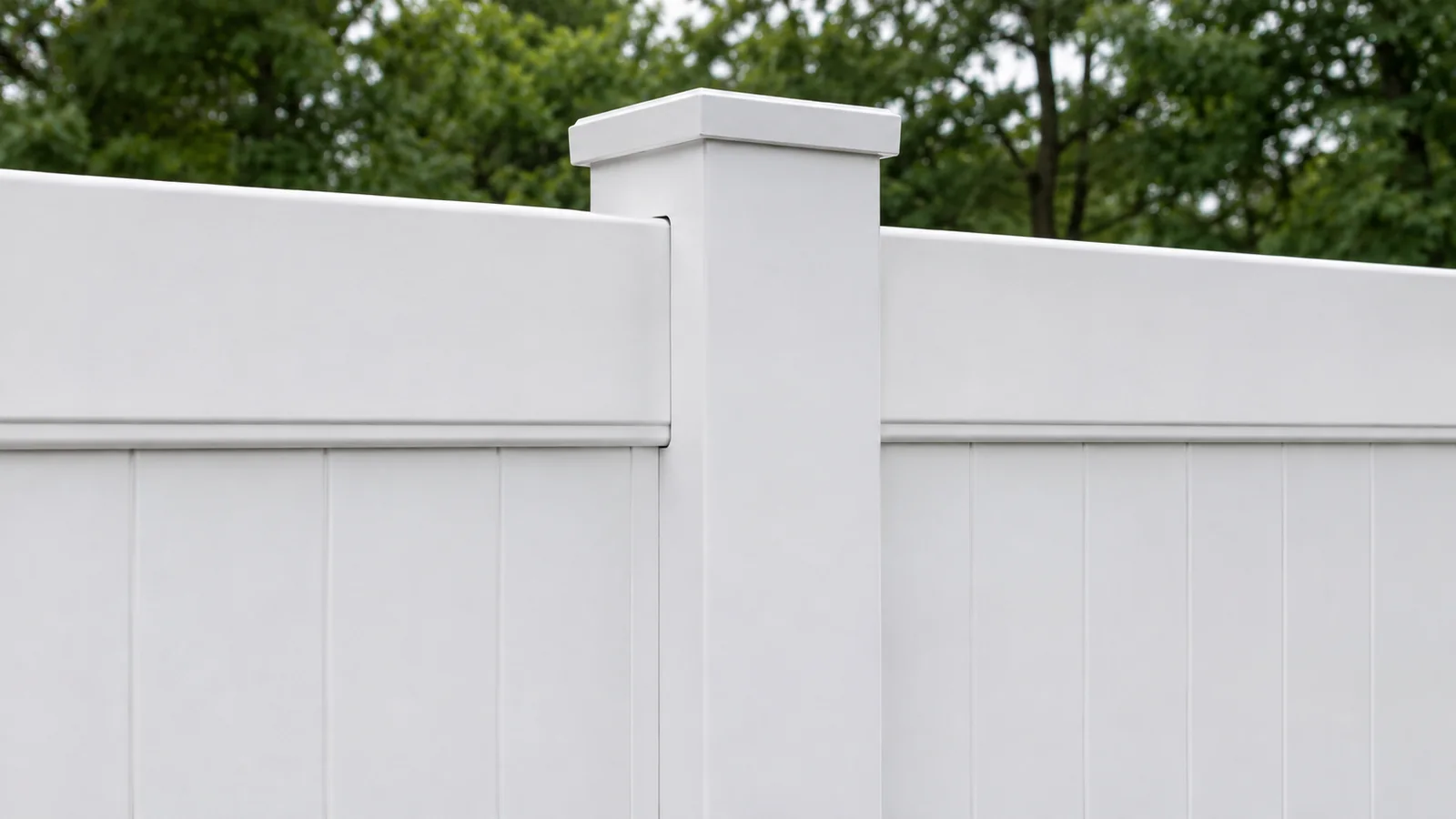
The rails end in routed holes in the posts. One post is set in concrete, the next stands loose in its hole while the panel is assembled between them, and only then is the second post poured. Each section is finished before the next post is poured.
How many panels does a vinyl privacy fence need?
On the 132-ft line, the 4-ft gate opening leaves 128 ft of fence, which is exactly 16 panels of 8 ft. Every panel goes up full width. The calculator puts 19 posts under them, 2 of them added for the gate, with a cap on each and 3 bags of 80-lb mix per post hole, 57 bags in all. Set by hand on a straight line the count is one lower, 18, for the reason the vinyl fence calculator works through.
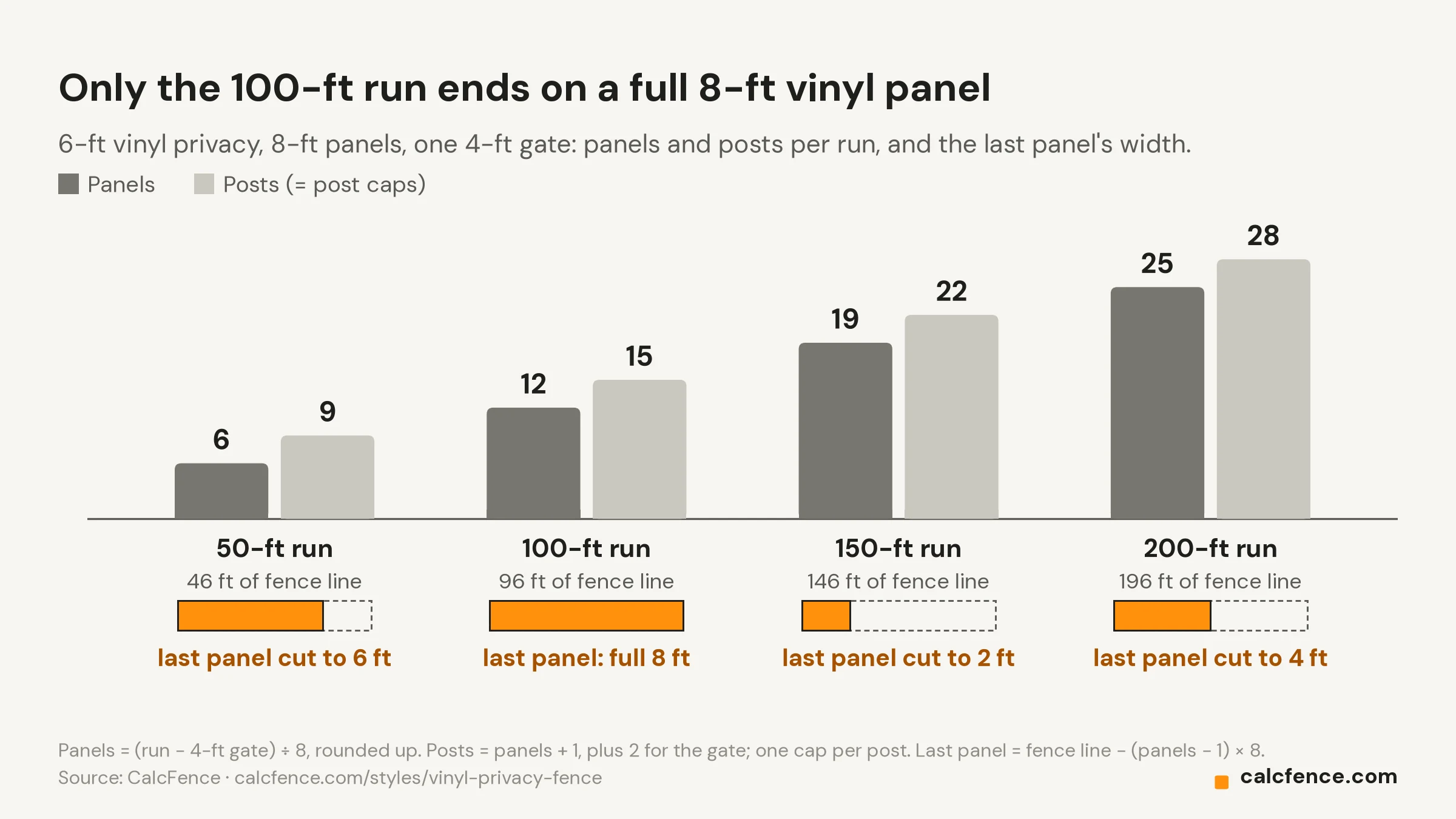
A run that does not divide by the panel width ends on a cut panel. Of the four lengths in the chart, 150 ft leaves the shortest piece.
A 2-ft panel at the end of 150 ft
At 150 ft with the same single gate, the calculator counts 146 ft of fence line, 19 panels and 22 posts. Eighteen full panels cover 144 ft, so the 19th is cut down to 2 ft. A 2-ft section of vinyl looks like a mistake at the end of a long run, the cut rail loses the factory notch that locks it in the post, and you still pay for the whole panel. Three alternatives avoid the stub, and none needs more than the 19 panels already counted.
| 150 ft, one gate | 8-ft panels | 6-ft panels | Pieces cut | Posts, calculator | Posts, by hand on a straight line |
|---|---|---|---|---|---|
| As counted, last panel cut to 2 ft | 19 | 0 | 1 | 22 | 21 |
| Split the cut: two panels at 5 ft | 19 | 0 | 2 | 22 | 21 |
| Mix widths: 128 ft + 18 ft | 16 | 3 | 0 | 22 | 21 |
| Widen the opening to 6 ft | 18 | 0 | 0 | 21 | 20 |
Splitting the cut leaves 17 full panels and two 5-ft ones, at each end or either side of the gate. Mixing widths works only if your style is sold in both 6×8 and 6×6 kits. The calculator takes one panel width at a time, so the mixed row is two runs on the fence panel calculator: 132 ft with the gate in 8-ft panels gives 16 panels on 19 posts, and 18 ft in 6-ft panels gives 3 panels on 4 posts. Where the two runs meet, one post takes the last 8-ft panel on one side and the first 6-ft panel on the other, so the line needs 22 posts, not 23, and 21 by hand. A 6-ft opening, for a wider gate or a double one, leaves 144 ft, 18 full panels on 21 posts. Gates are assembled before the post layout, since their width plus hardware sets the opening.
Stepping down a slope
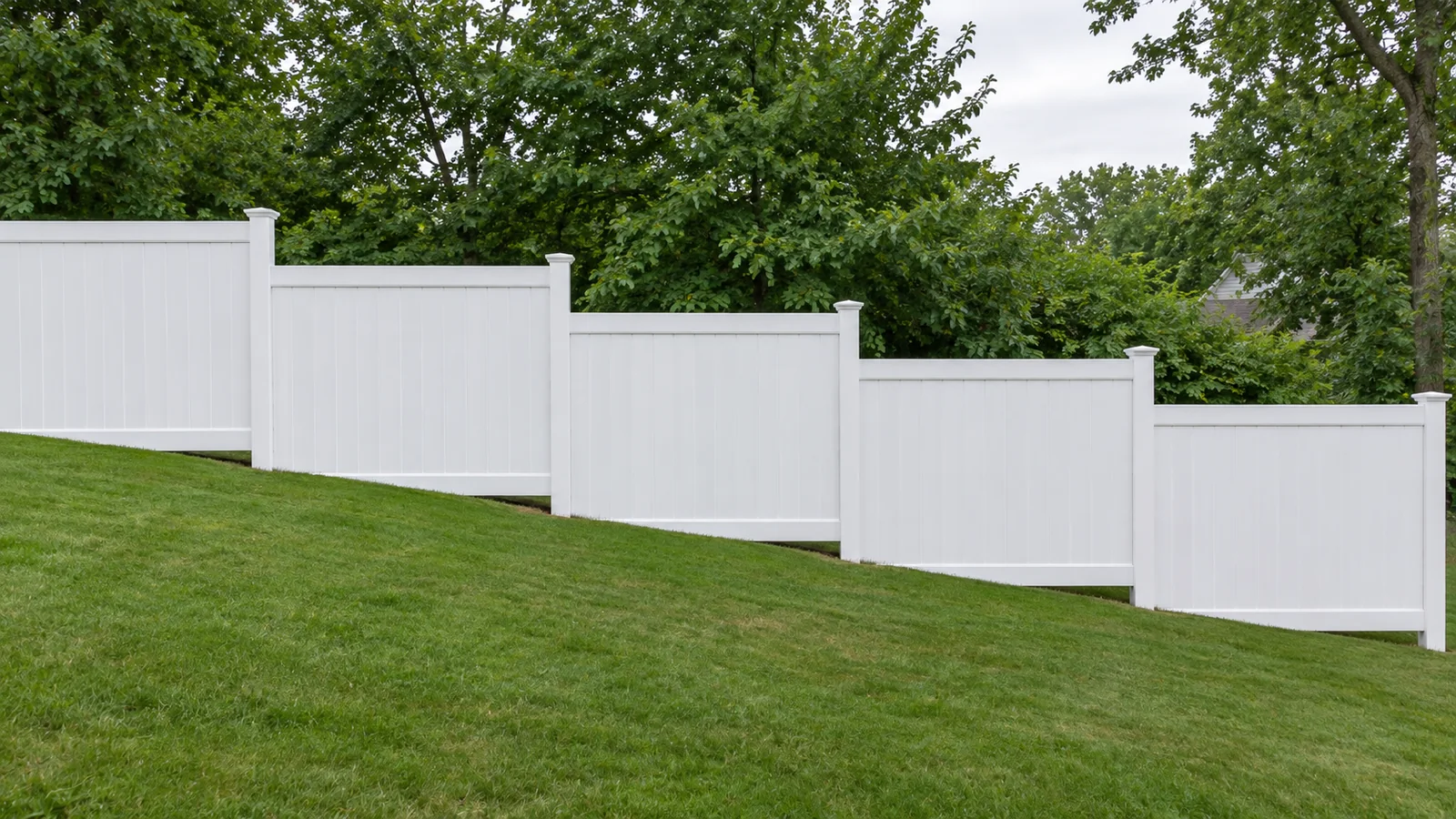
A vinyl panel is a rigid rectangle, and on falling ground it either steps or racks. The slope each style can take is set per style, in inches over feet, on its spec diagram; Weatherables' general guide prints no single figure and asks for a string line across the yard before you buy. Steeper ground is stepped. Each panel stays level and sits lower than the one before, leaving a wedge of open space under the downhill side, as in the illustration. A stepped panel hangs either on end posts with rail holes cut into their blank side, or on brackets: U-mount brackets on the blank side of an end post, or on both sides of a blank post. Bracketed rails are cut shorter, and steep ground may need longer posts. The calculator assumes a level line and does not sort posts by type, so a stepped section changes your post order even where the count stays the same.
Vinyl privacy fence colors: white, tan and gray
Weatherables sells privacy fence in White, Tan, Khaki and Gray, three woodgrain finishes (Coastal Gray, Cedar, and a two-tone with black posts and rails) and an All Black at about 40% gloss. Because the color is mixed into the vinyl during manufacturing, the seller claims it "won't fade or chip like painted panels." White is the one color it lists as reflecting sunlight to keep the fence cooler.
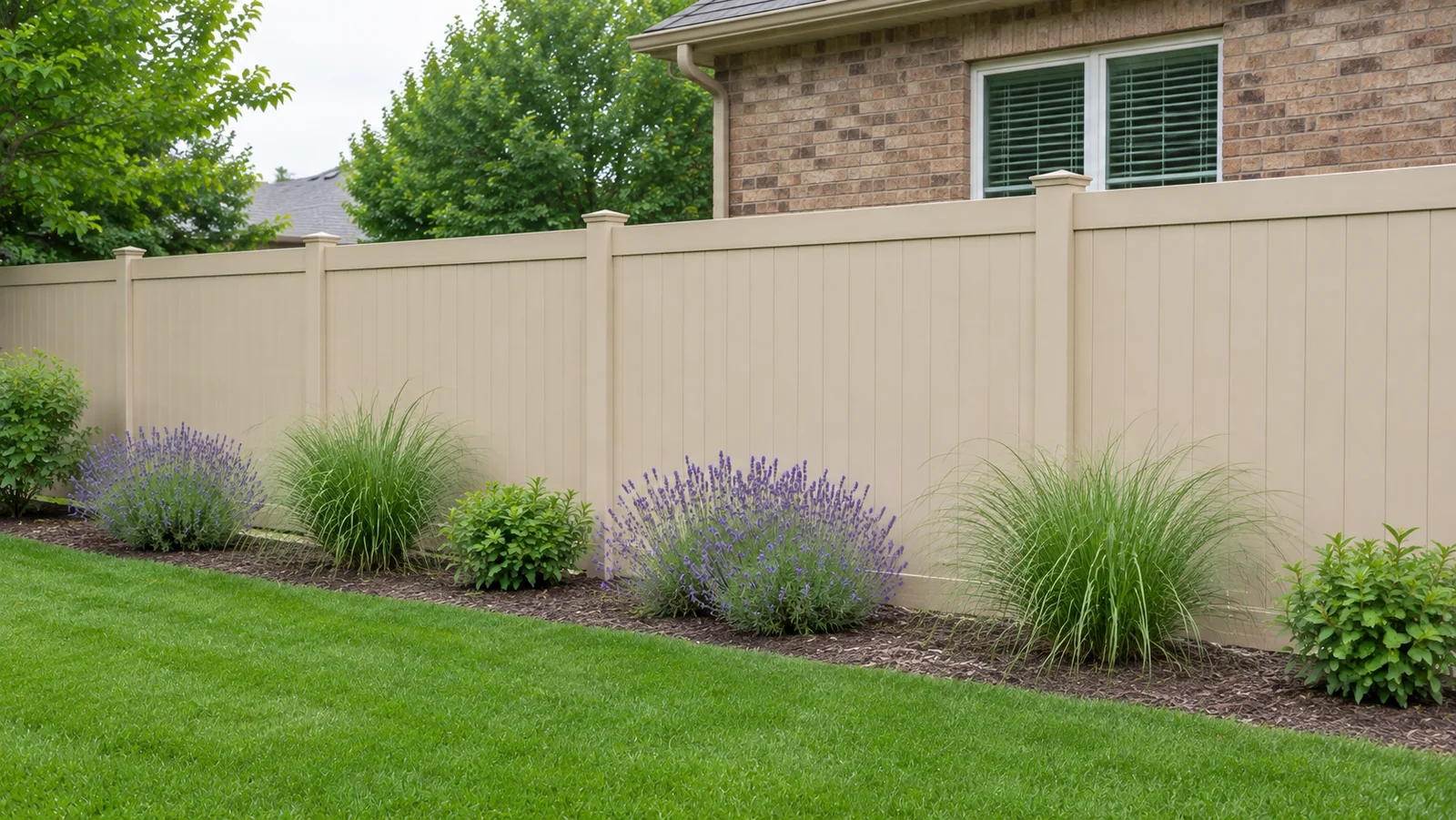
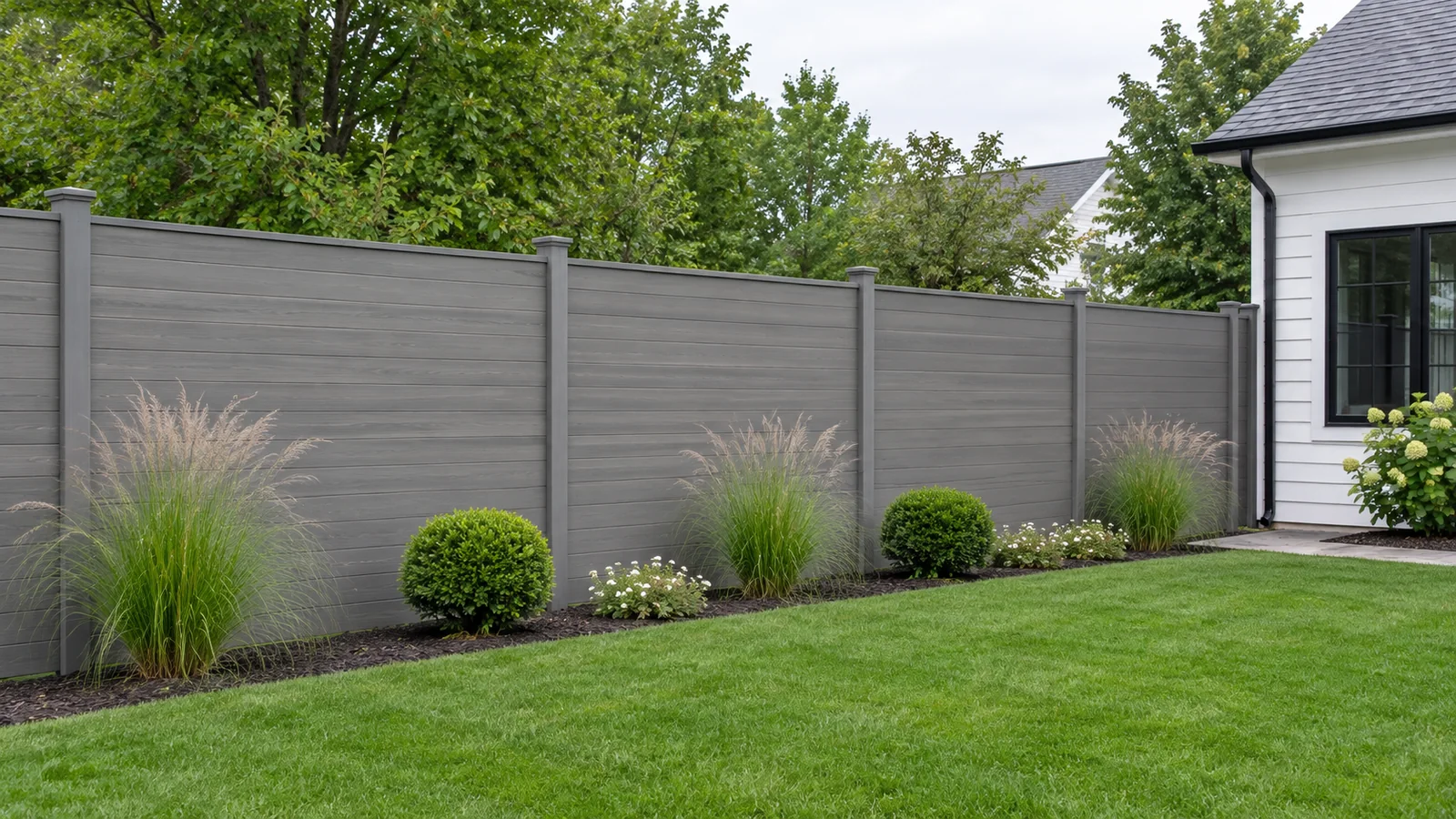
Tan is pitched as the warm neutral, a softer choice than bright white and one meant for earth-toned houses like this brick one. Gray, or grey, comes two ways: plain Gray is a flat color, and Coastal Gray Woodgrain is a medium gray with a printed wood pattern, the one that reads as stained boards from across the yard.
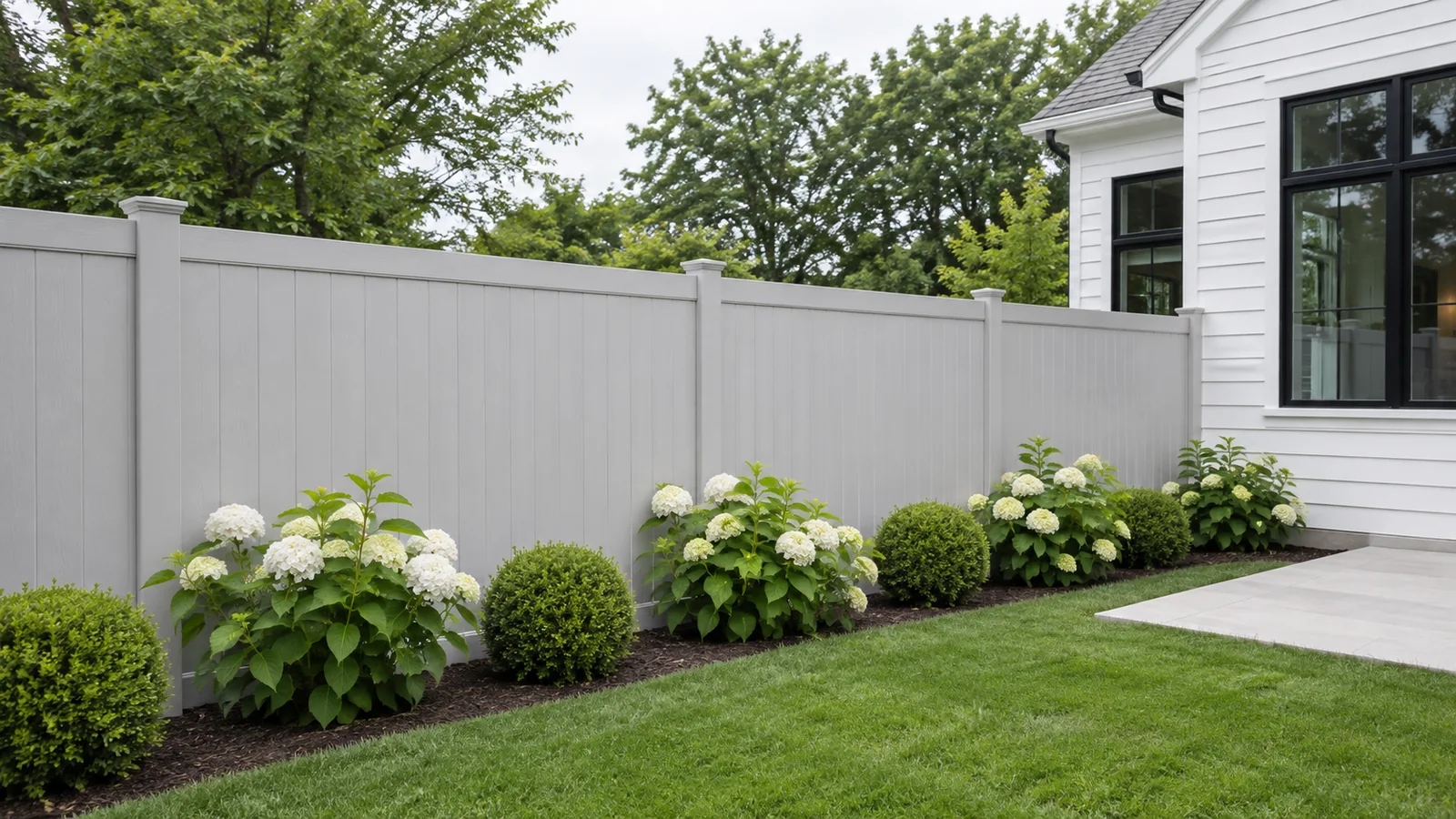
Lattice and two-tone panels change the outline. A solid panel with lattice slides a lattice strip between a mid-rail and the top rail, and the wood version of that look is the lattice top fence. The two-tone woodgrain puts black posts and rails around wood-look panels, much the way a picture frame fence frames its boards in wood.
Vinyl vs wood privacy fence
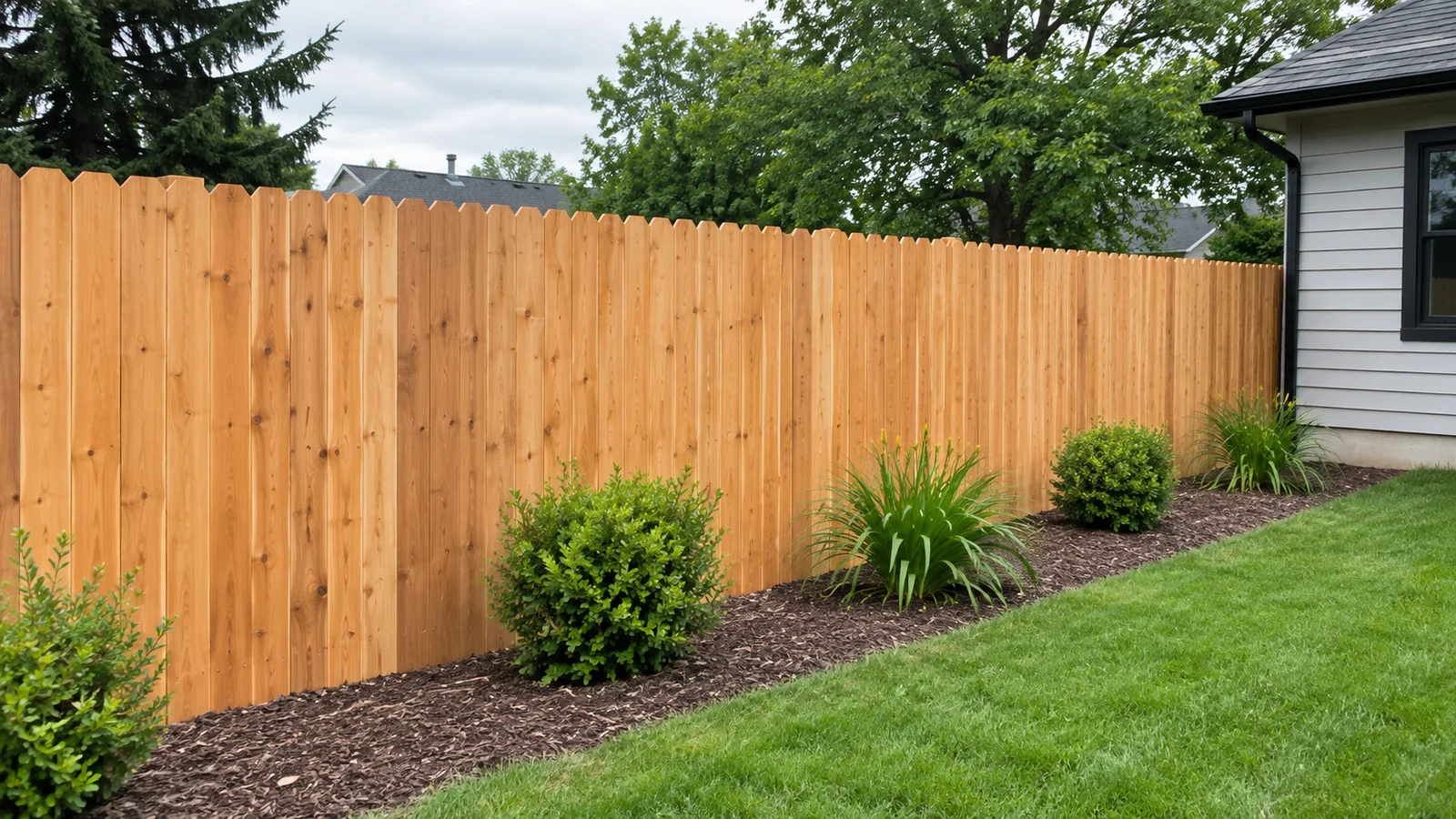
At 6 ft, wood dog-ear privacy installs for $37 a foot at mid-range national prices, so vinyl costs about 24% more per foot before gates and permit. The vinyl fence cost calculator prices the whole job, and the fence materials compared guide puts upkeep side by side.
A wood privacy fence is boards nailed to rails on 4×4 posts, so a short section is a saw cut and the wood fence calculator counts boards to the inch. A vinyl fence comes in the widths its kits are sold in, and its posts carry the rails and, on tall fences or in high wind, a reinforcing core. The dog ear fence page counts the wood version on a 4-ft front-yard run, and the fence height rules guide lists how tall either may stand by city.
The vinyl gate
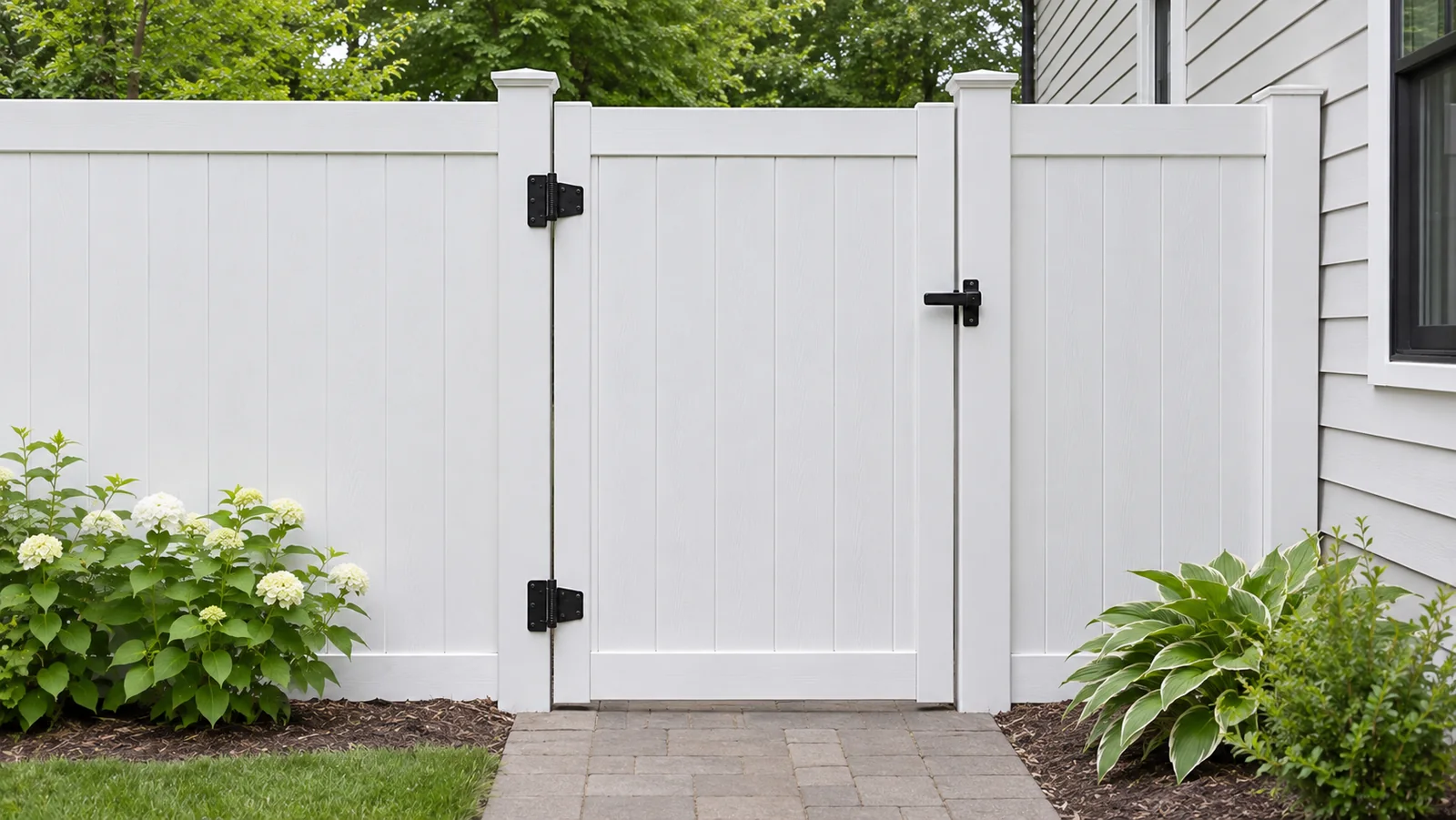
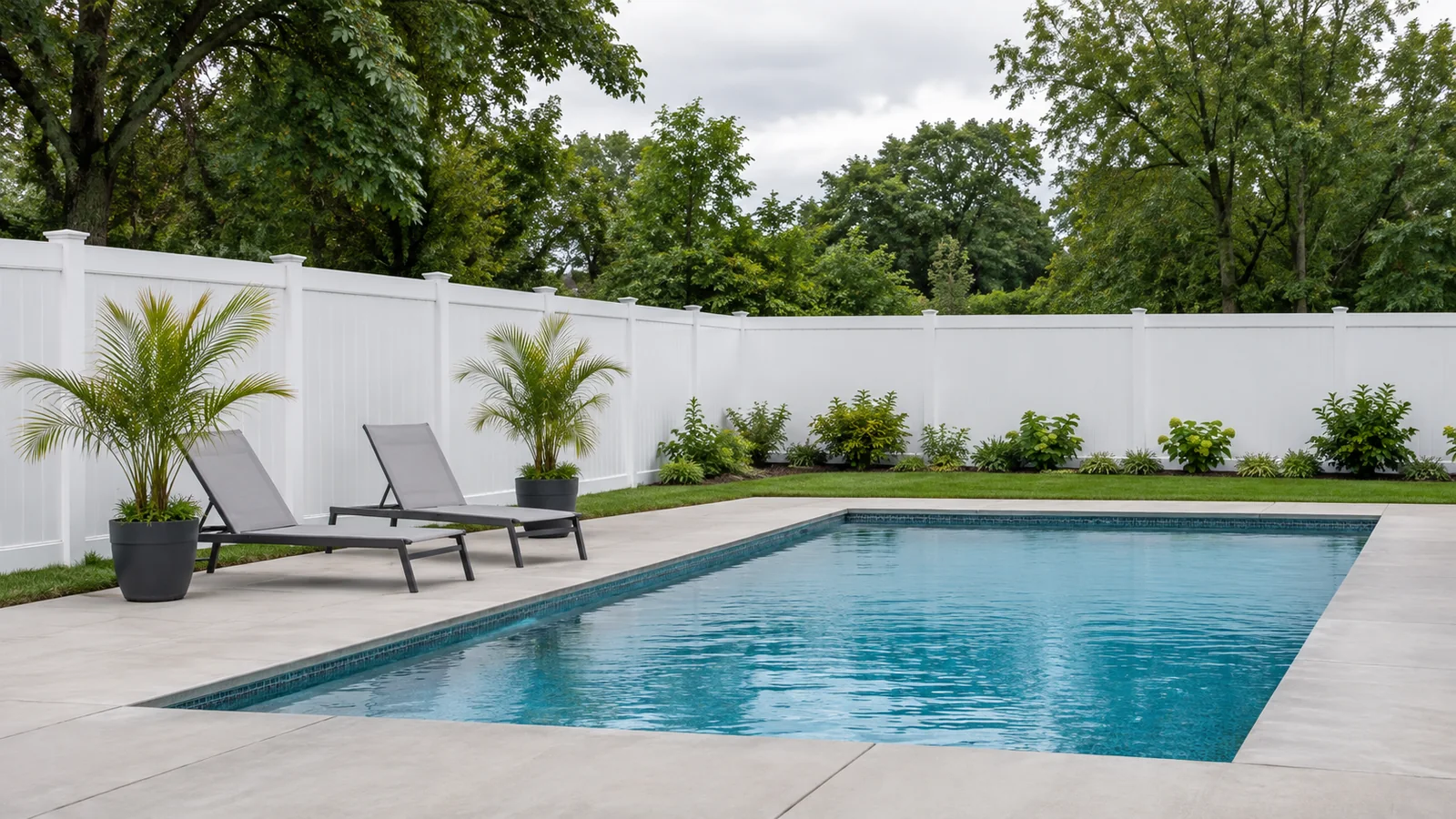
The calculator treats a gate as an opening and two posts. The opening has to be wider than the gate: about 1 in each for the hinge and the latch, another 1 in on a double gate, or whatever the gate hardware's own instructions say. Without an aluminum insert, the hinge post is filled with concrete after the gate is hung. The gate mounts flush with the side it swings toward. Around a pool, Weatherables expects the gate to swing outward, away from the water, but local code decides the direction, so the building department's answer comes before the gate posts go in.
Key Takeaways
- Post caps are not glued but held with a small amount of clear silicone on the inside corner, so they can come off later.
- A 1/4-in hole drilled in the middle of the underside of each rail lets trapped water drain.
- An 8-ft-tall gate takes two cross braces in Weatherables' build.
- With 60-lb bags in place of 80-lb, the 132-ft line takes 4 bags per post, 76 in all.
Frequently Asked Questions
How much gap should be under a vinyl fence?
Weatherables recommends at least 2 in between the bottom of the panel and the ground. On a stepped slope the gap grows toward the downhill end of each panel.
Do vinyl fence posts need concrete inside them?
Only in some places. On a fence over 6 ft tall or in a high-wind area, each post is reinforced with concrete or an aluminum insert to at least 22 in above grade, and concrete goes in only after the panels are installed.
Can you cut a vinyl panel to length?
Yes, but the cut rail loses its notch. Weatherables replaces it with a stainless steel screw through the top rail, set close to the inside wall of the post, and a screw through the face of the bottom rail about 1 in from its end.
Is vinyl more expensive than a wood privacy fence?
Per foot installed, yes, by about a quarter at national mid-range prices for 6-ft fences.
How do you clean a vinyl privacy fence?
Normal rain washes most of it, and soap and water handle the rest. For stains the guide allows lacquer thinner or a soft scrub with bleach, rinsed off right away and without hard scrubbing.
Sources
- Weatherables, Vinyl Fencing Installation Guide, no date, accessed November 1, 2026.
- Weatherables, Color Selection, no date, accessed November 1, 2026.