Slat Fence: How It Is Built and How Many Slats It Takes
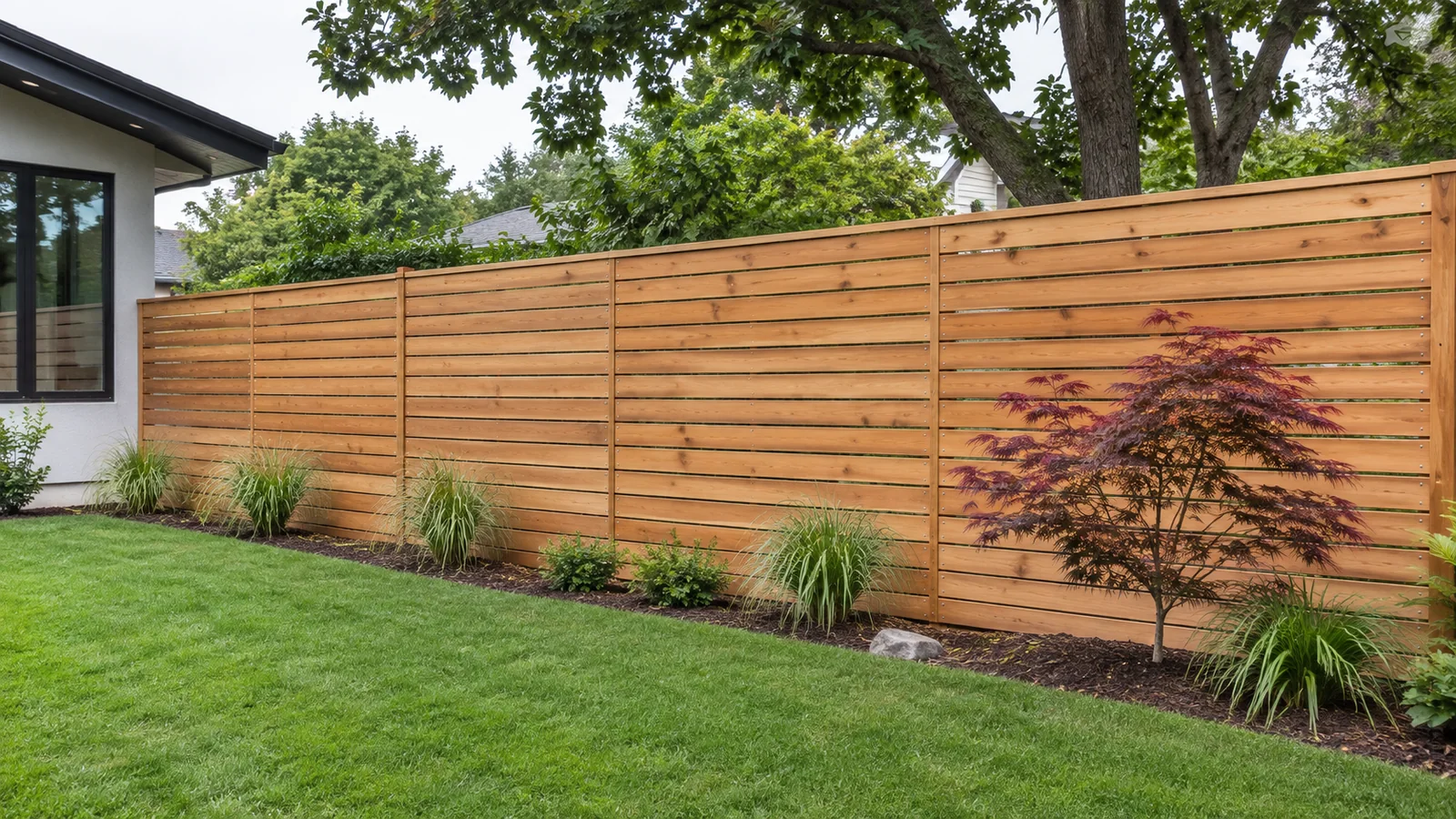
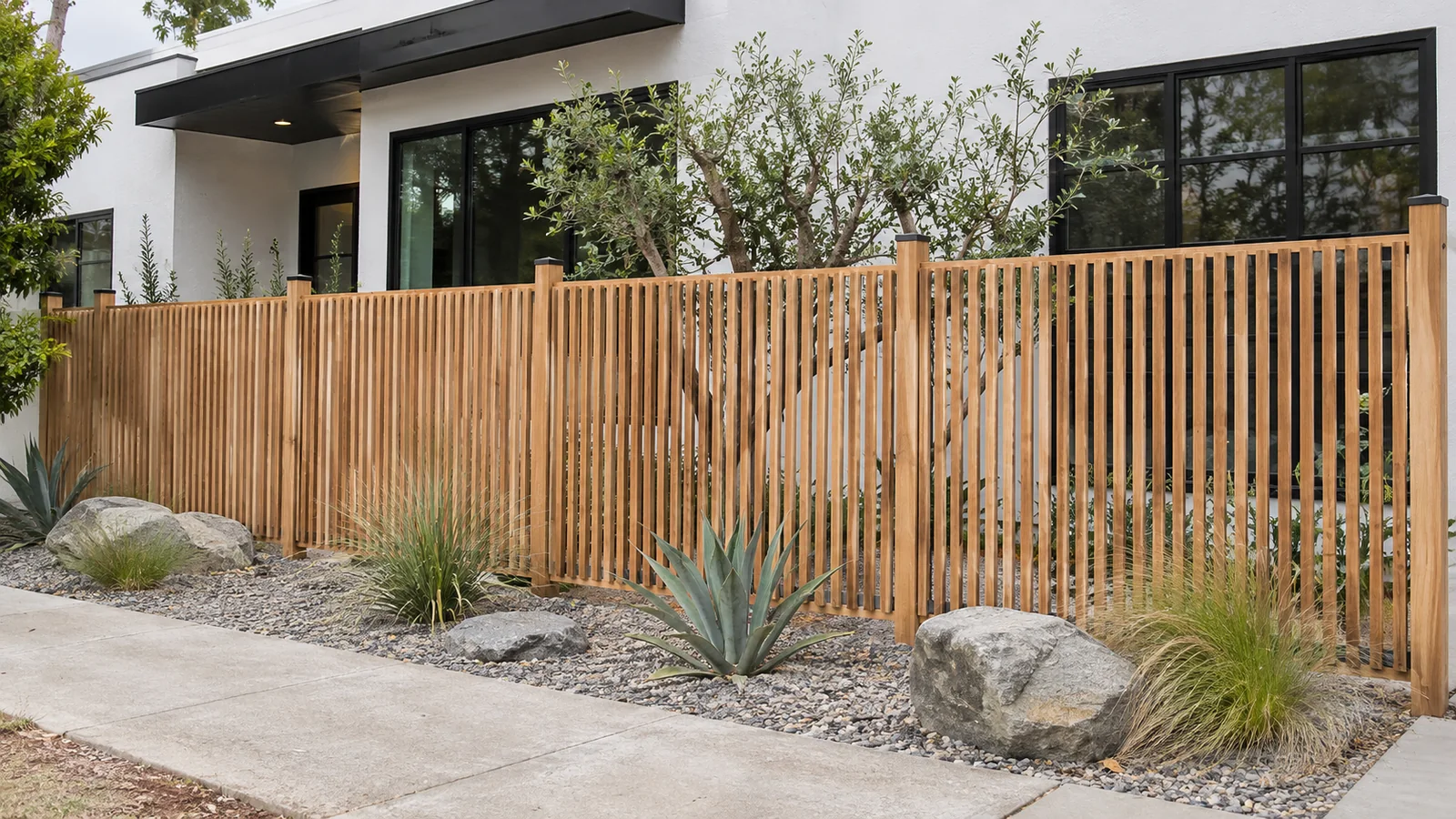
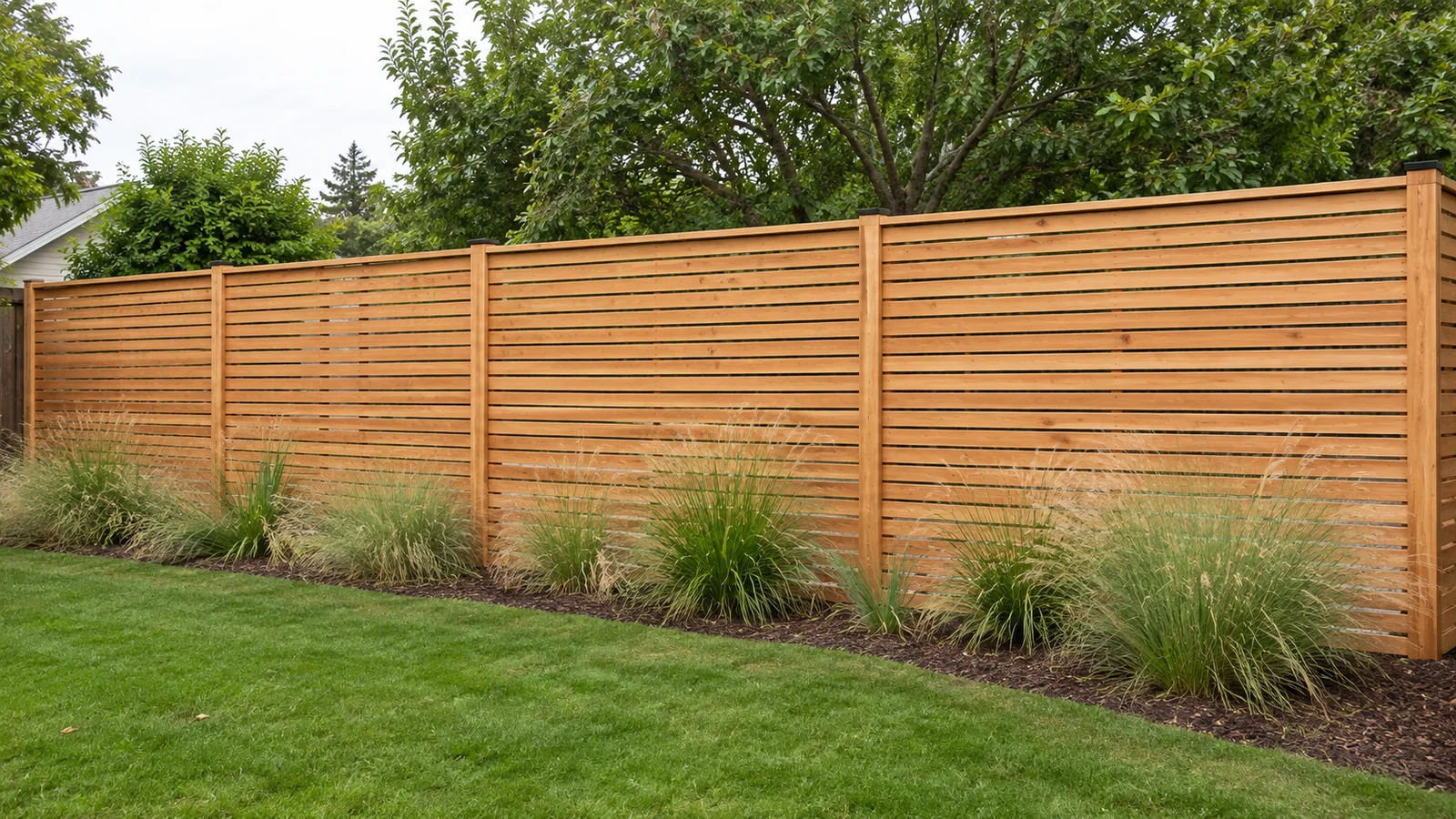
A slat fence is a run of narrow boards, such as 1×4s, hung with gaps so light and air pass through. At 6 ft tall with 1/2-in gaps, each 8-ft section takes 18 horizontal slats, so a 56-ft run with one 4-ft walk gate comes to 10 posts and 133 slats, 5% waste included.
Updated
Advanced: Picket Width & Gap
8 line + 2 gate, 4x4
With 5% waste: 133 boards.
Hole: 10 in diameter x 2 ft deep, 0.92 cu ft per post.
Total: 20 bags (80 lb) / 30 bags (60 lb) / 30 bags (50 lb) for 10 posts, 9.21 cu ft.
The calculator above is set to 1×4 slats laid sideways: a 56-ft run, 6 ft tall, one 4-ft gate, posts 8 ft apart. Slat width and gap sit under Advanced. A slat fence is one of the open-spaced layouts in the fence styles section, and the 1×6 version of the same horizontal build has its own page, horizontal fence.
How many slats does a slat fence need?
A slat is a 1×4, 3.5 in wide, so more of them fit in 72 in than 1×6 boards would. The count per section is the fence height divided by slat plus gap, rounded up: 72 ÷ (3.5 + 0.5) = 18 slats.
Inputs for the run: 56 ft straight, one 4-ft walk gate, 4×4 posts 8 ft apart, 1×4 slats with a 1/2-in gap, 5% waste on.
| Line | Quantity | What sets it |
|---|---|---|
| Fence line | 52 ft | 56 ft minus the gate opening |
| Sections | 7 | six full bays and a 4-ft bay |
| Posts | 10, each 8 ft long | 8 line posts and 2 gate posts |
| Slats | 126, or 133 with waste | 18 per section, 8 ft long |
| Mid-supports | 6, each 6 ft long | one in each full bay |
| Fasteners | 720 | 4 per slat, plus 2 at each mid-support crossing |
| Concrete | 20 bags of 80-lb mix | 2 per post |
Slats screw straight to the posts, so there are no rails. The 18 slats stack to 71.5 in, half an inch under the fence height. Posts follow the length and the spacing, so the slat width and gap do not change the 10 posts or the 20 bags.
Why does a 1/4-in gap give 20 slats that stack to 74.75 in?
The calculator counts one gap for every slat, including the top one, but a stack has one gap fewer than it has slats. At a 1/4-in gap the division gives 72 ÷ 3.75 = 19.2, which rounds up to 20. Twenty slats and 19 gaps stack to 70 + 4.75 = 74.75 in, which is 2.75 in over a 6-ft fence.
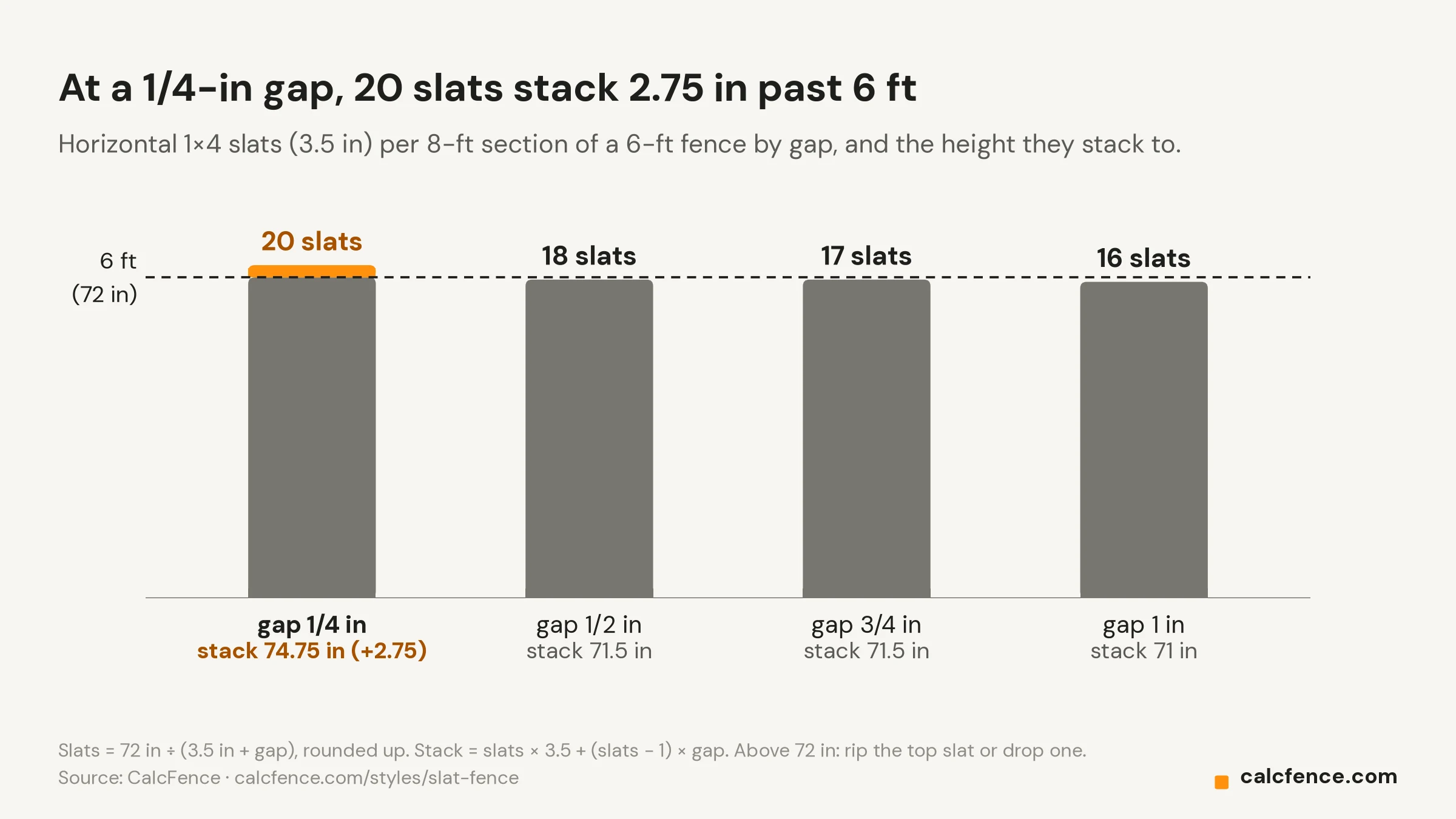
Nineteen slats would fit. They stack to 71.0 in at a 1/4-in gap, and spread over 72 in they hang with gaps of 0.31 in. So at the narrowest settings the rounding is a prompt, not an instruction: order for 19 per section, which is 133 slats before waste on this run and 140 after it, against the 147 the calculator shows. Or keep the 20 and rip the top slat down to a strip 0.75 in wide, which is rarely worth the saw time.
| Gap setting | Slats per section | Stack at that gap | Gap that fills 72 in with that count | Slats for the 56-ft run, with waste |
|---|---|---|---|---|
| 1/4 in | 20 | 74.75 in | 0.11 in | 147 |
| 1/2 in | 18 | 71.5 in | 0.53 in | 133 |
| 3/4 in | 17 | 71.5 in | 0.78 in | 125 |
| 1 in | 16 | 71.0 in | 1.07 in | 118 |
From 1/2 in up, the counted slats stay under 72 in and the gap you hang is a little wider than the one you typed. The reason, and how to hang a gap you can measure, is worked through on the semi-privacy fence page, where the same rounding appears with 1×6 boards. For slats, the practical rule is to cut one spacer block to the gap you want and check the stack against 72 in on the first post before you fasten the rest.
Vertical slats or horizontal slats?
A vertical slat fence turns the same 1×4s on end between rails. The picket calculator counts it, since the locked horizontal calculator above does not.
| 56-ft run, 6 ft tall, 1×4 at 1/2 in | Horizontal slats | Vertical slats |
|---|---|---|
| Slats per section | 18 | 24 |
| Slats with waste | 133 | 177 |
| Slat length | 8 ft | 6 ft |
| Rails or supports | 6 mid-supports, 6 ft | 23 rails, 8 ft |
| Fasteners | 720 | 1,008 |
| Posts | 10 | 10 |
Slat footage barely differs: 133 slats of 8 ft are 1,064 ft, and 177 of 6 ft are 1,062 ft. The difference sits in the framing. The vertical version carries 184 ft of rail where the horizontal one carries 36 ft of mid-support, and 288 more fasteners.
Slat ends, posts and mid-supports
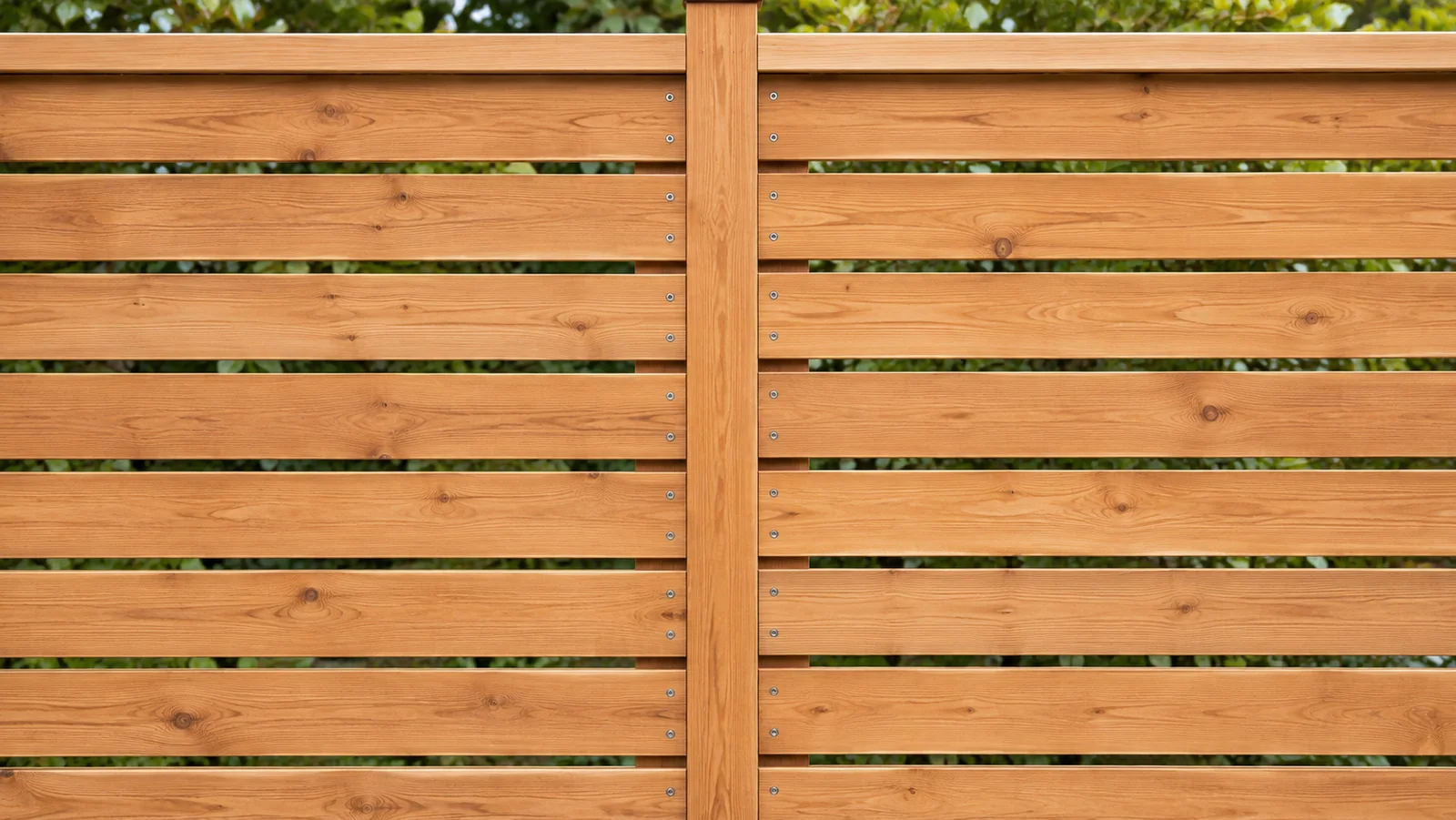
Where two slats meet on a post, each end takes two screws, which is where the 4 per slat in the table comes from. The slats are 8 ft long and the posts 8 ft on center, so every end joint lands on a post. Slat length and post spacing are tied together, and the fence post spacing calculator spaces the posts so that every bay matches.
The calculator adds a 2×4 mid-support to every bay of 6 ft or more, so a long 1×4 does not span 8 ft unsupported. The 4-ft bay at the end of this run gets none.
Taller and shorter slat fences
The count follows the height alone. At 4 ft, 12 slats fill a section and the run takes 89 with waste. At 5 ft it is 15 per section and 111 slats, and at 8 ft it is 24 per section and 177 slats. All three keep the same 10 posts, except that the 8-ft fence moves to 6×6 posts. Front-yard limits are the usual reason to build low, and fence height rules and permits lists four city codes.
Black stain and the price of a slat fence
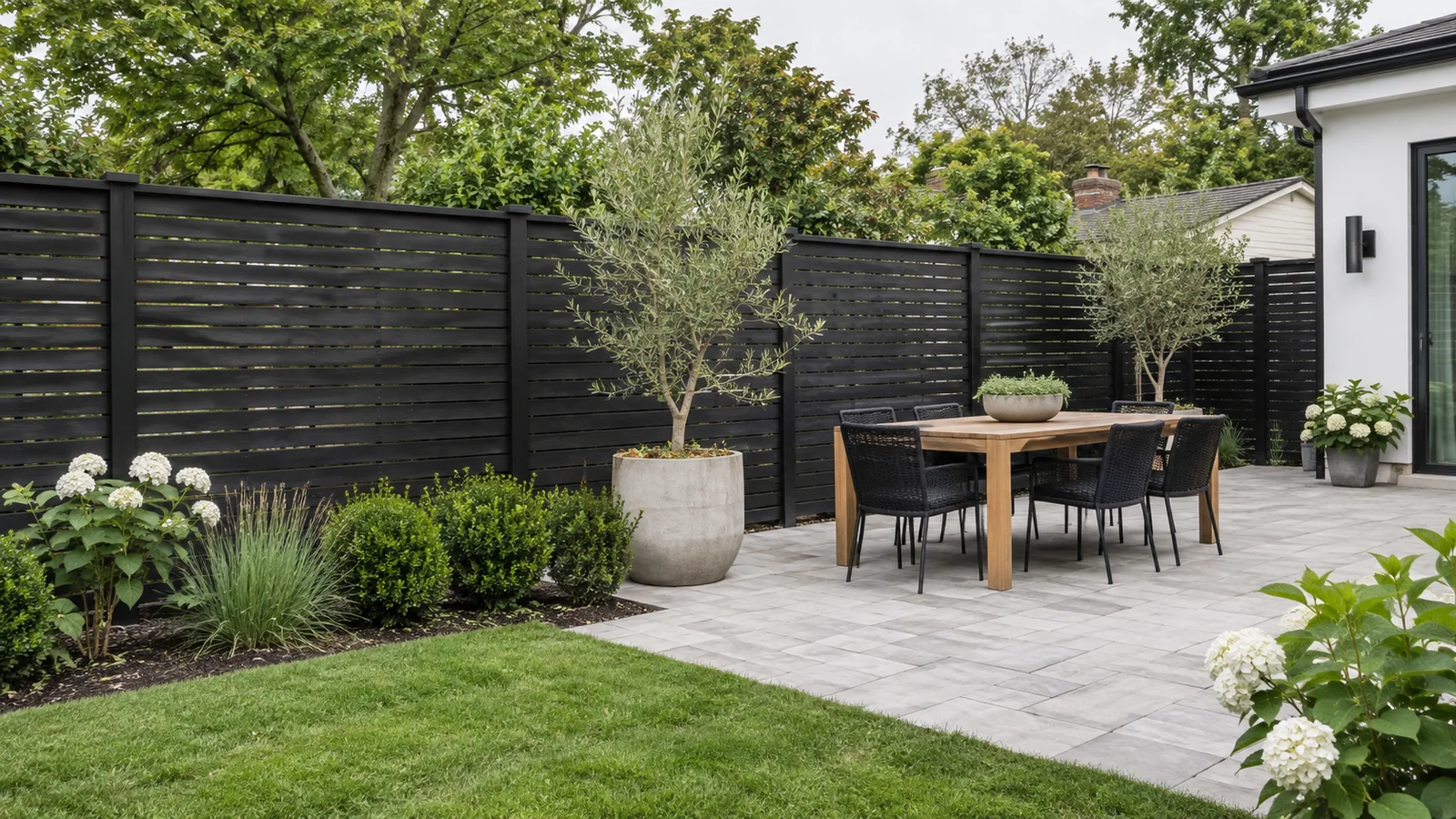
Stain does not change any count. On a black slat fence the gaps read as thin shadow lines, and on bare cedar as light, which is why the same fence looks different at the same 1/2-in setting.
The national cost table has a row for wood horizontal fencing at 6 ft, an estimate of $52 per foot installed at mid range, built on the privacy rate and not on 1×4 slat counts. The row does not know that this layout uses more, thinner slats. Price your own length with the wood fence cost calculator, and compare the wood against other materials in fence materials compared.
Key Takeaways
- With no gap at all, 1×4 slats come to 21 per section and stack to 73.5 in, 1.5 in over a 6-ft fence.
- In 60-lb bags the 56-ft run needs 30 bags of concrete.
- A 1 1/2-in gap drops the count to 15 per section and 111 slats with waste.
- The gate takes 4 ft out of the fence line and adds 2 gate posts; its leaf and hardware are not counted.
Frequently Asked Questions
What gap should a slat fence have?
Choose by how much you want to see through. At 1/2 in the gaps hang at about 0.53 in, and at 1 in about 1.07 in. For the effect of each gap on openness, the fence board calculator lays the counts out for the other layouts.
Does the gap change how many posts I need?
No. The 56-ft run takes 10 posts and 20 bags of 80-lb concrete at every gap from none to 1 1/2 in. Only the slat count and the fastener count move.
How many slats for a 100-ft slat fence?
At 6 ft with 1/2-in gaps, 18 per 8-ft section. A straight 100-ft run with one 4-ft gate has 96 ft of fence line, 12 sections, 216 slats and 227 with waste.
Can I use 1×6 boards instead of 1×4 slats?
Yes. At 5.5 in wide with the same 1/2-in gap, a 6-ft section takes 12 boards, and the 56-ft run takes 89 with waste. The method for that size is on the horizontal fence page linked above.